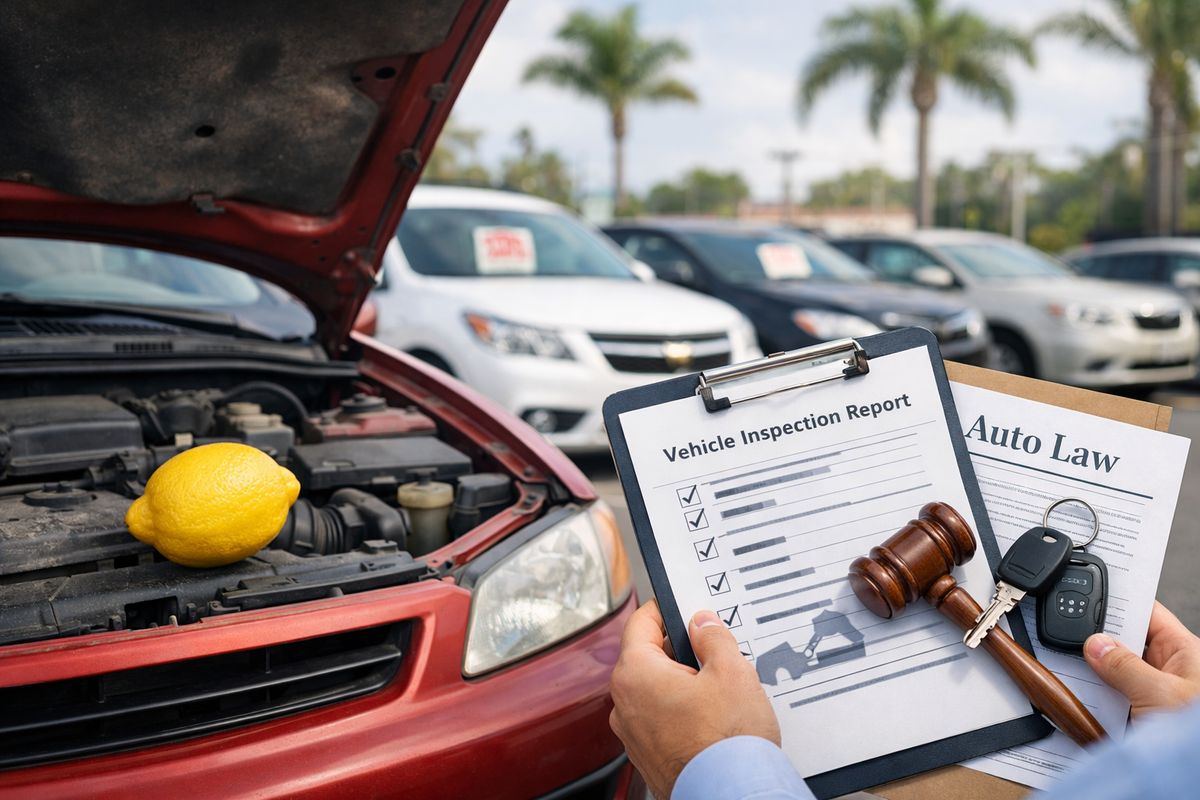

If your leased SUV keeps going back to the dealer for the same shudder, warning light, or no-start issue, the question gets urgent fast: does lemon law for leased car problems actually apply in Florida? Yes, it can, and the bigger issue is usually not the lease itself, but whether your vehicle and repair history fit Florida’s rules.
Lemon law for a leased car in florida: yes, it can apply
A leased car can qualify under Florida lemon law. That is the short answer, and it matters because a lot of drivers assume leasing somehow strips away protection. It usually does not.
Here’s the thing: Florida lemon law focuses on the vehicle’s defects, the warranty coverage, and the repair history. If your 2024, 2025, or 2026 vehicle has a substantial problem that the manufacturer cannot fix within a reasonable number of attempts, your lease does not automatically block a claim.
The short version
If your leased vehicle has a serious warranty-covered defect, keeps returning to the dealership for the same issue, or spends too many days out of service, you may have a claim for a buyback, replacement, or other compensation. If you want a broader overview of how Florida lemon law works for qualifying vehicles, that helps put the lease question into context.
What florida lemon law actually covers
Florida’s lemon law is meant to protect you when a new vehicle has a defect the manufacturer cannot fix during the protected period. In plain English, if the car has a real problem and repair visits are piling up without a real fix, the law may step in.
This is not about minor annoyances. A loose trim piece or one-time squeak usually is not the fight. The law is aimed at defects that seriously affect how the vehicle drives, how safe it is, or what it is worth.
Which vehicles are usually covered
Florida lemon law generally applies to new vehicles, including demonstrator vehicles, that are sold or leased in the state and come with a manufacturer’s warranty. That means leased vehicles can fit within the same basic framework as purchased vehicles.
The catch is that lease cases can look a little different once money changes hands at the end. But at the qualification stage, the main question is still whether the vehicle meets the legal standard for a lemon.
What counts as a “nonconformity”
A nonconformity is a defect or condition that substantially impairs the use, value, or safety of the vehicle. That sounds formal, but the idea is simple: the problem has to matter in real life.
Think about a vehicle that stalls at a red light, jerks hard during shifting, loses power on I-95, or flashes the check engine light every few weeks even after repeated repairs. Those are not cosmetic gripes. Those are the kinds of problems that can support a claim. If you want a closer look at what kinds of defects tend to meet the standard in Florida, that can help you size up your own situation.
The florida time and mileage window
Timing matters more than most people realize. Florida lemon law has a rights period tied to the first 24 months after delivery of the vehicle. Early repair visits matter because they help show the defect showed up during the protected window.
Waiting too long can weaken a claim. If you keep hoping the next software update or next service writer will finally fix it, miles keep adding up, lease payments keep leaving your account, and the paper trail gets messier. A lemon claim is a lot easier to evaluate when the repair history starts early and stays documented.
When a leased car becomes a lemon
A leased car does not become a lemon because it is annoying. It becomes a lemon when the repair history starts matching the legal triggers.
Repeated repair attempts for the same problem
One of the clearest signs is multiple repair attempts for the same unresolved defect. Maybe your transmission slips, gets reprogrammed, then still slams into gear. Maybe the engine loses power, a sensor gets replaced, and the exact symptom comes back two weeks later.
Patterns matter. A stack of repair orders showing the same complaint over and over can be more powerful than a dramatic one-day breakdown. If you have been bringing the vehicle back again and again for the same problem, that history may be doing more work than you think.
Serious safety defects
Some problems are dangerous enough that fewer repair attempts may be needed. If the defect is likely to cause death or serious bodily injury, the law can treat it differently.
That includes issues like sudden stalling in traffic, brake failures, steering loss, or a vehicle that shuts off while moving. In those cases, the concern is not just inconvenience. It is safety, plain and simple.
Too many days in the shop
Sometimes the problem is not just repeat visits. It is how long your vehicle disappears into the service lane.
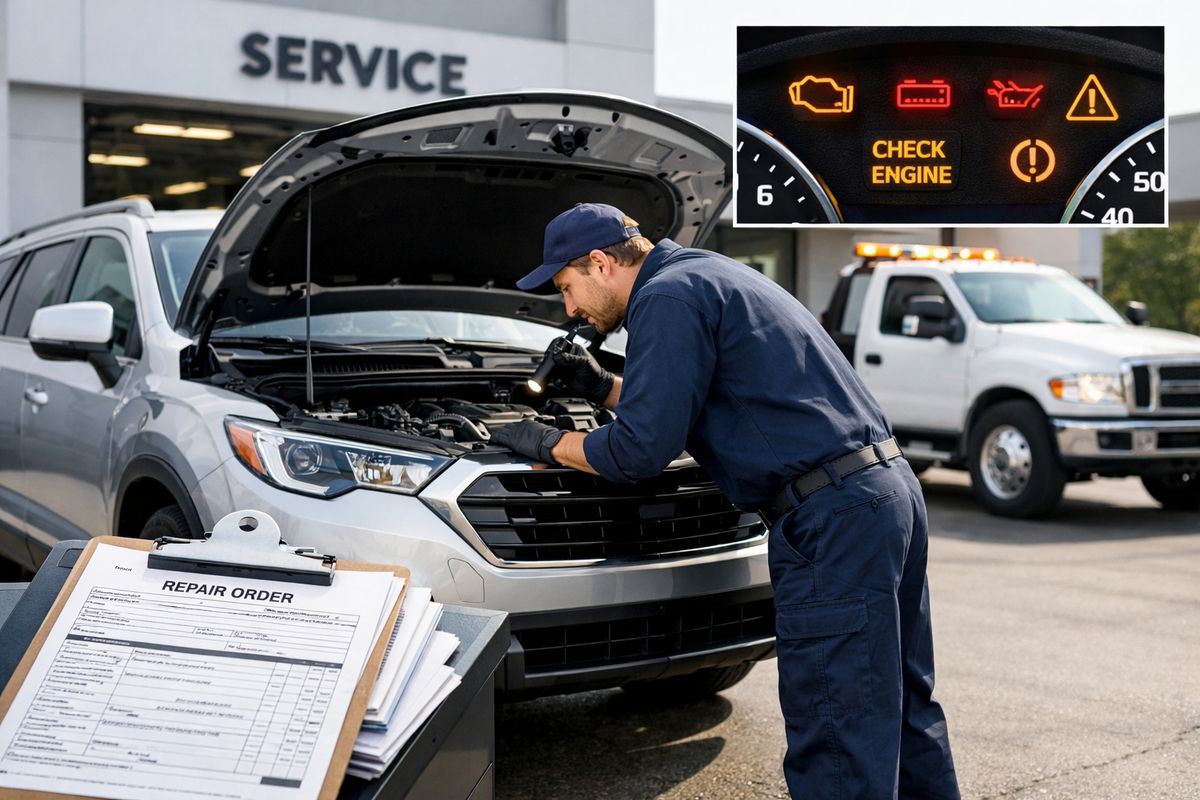
If your car sits at the dealership for weeks waiting on diagnostics, parts, or another attempt that still does not fix the issue, that downtime can matter a lot. Your car is supposed to be in your driveway, not parked behind the service department collecting dust near a row of waiting loaners. If you are dealing with a vehicle that has been out of service for too long, that can support a lemon law claim even if the defect itself is hard to pin down.
Does leasing change your rights or the outcome?
Leasing does not erase your rights, but it can affect how the remedy gets handled. That is where some confusion comes from.
Buyback vs. replacement in a lease case
The common outcomes are still usually a repurchase or a replacement. In a repurchase, the manufacturer buys back the defective vehicle. In a replacement, the manufacturer provides another vehicle instead.
With a lease, the leasing company technically owns the car, so the transaction does not look exactly like a purchase case. But the basic goal is similar: get you out of a defective vehicle and sort out the financial pieces fairly. If you want to compare how a buyback and a replacement can play out, that is worth understanding before you accept whatever gets offered first.
Who gets paid in a leased vehicle claim
In a lease case, the money may be split between you and the lessor depending on the facts. Some amounts may go toward paying off the lease obligation, while other amounts may relate to lease payments you made, taxes, fees, and other qualifying charges.
You do not need to memorize the accounting to know whether your case matters. The main point is that a leased vehicle claim can still produce real relief, even though the vehicle title is not in your name.
Why trade-in is often the expensive mistake
A lot of drivers get so worn down that a trade-in starts to feel like the easy exit. It usually is not.
If you trade in a defective leased vehicle, you may end up absorbing negative equity, penalties, or diminished value yourself while the manufacturer avoids answering for the defect. That is a bad deal. Before you take the loss by swapping out a bad vehicle, it makes sense to review whether a lemon law claim gives you a stronger path.
What you should do if your leased car keeps going back to the dealer
Once the same problem keeps returning, small details start to matter. Dates matter. Mileage matters. The exact words on the repair order matter.
Keep every repair order and invoice
Save everything, even if the dealer writes “could not duplicate concern” or “operating as designed.” Those phrases can be frustrating, but the document still proves you brought the vehicle in on that date, at that mileage, for that complaint.
A clean paper trail can make the difference between a strong timeline and a fuzzy story. If you are missing documents, ask for copies now, not six months from now.
Report the problem clearly every time
Use plain, repeatable language each visit. “Transmission jerks at 35 mph.” “Engine dies at stoplight on US-1.” “Car hesitates when accelerating onto highway.” That kind of wording is far better than “car acting weird.”
Consistency matters because the record needs to show the same defect keeps returning. If every visit uses different vague language, the manufacturer gets more room to argue the problems were unrelated.
Check whether the manufacturer requires a final notice
Florida claims often involve formal notice and a final repair opportunity before the case moves forward. This is one of those procedural steps that sounds technical but really just means the manufacturer may need one last clear chance to fix the defect.
Do not assume the dealership handles this for you. In many cases, it does not. If the dealer keeps brushing you off with “that’s normal,” it helps to understand what that response often really means in a lemon law case.
Ask for a free case review before your lease problem gets more expensive
A case review can tell you whether your repair history is pointing toward a valid claim before you keep paying on a vehicle that still is not fixed. That is especially useful if the engine or transmission was replaced, the problem came back, or the car has spent long stretches in the shop.
The easiest starting point is simple: gather your repair orders, then write down your vehicle’s year, make, and model, plus how many times it has been repaired for the problem. That gives a case evaluator something concrete to review instead of guesswork. If you want to know what usually happens after your records are reviewed, that process is usually more straightforward than people expect.

What compensation can look like for a leased lemon
Most people care about one thing here: what does a successful claim actually do for you?
Refund-related amounts
In a lease case, compensation may include payments you made, certain fees, and other qualifying charges, subject to deductions or offsets allowed by law. The exact numbers depend on the lease terms, mileage, and case facts.
That may sound dry, but the practical point is not dry at all. A successful claim can stop you from continuing to pour money into a defective vehicle month after month.
Replacement vehicle option
Sometimes a replacement vehicle is offered instead of a repurchase. For some lessees, that is appealing because it gives a clean reset without dragging through another cycle of diagnostics, parts delays, and service appointments.
Other lessees prefer a buyback because confidence in the brand is already gone. After enough tow trucks and enough mornings in a dealership waiting room, that reaction makes perfect sense.
Incidental and related costs
Depending on the facts and applicable law, you may also be able to recover certain out-of-pocket costs tied to the defect, such as towing, rental expenses, or similar losses. Keep receipts if you have them. Small costs add up fast when a “quick fix” turns into a month-long problem.
Common questions about florida lemon law for leased cars
A few questions stop people from acting even when the facts look strong. Most of them come from things a dealer said in passing.
“The engine or transmission was replaced. do you still have a case?”
Yes, possibly. A major component replacement does not automatically wipe the slate clean.
If the defect continues, if another major failure follows, or if the downtime was excessive, a claim may still exist. A new transmission does not magically erase three failed repair visits and twenty-plus days in the shop.
“What if the dealer says the problem is normal?”
That line gets used a lot. Sometimes it means the dealer cannot duplicate the issue. Sometimes it means the dealer does not have a fix yet. Sometimes it is just a way to move the car out of the service lane.
If the warning lights, drivability issues, or recurring symptoms keep showing up, the problem can still matter even if the dealer minimizes it. “Normal” is not a magic word that defeats a valid claim.
“What if the problem comes and goes?”
Intermittent defects are still defects. A vehicle does not need to fail every mile to have a serious issue.
Think of it like a phone that randomly shuts off. If it only happens twice a week, you would still know something is wrong. The same logic applies here. Documentation and repeat repair efforts are what count.
“Can you qualify if the car was in the shop for weeks?”
Yes. Extended downtime can be a major factor, especially when the vehicle is out of service for warranty repairs during the protected period.
If your car spent weeks waiting for parts, software, diagnostics, or repeated repair work, that is not just bad luck. It can be part of a strong lemon law story.
“Does it matter that the leasing company owns the car?”
It matters to how the remedy is handled, but not necessarily to whether you can seek relief. Leased vehicles can still qualify.
That is the key distinction. Ownership structure affects the financial mechanics, not the basic fact that you may be stuck with a defective vehicle covered by warranty.
How to tell if your situation is worth pursuing
You do not need a perfect legal analysis at your kitchen table. You just need a realistic screen for whether your case deserves attention now, not six more repair visits from now.
Signs your case may be strong
Your case may be strong if the same defect has been repaired multiple times, the problem affects safety, the vehicle spent a long time in the shop, or a major component like the engine or transmission was replaced. A newer Florida vehicle that is still under warranty is exactly the kind of situation that deserves a close look.
Repeated failed warranty work is often the giveaway. If the dealer keeps “fixing” it and the same issue keeps showing up, your instincts are probably right.
Signs you should act quickly
Act quickly if the mileage keeps climbing, the lease end is getting closer, or you are considering a trade-in just to be done with the problem. Delay usually helps the manufacturer more than it helps you.
The longer you wait, the easier it becomes for records to scatter, timelines to blur, and leverage to shrink. A lease problem can get more expensive quietly, one monthly payment at a time.
The one thing to try next
Pull together every repair order, then write down your vehicle’s year, make, model, and the number of repair attempts for the issue. That single step turns frustration into something useful.
Talk to Jonathan About Your Vehicle
Jonathan D. Schwartz, the attorney behind Bad Vehicle, helps vehicle owners understand their Lemon Law options. He can review your repair history, answer your questions, and help you determine the next steps for your potential claim.
Your case review is free, and you pay no attorney fees unless you win.
Schedule your free consultation with Jonathan: https://badvehicle.com/schedule-your-consultation/
Frequently asked questions
Does florida lemon law cover a leased car the same way as a purchased car?
In many cases, yes. The vehicle can still qualify if it meets Florida’s requirements for warranty-covered defects, repeated repair attempts, or excessive time out of service. The biggest difference is usually how the refund or payoff is handled because the leasing company owns the vehicle.
Can a leased car qualify if the defect started with software issues?
Yes. Software-related problems can matter if they substantially affect use, value, or safety and keep returning despite repair attempts. A glitch that causes warning lights, loss of power, shifting problems, or repeated system failures is not automatically minor just because the issue is electronic.
Do you need to finish the lease before making a lemon law claim?
No. Waiting until the lease ends can make things harder, not easier. If the defect showed up during the protected period and the repair history supports a claim, it usually makes more sense to address it while the records are fresh and the problem is ongoing.
What if the dealer never finds a fix but keeps updating the car?
Repeated software updates without a lasting repair can still support a claim. What matters is not how many times the dealer plugs in a computer. What matters is whether the defect was actually fixed.
Can downtime alone support a florida lemon law claim for a leased vehicle?
It can be a major factor. If the vehicle spends an extended time out of service for warranty repairs during the protected period, that downtime may help support a claim even if the defect is intermittent or hard to duplicate.
Is a free case review worth it if you are not sure the car qualifies?
Yes. If you have the year, make, model, and repair history, a review can quickly show whether the facts are pointing toward a real claim or just a frustrating but weaker situation. That is a lot better than guessing while more payments and more repair visits pile up.
Think your vehicle may qualify?
Have your repair history reviewed and find out what options may be available under Lemon Law or warranty law.