

When a dealer can’t duplicate problem, it can make you feel stuck in a loop: your vehicle acts up on the way to the service lane, then suddenly behaves once it gets there. That does not mean the issue is imaginary, and it definitely does not mean the visit was a waste. The goal is to make your complaint harder to ignore, easier to trace, and much more useful if the problem keeps coming back.
What you’ll need before you go back to the dealer
Before the next visit, pull together the basics in one place. That means every repair order, every invoice, your warranty booklet, and a simple list of dates the vehicle was unavailable. If your car has been sitting at the dealership for days at a time, those dates matter more than most people realize.
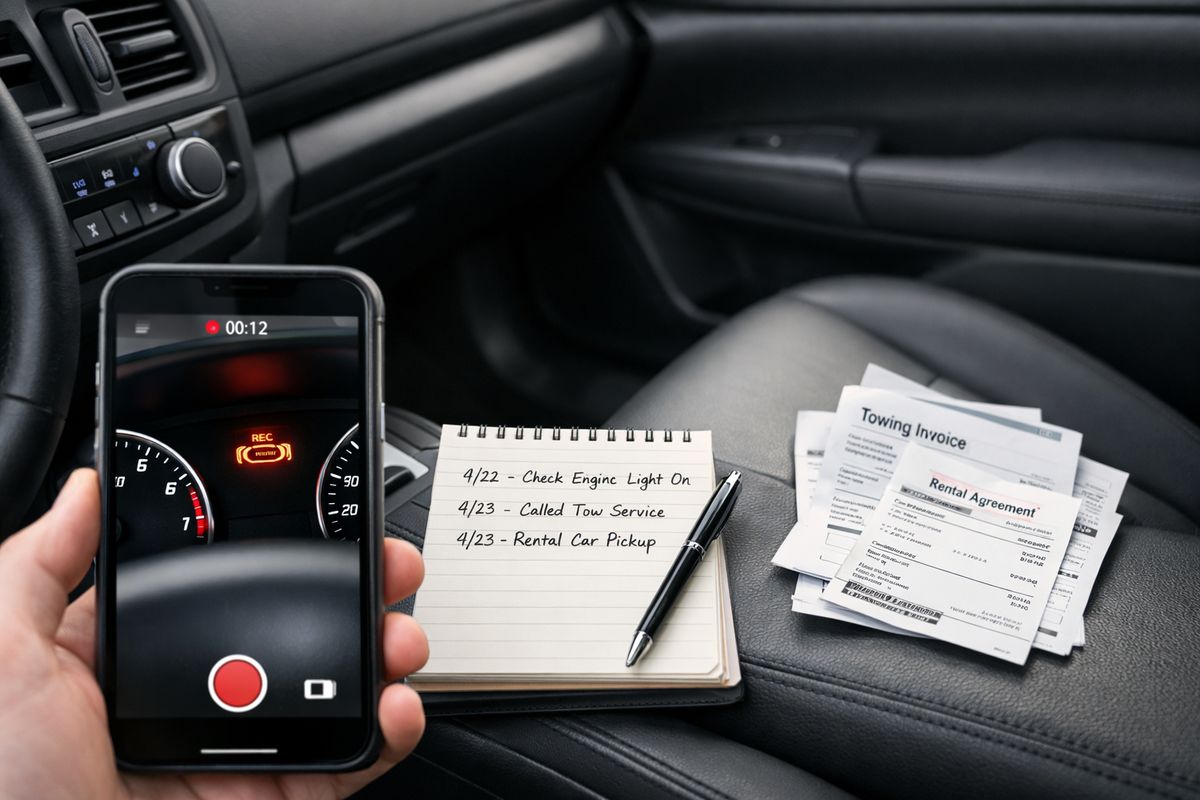
Keep photos, videos, and screenshots on your phone, but also back them up somewhere else. Emailing clips to yourself works fine. If you have towing receipts, rental bills, or roadside assistance records, save those too. Problems that leave you stranded or without transportation carry more weight when you can show the real-world fallout, not just the mechanical complaint.
A note app is enough for your log. You do not need anything fancy. You just need a clean record you can pull up in the service drive in about ten seconds.
Step 1: write down the problem in plain, specific detail
- Open your notes app and write one short description of the issue.
- Keep it factual, not diagnostic.
- Reuse that same wording at each visit.
This is where a lot of cases get weaker than they should. If your first visit says “hard shifting at 30 to 40 mph after warm-up” and the next says “transmission feels weird,” the paper trail starts to look messy.
Focus on symptoms, not guesses
Write what your vehicle does. Stalls at red lights. Jerks on acceleration. Hesitates merging onto I-95. Flashes a warning light, then goes away. Those are symptoms.
Skip guesses like “the transmission is shot” or “the computer must be bad.” The catch is that a wrong guess can distract from a very real symptom. Service records are stronger when your complaint sounds simple and consistent. If you need help tightening your records, this guide on documenting repair visits the right way covers the same idea in more depth.
Include when, where, and how it happens
Add the conditions around the problem. Note speed, outside temperature, traffic, fuel level, whether the vehicle had just started, and whether it had been driven for 20 minutes already. Specifics matter.
“Shifts hard after 15 minutes of stop-and-go traffic” is useful. “Runs bad sometimes” is not. Think of it like giving directions to a place in Miami or Buffalo. The more precise you are, the easier it is to get there.
Use the same wording every time
Once you land on a clear description, stick with it. Repetition helps. If your complaint is the same on each repair order, repeat visits look like repeat visits, not separate random annoyances.
Step 2: build proof before the next repair visit
- Start collecting evidence the moment the issue happens.
- Save each incident in the same folder.
- Bring that proof with you to the dealership.
Intermittent problems are slippery. A vehicle can act perfectly for an hour, then fail in one ugly moment in a grocery store parking lot. The trick is catching the pattern.
Take video, photos, and audio safely
If a warning light comes on, photograph it. If the engine rattles on startup, record the sound. If the transmission slams into gear, capture what you safely can without putting yourself at risk.
Time-stamped evidence helps because it shows the problem happened in the real world, not just in conversation. The same goes for warning lights that disappear before the dealer sees them. If that is your issue, this article on what to do when the light keeps returning can help you build a cleaner record.
Keep a simple incident log
Use one entry per event. Date, mileage, weather, road type, what happened, how long it lasted. Short is fine.
A basic log can turn “random issue” into “happens after highway driving, then idling at a stoplight.” That is a much stronger story.
Save tow bills, rental receipts, and roadside records
If your vehicle could not be driven, save proof. If you had to rent a car or pay for towing, save that too. Those costs and lost days can matter a lot, especially if your car has been out of service for weeks. If that sounds familiar, read about when long shop time starts to matter.
Step 3: make sure the repair order says exactly what you reported
- Read the write-up before signing.
- Ask for corrections if it is vague.
- Keep a copy before leaving.
This step feels small, but it is huge. The repair order is the paper trail. If your complaint is watered down at the start, the final invoice will usually be weak too.
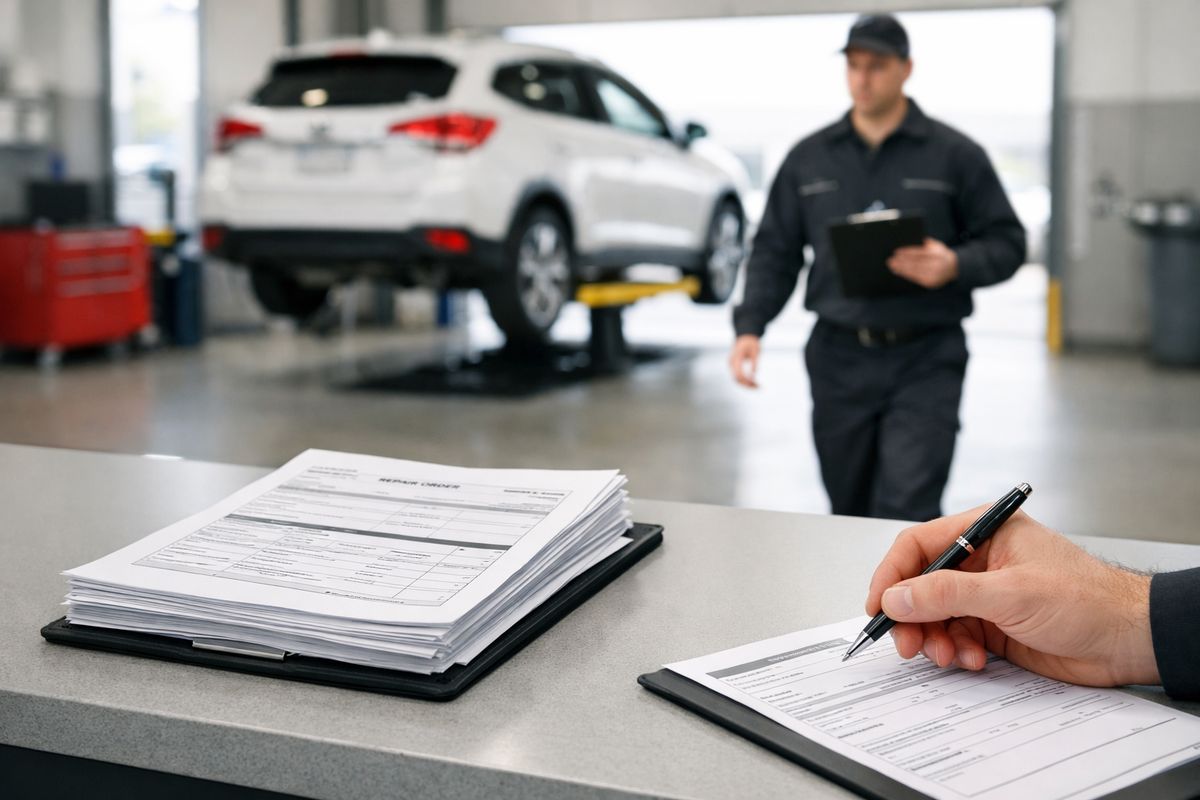
Ask for your full complaint in writing
You want the repair order to say what you actually reported. Not “check vehicle.” Not “customer states noise.” Those phrases are too thin to help later.
Ask for the symptoms, timing, and warning messages to be written out. If your dashboard said “transmission malfunction” or “reduced power,” make sure that wording appears.
Add your supporting details before signing
Mention prior visits for the same issue. Mention if an engine or transmission has already been replaced. Mention if the problem came back right after a supposed fix.
Those details show this is not a one-time inconvenience. If a major component was swapped and the trouble returned, that is a serious red flag. This is especially true if you are dealing with problems that came back after a transmission replacement.
Keep a copy of every repair order and invoice
Save everything, even if the dealer says no problem found. A “could not duplicate” entry still proves you brought the vehicle in and reported the issue.
Step 4: help the dealer reproduce the issue the smart way
- Tell the advisor exactly what triggers the problem.
- Ask whether a test drive can be done under those conditions.
- Leave the vehicle long enough for real testing.
You do not need to diagnose the vehicle for the shop. But you do need to give usable conditions.
Share the trigger conditions
Be specific. Does it happen on cold starts, during left turns, after sitting overnight, or only once the engine is hot? Does it show up at highway speed, or only in stop-and-go traffic?
That information gives the technician a better shot at seeing the failure instead of guessing. If the issue refuses to show itself at the dealership, this breakdown of what to do when the problem will not reappear in the shop is worth reading too.
Request a ride-along or drive with a technician
Ask if you can demonstrate the issue during a test drive. Five minutes with a technician can do more than three vague notes at the counter.
If the dealership allows it, point out the exact moment, sound, hesitation, or shift behavior you notice. Keep it simple and calm.
Leave the vehicle long enough for proper testing
Some issues need a cold soak. Some need a long drive. Some only happen after the car sits overnight and restarts the next morning.
A quick same-day appointment may not be enough. If you can leave the vehicle long enough for realistic testing, that can help both the repair effort and your documentation later.
Step 5: respond the right way when the dealer says they can’t duplicate it
- Ask what testing was performed.
- Make sure the finding is written down.
- Return quickly if the problem happens again.
Here’s the thing: “cannot duplicate” is not the same as “nothing is wrong.” It only means the dealer did not reproduce it during that visit.
Ask what testing was actually performed
Was the vehicle road-tested? Scanned for codes? Cold-started? Driven at the speeds you described? You are trying to find out whether the visit was thorough or just brief.
The answer can also help you frame the next visit better.
Confirm the no-problem finding is written on the repair order
Do not leave with only a verbal shrug. You want paperwork showing that you reported the complaint and the dealer could not verify it.
That record matters if you end up making the same trip back for the same unresolved issue.
Return promptly if the issue happens again
If the problem returns two days later, go back. Do not wait three months if you can avoid it. Tight timing helps show the issue never truly went away.
Step 6: escalate beyond the service counter
- Ask for a manager review.
- Open a manufacturer case.
- Follow up in writing.
At some point, the service desk is not enough. If the same problem keeps showing up, move it up the chain.
Speak with the service manager
Ask for a direct review if your vehicle has repeat repairs, long shop stays, or a failed major repair. A manager may approve deeper testing, factory involvement, or a different technician.
Open a case with the manufacturer
Call the manufacturer customer assistance line and get a case number. Write it down and keep it with your records.
That extra layer of documentation can matter later, especially in a warranty dispute.
Follow up in writing
Send a short email summarizing the ongoing issue, the repair dates, and the current symptoms. Keep it clear and boring. Boring is good here because it keeps the facts straight.
Step 7: track whether your case may be heading into lemon law territory
- Count repair visits for the same defect.
- Add up total days out of service.
- Watch closely after major repairs fail.
At some point, this stops being a frustrating service issue and starts looking like a pattern.
Count repair visits for the same defect
Track every visit for the same engine, transmission, electrical, or drivability complaint. Even if one or more ended with “dealer can’t duplicate problem,” the visit can still matter if your complaint stayed consistent.
If you want a clearer sense of that pattern, this piece on how repeat visits build a stronger record lays it out simply.
Track total days out of service
Count every day your vehicle is unavailable because of repairs, waiting on parts, or stuck at the dealer. Long downtime can be just as important as repeat repair attempts. The same goes for weeks of repair delay that keep adding up.
Pay extra attention after major repairs fail
If an engine or transmission was replaced and the vehicle is still not right, pay attention. That is not normal wear and tear. That is a sign the core problem may not have been solved.
Step 8: get your records ready for a free case review
- Build a timeline.
- Gather the documents.
- Be ready to explain the impact.
Once your file is organized, the next move gets much easier.
Create a clean timeline
List the purchase or lease date, when symptoms began, each repair visit, total days out of service, and current mileage. One page is enough if it is clean and chronological.
Gather the key documents
Put your sales or lease contract, warranty booklet, repair orders, invoices, photos, videos, tow bills, rental receipts, and manufacturer case number in one folder. Digital is fine. Paper is fine. Scattered is not.
Be ready to explain the real impact
Spell out what the defect does to your life. Does the vehicle stall, jerk, shut off, slip, strand you, or keep you paying for something you cannot depend on? That practical impact matters.
Common mistakes that can weaken your paper trail
Accepting vague repair write-ups
If the paperwork says almost nothing, the record says almost nothing. Ask for clearer wording before you leave the dealership.
Waiting too long between visits
Long gaps can make it look like the problem was resolved. If it comes back, get it documented again quickly.
Trading in the vehicle too early
Trading in a defective vehicle at a loss can box you into the wrong outcome. It often makes more sense to understand your rights before you dump the problem and absorb the hit.
Troubleshooting: if the problem only happens once in a while
If no warning light stays on
Use startup videos, short clips, and voice notes made right after the event. Intermittent problems often leave better evidence in real life than in stored fault codes.
If the dealership says “come back when it gets worse”
Ask for that statement to be written on the repair order. You still want a record showing you reported the problem now, not only after it becomes a bigger disaster.
If the vehicle is unsafe to drive
Stop driving it. Use roadside help or towing if needed. Stalling, loss of power, failed acceleration, or violent shifting are not problems to “wait and see” about.
What you can expect next
Possible short-term outcomes
A better-documented visit may lead to a real diagnosis, a deeper repair, or factory involvement. Sometimes the tone changes fast once the file is detailed and consistent.
When to seek a free case review
If your vehicle keeps going back for the same issue, spends weeks in the shop, or still has problems after major repairs, it is time to get the file reviewed.
Frequently asked questions
Does “cannot duplicate” mean the repair visit does not count?
No. If your complaint is documented and it involves the same ongoing issue, the visit can still matter. The paperwork is what matters most.
Should you accept a repair order that says only “check vehicle”?
No. Ask for your actual symptoms to be written out before signing. Vague wording weakens the record.
Can a video help prove an intermittent defect?
Yes. A clear, time-stamped video of a warning light, rough idle, no-start, hard shift, or stall can support your complaint when the dealer does not see it happen live.
What if the dealer says the issue is “normal”?
Ask for that statement in writing and keep documenting the same symptoms. A repeated condition does not become harmless just because somebody labels it normal.
Does a major repair like an engine or transmission replacement matter?
Yes. If a major component was replaced and the problem returned, that can be a strong sign of an unresolved warranty issue.
Talk to jonathan about your vehicle
Jonathan D. Schwartz, the attorney behind Bad Vehicle, helps vehicle owners understand Lemon Law options. Your repair history can be reviewed, your questions can be answered, and the next steps for a potential claim can be explained clearly.
Your case review is free, and you pay no attorney fees unless you win.
Schedule your free consultation with Jonathan: https://badvehicle.com/schedule-your-consultation/
Think your vehicle may qualify?
Have your repair history reviewed and find out what options may be available under Lemon Law or warranty law.