

How many repairs for lemon law is one of the most common Florida warranty questions, and the answer is less mechanical than most people expect. Florida law does not set one fixed repair number for every vehicle problem. Instead, the controlling framework under Florida Statutes, Chapter 681 and the Florida Attorney General’s Lemon Law program looks at repeated failed repairs, total time out of service, and whether the defect substantially impairs your vehicle.
How many repairs for lemon law in florida
Florida’s lemon law analysis starts with a legal standard, not a simple count. Under the Florida Motor Vehicle Warranty Enforcement Act, your vehicle may qualify if a manufacturer had a reasonable number of attempts to fix a nonconformity, or if the vehicle was out of service for repairs for too long. The Attorney General’s office uses that same structure in its state-run process.
That matters because search results often reduce the issue to a number like three or four repairs. Florida law is broader than that. A recurring transmission issue and a vehicle that spent 31 cumulative days at the dealership can both raise lemon law questions, even if the repair counts look different.
Finding: In Florida, repair count is context-dependent, not fixed across all defects.
The short answer: florida usually looks at repeated failed repairs or 30 total days out of service
The shortest accurate answer is this: Florida usually examines either repeated unsuccessful repair attempts for a qualifying defect or 30 or more cumulative days out of service for warranty repairs. That standard appears in Florida Statutes § 681.104 and the Attorney General’s consumer guidance.
So if you are counting visits alone, you may miss a second path to eligibility. A vehicle that returned to the dealer twice but then sat for weeks waiting on parts can be legally more significant than a vehicle with four short visits for minor issues.
Finding: Florida law evaluates both repair attempts and downtime.

What counts as a “reasonable number of repair attempts”
Florida uses the phrase “reasonable number of attempts” because defects differ. A software glitch that occasionally resets a radio is not evaluated the same way as repeated loss of power on the highway. The statute ties the analysis to a nonconformity that substantially impairs use, value, or safety, and the process also depends on proper notice to the manufacturer.
That is why no universal repair-count rule fits every case. A pattern may look strong on paper, but if the issue was never reported clearly, or if the defect falls outside the rights period, the claim can weaken quickly. For a broader explanation of the state framework, see this overview of which vehicles may qualify under Florida law.
Finding: The legal test focuses on reasonableness tied to the defect, not just arithmetic.
If the same problem keeps coming back
Repeated visits for the same issue usually carry the most weight. If your repair orders keep describing stalling, hard shifting, slipping, no-start conditions, brake failure, steering pull, electrical shutdowns, or a similar recurring complaint, that pattern indicates the dealer had multiple opportunities to address one unresolved nonconformity.
The paperwork matters here. A first visit that says “vehicle jerks while accelerating” and a second that says “transmission hesitation” may still point to the same core problem. A scattered file with unrelated complaints, by contrast, usually does less to prove a lemon law claim. If your file is building in that direction, it helps to understand what repeated repair attempts usually mean.
Finding: Repeat repairs for the same nonconformity usually carry more weight than unrelated shop visits.
If your vehicle has been in the shop for 30 or more cumulative days
Florida also looks at downtime. According to the Attorney General’s Lemon Law guide, your vehicle may qualify if it has been out of service for repair of one or more nonconformities for a cumulative total of 30 or more days. Those days do not need to be consecutive.
In practice, that means separate repair visits can be added together if your vehicle was unavailable because of warranty repairs. Records become especially important when delays involve parts shortages, dealership storage, or a long diagnosis period. If downtime is your main issue, this explanation of when too many days in the shop starts to matter adds useful context.
Finding: Extended downtime can support a claim even when the number of repair attempts is modest.
If the defect affects safety or major drivability
Serious defects tend to change the analysis. Engine failure, transmission failure, repeated stalling, steering loss, brake defects, or sudden loss of power may support a stronger argument that the problem substantially impairs use, value, or safety. In those situations, asking only “how many repairs” can oversimplify the issue.
Still, severity does not erase Florida’s procedural steps. Even a major defect usually has to fit within the statute’s timing and notice requirements. A dangerous issue may make fewer failed attempts appear reasonable, but the process still controls the claim.
Finding: The more serious the defect, the less useful a rigid repair-number rule becomes.
Which repairs count toward a florida lemon law case
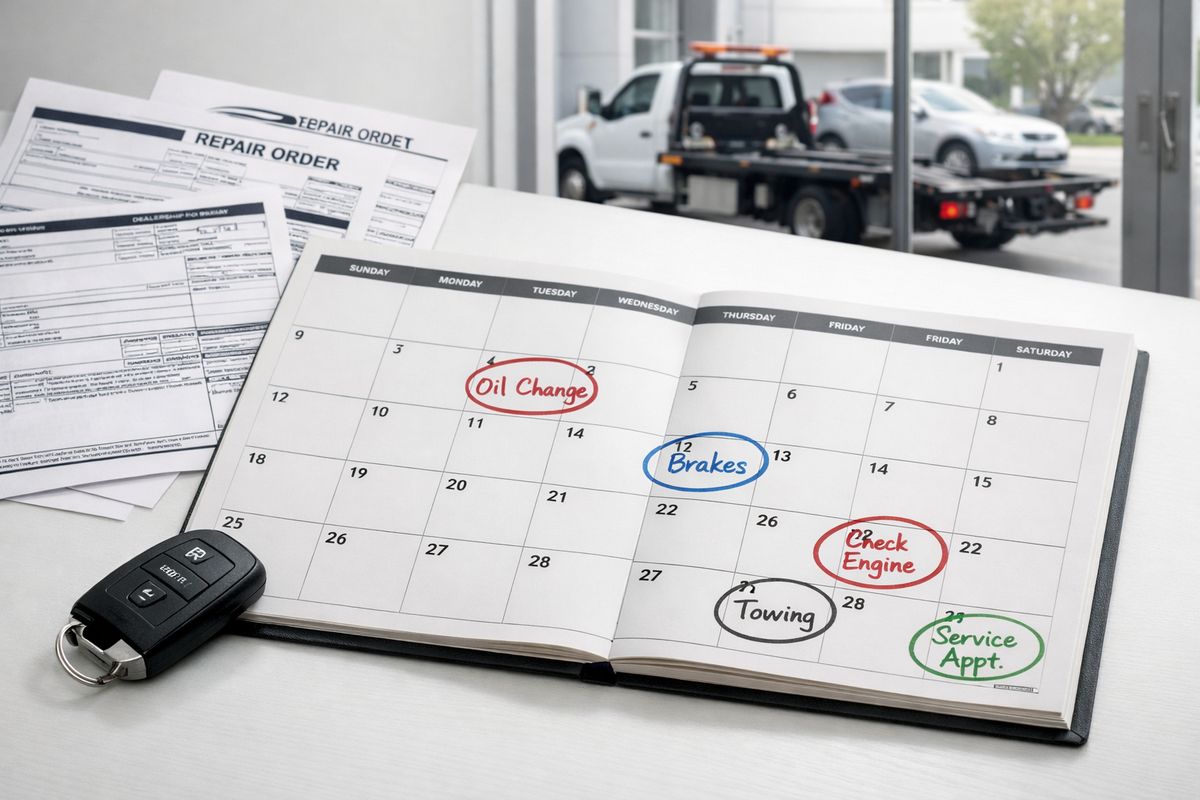
Not every service visit counts as a lemon law repair attempt. The repairs that matter are warranty-covered efforts to fix a defect that substantially impairs your vehicle’s use, value, or safety. Routine maintenance, cosmetic concerns, wear items, and unrelated minor complaints generally do not carry the same legal weight.
Documentation should connect the visit to a specific defect. Oil changes, tire rotations, and basic maintenance records may help show ownership history, but they do not usually establish a qualifying nonconformity. If your issue remained unresolved after warranty work, this discussion of what an unfixed warranty repair can mean is closely related.
Finding: Only documented repair efforts tied to a qualifying nonconformity generally count.
Repairs for the same defect vs. different defects
A recurring unresolved problem is usually stronger than a series of unrelated complaints. Three visits for a slipping transmission create a clearer narrative than one visit for rattling trim, one for an infotainment issue, and one for a sunroof leak.
That said, multiple symptoms can still trace back to one underlying failure. Hard shifting, delayed engagement, and slipping may all describe a single transmission defect. The legal value comes from showing consistency in the repair history, not forcing identical wording in every line item.
Finding: Repair history matters most when the records show a consistent unresolved problem.
Does an engine or transmission replacement count?
An engine or transmission replacement can be significant evidence because it usually indicates a substantial defect. If your 2024, 2025, or 2026 vehicle already needed one of those major components replaced, the repair file may show more than an isolated inconvenience.
But replacement alone does not automatically establish a lemon law claim. Post-replacement performance still matters. If the vehicle continues to stall, hesitate, vibrate, leak, or trigger warning lights, that ongoing history often becomes more important than the replacement event by itself.
Finding: Major component replacement is important evidence, but not automatic proof.
Do repairs during a lease count?
Yes. Florida lemon law protections can apply to leased vehicles if the vehicle otherwise meets the statutory requirements. The Florida Attorney General’s Lemon Law materials do not limit protection only to financed or fully purchased vehicles.
Your documentation duties stay the same. Lease agreement, repair orders, notices, and mileage records matter just as much as they do in a purchase case. For more on that issue, review how Florida treats qualifying lease situations.
Finding: Lease status does not remove lemon law protection if your vehicle qualifies.
The timing rules that matter as much as the repair count
Timing can defeat an otherwise strong claim. Florida’s lemon law generally applies to defects first reported during the Lemon Law Rights Period, which the Attorney General defines as the first 24 months after the date of original delivery of the vehicle to the consumer. That timeline appears in the state guidance and is built into Chapter 681.
This is where many vehicle owners focus too heavily on repair count. Five repairs may not help much if the qualifying defect was first reported too late. On the other hand, two or three repairs reported promptly within the rights period may preserve a stronger position.
Finding: Timing can defeat an otherwise strong repair history.
The 24-month lemon law rights period
The clock generally starts on the date of original delivery, not the model year. So a 2025 vehicle delivered in late 2024 may have a rights period that began earlier than expected. That distinction matters for 2024 to 2026 vehicles, especially when owners rely on the year on the window sticker instead of the in-service date.
Repairs outside that window may still matter for other warranty-based claims, but Florida lemon law has its own timing structure. If you need the baseline rules in one place, this guide to the basics of Florida car lemon law is useful.
Finding: The delivery date anchors the lemon law clock.
The final repair opportunity notice to the manufacturer
Florida usually requires written notice to the manufacturer and a final opportunity to repair before you move forward in the formal process. The Attorney General’s program explains that this notice step can be mandatory before arbitration, depending on the circumstances.
This is one of the most common procedural weak points. A vehicle can have multiple repairs and serious symptoms, but skipped notice can delay or complicate the claim. Counting visits is not enough if the statutory process was not followed.
Finding: Repair count alone is not enough if required notice was skipped.
Why waiting too long can hurt your case
Delay creates several problems at once. Records get harder to gather, warranties move closer to expiration, and the manufacturer may argue that the defect was not asserted promptly within the required period.
There is also a practical issue: dealership descriptions often become less precise over time. If your vehicle has already been in the shop several times, preserving the timeline early usually creates a cleaner record than reconstructing it months later.
Finding: Prompt action preserves both evidence and eligibility.
How to tell whether your repair history is strong enough
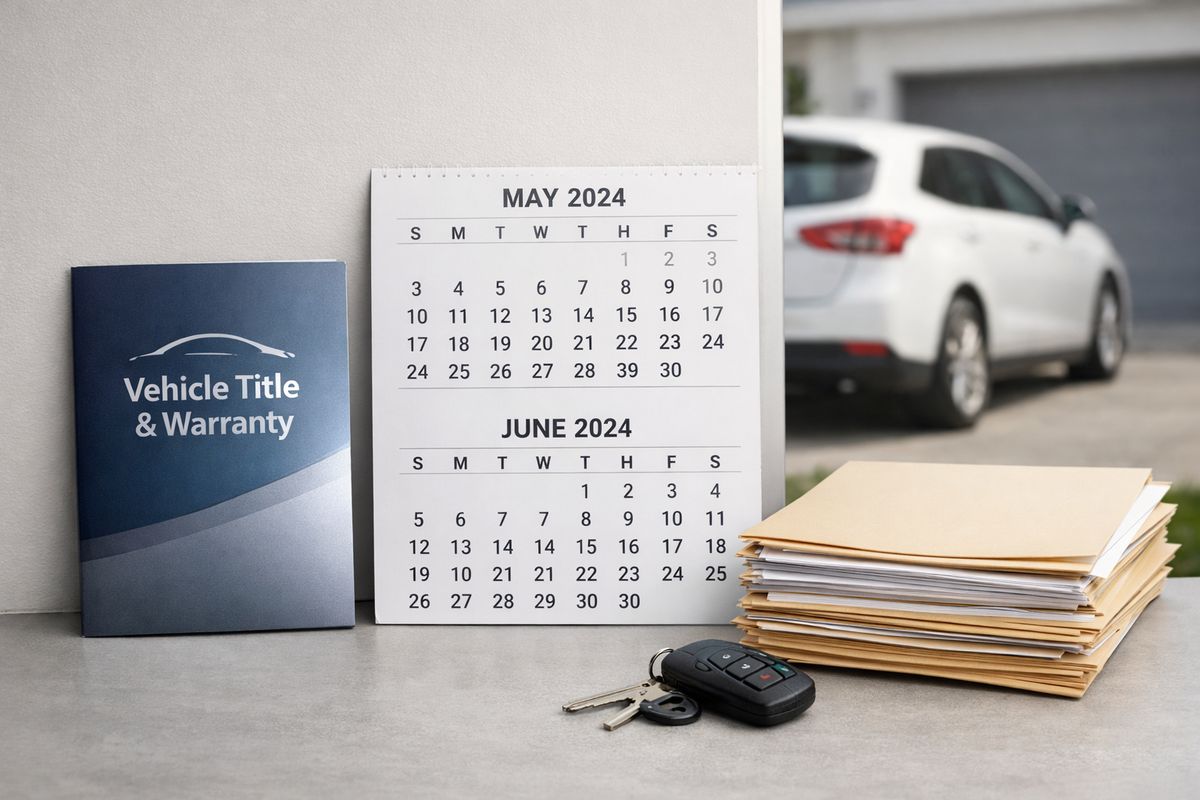
A strong lemon law file usually combines repeated repairs, measurable downtime, and clean documentation. Your repair history should show what went wrong, when you reported it, how long the vehicle stayed out of service, and whether the problem returned.
That review is less about a magic number and more about pattern recognition. If your file shows the same complaint across multiple visits, or a major drivetrain repair followed by continued problems, the history may be stronger than you think.
Finding: A strong case usually combines repeat repairs, clear records, and compliance with Florida’s notice rules.
Records that matter most
The core documents are repair orders, invoices, tow records, rental receipts, the warranty booklet, your purchase or lease agreement, and manufacturer correspondence. Repair orders show complaint history and attempted fixes. Tow and rental records help confirm loss of use. Warranty and contract documents help establish dates and coverage. Manufacturer correspondence can prove notice and response.
If your file is incomplete, gathering the dealership printout and every closed repair order is usually the fastest way to clarify the timeline.
Finding: Documentation converts a frustrating experience into verifiable evidence.
Warning signs that your case may be stronger
Several patterns tend to strengthen a file: the same complaint appears across multiple visits, a major component such as the engine or transmission was replaced, the dealer repeatedly marked the concern as “unable to duplicate,” or the vehicle spent weeks out of service. Those facts do not guarantee a buyback or replacement, but they usually matter.
Another warning sign is when the dealer keeps trying repairs but the core issue remains unchanged. In that situation, this explanation of what it means when the problem never really got fixed can help frame the issue.
Finding: Recurring defects plus documented downtime usually strengthen eligibility.
Situations that may not qualify
Some repeated service histories still do not qualify. Routine maintenance does not count. Problems caused by abuse, accidents, or unauthorized modifications may fall outside protection. Minor annoyances that do not substantially impair use, value, or safety usually fall short. Defects first reported outside the rights period can also fail under Florida’s statute.
That limitation matters because high repair count alone can mislead. Ten minor visits are not automatically stronger than two serious failed repairs for a major drivability defect.
Finding: Not every repeated repair problem meets Florida’s lemon law standard.
What happens after you meet the threshold
Meeting the threshold starts the formal process. It does not end it. Florida cases typically move into manufacturer notice, a final repair opportunity if required, and then possible state-certified arbitration through the Attorney General’s Lemon Law program.
Manufacturers may dispute whether the defect substantially impairs the vehicle, whether enough repair opportunities were provided, or whether your documentation proves the days out of service. The claim often turns on procedure and records as much as on the defect itself.
Finding: Meeting the repair threshold starts the formal process, it does not end it.
Possible outcomes: buyback, replacement, or other compensation
Florida lemon law remedies can include repurchase or replacement if your vehicle qualifies under the statute. In related warranty disputes outside strict lemon law relief, other compensation structures may sometimes come into play.
The right outcome depends on the legal path and the facts of your case. If you want a clearer comparison of remedy types, see how repurchase and replacement can differ in practice.
Finding: The remedy depends on the legal path and the facts of the case.
Arbitration and manufacturer response
Florida uses a structured dispute process, and manufacturer responses often focus on narrow points: the defect is normal, the problem was repaired, the issue does not substantially impair the vehicle, or the repair history does not show enough opportunities.
That means a case can become a records dispute even when the mechanical problem feels obvious from your perspective. Dates, complaint descriptions, and proof of notice often matter more than general descriptions of inconvenience.
Finding: Disputes often center on impairment, notice, and documentation rather than repair count alone.
Common questions about repair attempts and lemon law
Most confusion comes from treating lemon law as a fixed-number formula. Florida’s statute does not work that way. Repair count matters, but only within the larger framework of defect severity, downtime, timing, and notice.
Finding: Most consumer confusion comes from assuming a fixed number applies in every case.
Do you need three repair attempts for lemon law?
No universal three-attempt rule applies to every Florida case. Three repairs can be relevant, especially for the same unresolved defect, but Florida law does not reduce every claim to that number.
Finding: “Three repairs” is a common shorthand, not a complete Florida standard.
Can one very serious defect be enough?
One very serious defect can be highly relevant, especially if it creates severe safety or drivability problems. But the statutory process still matters, including timing and notice requirements.
Finding: Severity can outweigh count, but procedure still controls.
What if the dealer says “could not duplicate” the problem?
Keep those repair orders. Even if the dealer could not confirm the issue, the document still shows you presented the vehicle for repair on that date.
Finding: Unsuccessful diagnosis attempts can still support the repair timeline.
Can you qualify if you already traded the vehicle in?
Possibly, but trading in the vehicle can complicate proof and available remedies. The contract, payoff, trade documents, and repair history become especially important if that happened.
Finding: A prior trade-in does not always end the analysis, but it can limit options.
When to seek a case review
A case review becomes more useful once you can state your vehicle year, make, model, in-service date, number of repair attempts, and total days out of service with reasonable accuracy. That information usually tells more than a general statement that the car has been “in a lot.”
A practical screening question is simple: what is your vehicle’s year, make, and model, and how many times has it been repaired? If you can answer that with supporting records, your file is far easier to evaluate. For a fuller picture of the process, review what usually happens during a formal vehicle case evaluation.
Finding: The most useful starting point is a documented timeline of the defect, the repairs, and the downtime.
The key facts to gather before you ask about eligibility
Gather your vehicle year, make, model, purchase or lease date, current mileage, defect description, number of repair attempts, dates in the shop, and whether an engine or transmission was replaced. Exact dates matter more than estimates. Delivery date matters more than model year. Repair orders matter more than memory.
Once that file is organized, the Florida lemon law question usually becomes clearer: not “is there a magic number,” but “does this repair history meet the state’s legal standard?”
Finding: Eligibility analysis depends on precise dates and repair records, not estimates.
Frequently asked questions
How many repair attempts usually make a car a lemon in florida?
There is no single number that makes every vehicle a lemon in Florida. A qualifying case may involve repeated failed repairs for the same defect, or 30 or more cumulative days out of service for warranty repairs.
Do days waiting for parts count toward the 30-day rule?
They often can, if the vehicle was unavailable because of warranty-related repair work. The repair orders, check-in dates, and release dates usually determine how those days are counted.
Does a replaced transmission automatically qualify a lemon law claim?
No. A transmission replacement is strong evidence of a substantial problem, but it does not automatically guarantee relief. The full repair history, timing, and post-repair performance still matter.
Can a leased vehicle qualify under florida lemon law?
Yes. A leased vehicle can qualify if it meets the same statutory requirements that apply to purchased vehicles, including the rights period and repair-history standards.
What if the dealer keeps saying the issue is normal?
That position does not end the analysis. If the condition keeps returning or substantially affects use, value, or safety, your records may still support a claim. The repair paperwork becomes especially important in that situation.
Talk to jonathan about your vehicle
Jonathan D. Schwartz, the attorney behind Bad Vehicle, helps vehicle owners understand Lemon Law options. Your repair history can be reviewed, your questions can be answered, and the next steps for a potential claim can be evaluated.
Your case review is free, and you pay no attorney fees unless you win.
Schedule your free consultation with Jonathan: https://badvehicle.com/schedule-your-consultation/
Think your vehicle may qualify?
Have your repair history reviewed and find out what options may be available under Lemon Law or warranty law.