

A lemon in Florida is usually a vehicle with a serious warranty-covered defect that keeps coming back, cannot be fixed after a fair number of repair attempts, or spends too many days stuck at the dealer. If your 2024, 2025, or 2026 vehicle keeps failing in the same ways, this is where the line between a frustrating car and a legal lemon starts to matter.
What qualifies as a lemon in florida
In plain English, a lemon is not just a car that annoys you. It is a vehicle with a substantial problem, covered by the manufacturer’s warranty, that significantly affects how the vehicle drives, what it is worth, or how safe it is, and the problem is not fixed within the time and repair limits set by Florida law.
That distinction matters. A loose trim piece, a squeak in the dash, or a one-time sensor issue usually is not enough by itself. But an SUV that shudders every time it shifts, a truck that stalls at a red light in Orlando traffic, or a car that has spent three separate stretches at the dealer waiting on transmission approval is in a different category entirely.
Florida’s lemon law is aimed at unresolved defects in new or qualifying leased vehicles. The core idea is simple: if the manufacturer had a fair chance to fix a serious warranty problem and still did not fix it, you may have the right to a buyback, a replacement, or other relief.

The short answer: when your vehicle crosses the line
Most high-intent lemon cases in Florida come down to three things: the defect is substantial, the repair history is long enough, and the timing falls within the legal window.
If your engine fails, your transmission jerks or slips after multiple repairs, your brakes or steering act up, or your electrical system keeps triggering warning lights and no-start conditions, that can qualify if the problem remains unresolved after the manufacturer gets a fair chance to repair it. Annoyance alone is not enough. Serious repeated failure is.
The problem has to be substantial
Florida law focuses on defects that substantially impair your vehicle’s use, value, or safety. That sounds legalistic, but the everyday version is pretty clear. If your vehicle stalls in traffic, loses power while merging, slams between gears on I-4, overheats, or sits undriveable at the dealer for weeks, you are not dealing with a minor inconvenience.
“Use” means the vehicle does not reliably do the basic job you bought or leased it to do. “Value” means the defect drags down what the vehicle is worth, especially if you are already thinking about trading it in at a loss. “Safety” is the most obvious category, because braking, steering, stalling, fire-risk, and serious electrical issues put you and your passengers at risk.
The problem must happen within the legal window
Timing is a big deal under Florida lemon law. The key period is called the Lemon Law Rights Period, and it generally runs through the first 24 months after the date the vehicle was originally delivered to you.
That means the defect needs to be reported during that window. Waiting too long can turn a strong case into an argument about deadlines instead of the vehicle itself. If you want a broader overview of which Florida vehicle problems fit the state’s lemon rules, that timing issue comes up again and again.
The manufacturer or dealer must get a fair chance to fix it
Florida does not use a vague standard like “this has become ridiculous,” even though that is often exactly how it feels. The law looks for a reasonable number of repair attempts or too many days out of service.
That usually means your paperwork and the sequence of repairs matter just as much as the defect itself. A strong claim is often built on dates, mileage, repeated complaints, and repair orders that show the same problem never really went away.
Which vehicles are covered in florida
Not every bad vehicle falls under Florida’s state lemon law. Coverage depends on the type of vehicle, how it was sold or leased, and whether a manufacturer’s warranty applies.
New cars, trucks, and other qualifying vehicles
Florida’s lemon law generally applies to new motor vehicles sold in the state. That includes many new cars, pickup trucks, SUVs, vans, and demonstrator vehicles, which are dealer-driven vehicles still sold with new vehicle warranty coverage.
The practical question is not whether your vehicle feels new. It is whether it qualifies under the law as a new or demonstrator motor vehicle with the right kind of manufacturer warranty protection.
Leased vehicles can qualify too
Leasing does not automatically take away your lemon law rights. If your leased vehicle is otherwise covered and the defect meets the legal standards, you may still have a valid claim.
That matters because lessees are often told, directly or indirectly, that buyback rights only apply to buyers. That is not how this works. If you are driving a leased vehicle with recurring defects, it helps to understand how Florida handles lease-related lemon cases.
What usually is not covered
Many used vehicles are outside Florida’s new-car lemon law, especially if they were bought as-is or without qualifying manufacturer warranty coverage. Problems caused by abuse, neglect, collision damage, unauthorized modifications, or skipped maintenance usually are not covered either.
Still, “not covered by the state lemon law” does not always mean “no case.” Some used vehicles and late-model vehicles fall into warranty-based claims instead, which is why the used-car question in Florida comes up so often.
What counts as a defect under florida lemon law
A defect under Florida lemon law is usually called a nonconformity. In plain English, that means a problem or condition that does not conform to the manufacturer’s warranty and substantially impairs the vehicle’s use, value, or safety.
That sounds abstract until you attach it to real symptoms.
Defects that affect use, value, or safety
Use is about basic drivability. If your vehicle hesitates, fails to start, goes into limp mode, loses power, or cannot be trusted for normal commuting, family trips, or work travel, use is impaired.
Value is about money. A vehicle with a known recurring engine or transmission issue is harder to sell, harder to trade, and often worth less than you expected. Safety is the most serious piece. Stalling in an intersection, brake defects, steering problems, fuel leaks, and repeated electrical failures are not just inconvenient. They are dangerous.
Common examples that often lead to lemon claims
Some patterns show up constantly in Florida lemon claims. Engine replacement followed by continued misfiring or warning lights. Transmission replacement followed by harsh shifting, slipping, delayed engagement, or shuddering. Repeated no-start conditions. Battery drain that leaves the vehicle dead overnight. Overheating. Loss of power. Brake issues. Electrical system failures that knock out cameras, sensors, dash functions, or safety systems.
A replaced major component does not erase the problem if the problem is still there. In fact, if your powertrain was replaced and your vehicle still acts up, that can strengthen the argument that the defect was never truly resolved. That is exactly why so many owners search for answers after a transmission was replaced but the failure kept happening.
Problems that usually do not qualify on their own
Minor cosmetic flaws usually do not create a lemon claim by themselves. Paint imperfections, small rattles, trim gaps, a loose interior panel, or a one-time repair that actually fixed the issue are not what Florida lemon law is built for.
The key difference is impact. A defect has to matter in a real-world way. If it changes how your vehicle drives, what it is worth, or how safe it is, the claim gets more serious fast.
How many repair attempts are enough
This is one of the most common questions, and honestly, it should be. Most people know something is wrong long before they know whether the repair history is legally enough.
The “reasonable number of attempts” rule
Florida looks at whether the manufacturer had a reasonable number of attempts to fix the vehicle. That is the umbrella standard.
A defect that keeps coming back after repeated repair visits often meets that test, especially if the same serious problem is still present. If you want a closer breakdown of how repeated service visits are counted in these cases, the language on each repair order can matter more than most people realize.
Three attempts for the same serious defect
A common benchmark in Florida is three repair attempts for the same nonconformity, with the problem still existing afterward. If that happens, the manufacturer may need to be given one final opportunity to repair the vehicle.
This is why repeated visits for the same symptom matter so much. If your dealership keeps writing “performed update,” “could not duplicate,” or “operating as designed,” but your vehicle still jerks, stalls, or shuts down, the issue may still count as unresolved.
One attempt may matter for a defect likely to cause death or serious injury
Some safety defects are so serious that one repair attempt can be enough to trigger the next step, if the problem remains. Think of defects involving sudden loss of braking, steering failure, fire-risk, or dangerous stalling conditions.
The point is simple: the law does not require you to keep risking a life-threatening event over and over just to prove a pattern.
What actually counts as a repair attempt
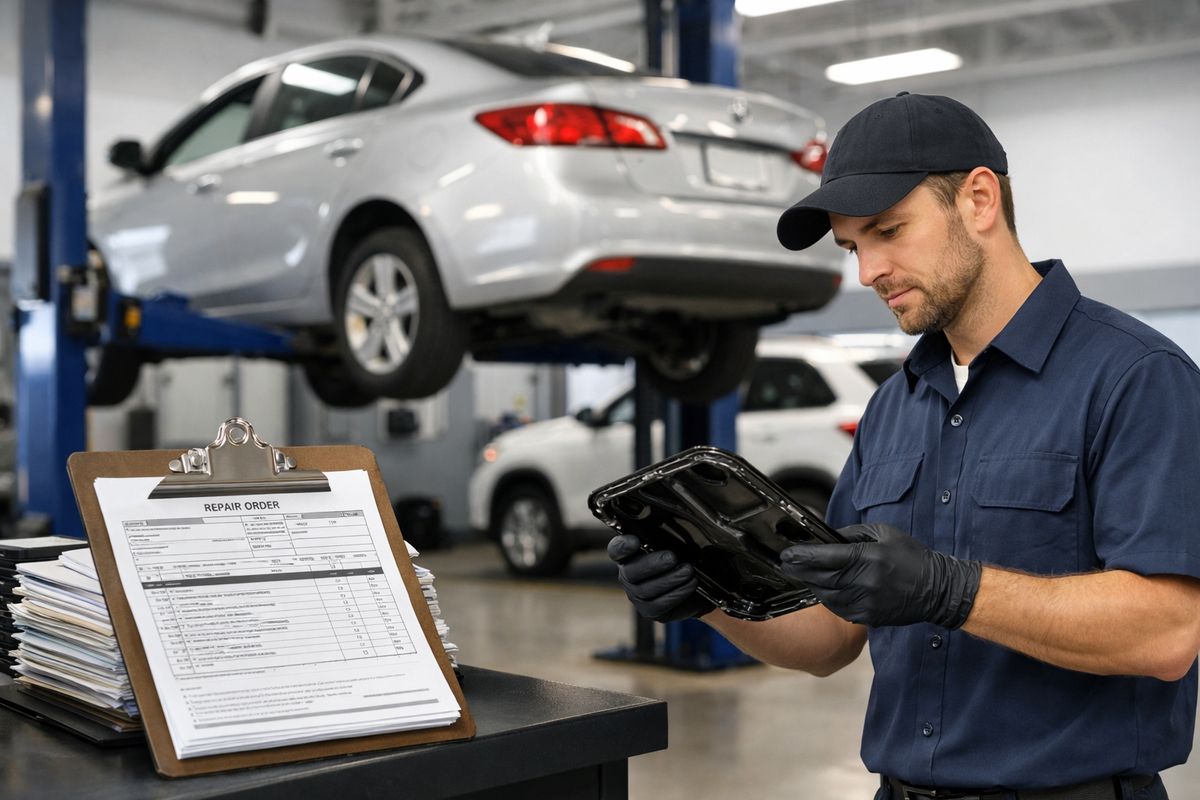
A repair attempt usually means you brought the vehicle in during the warranty period for diagnosis or repair of the covered defect, and the complaint was documented. That last part matters.
If your paperwork clearly says “vehicle hesitates and jerks shifting from 2nd to 3rd,” that is much stronger than “customer states concern.” Even a visit where the dealer says it could not duplicate the issue may still matter if your complaint was recorded. That is why owners dealing with a repair that never really solved the problem should look closely at every service record.
When too much shop time makes a vehicle a lemon
Sometimes the strongest lemon case is not about the number of repair visits. It is about how long your vehicle has been out of your hands.
The 15-day rule in florida
Florida law gives a lot of weight to cumulative downtime. If your vehicle is out of service for repair of one or more substantial defects for a total of 15 or more days during the Lemon Law Rights Period, that can trigger the next step in the process.
For many people, this is the moment the situation stops looking like bad luck and starts looking like a legal claim.
What “out of service” really means
Out of service generally means your vehicle is unavailable to you because it is at the dealer for covered warranty diagnosis or repairs. That can include time waiting for parts, waiting for technical approval, waiting for a manufacturer representative, or waiting for the actual labor to happen.
The catch is that many owners undercount this time. If your vehicle was sitting behind the service department fence for nine days before anyone touched it, those days may still matter. If your case involves a vehicle sitting at the dealership too long, the downtime timeline can be one of the strongest parts of the file.
How to count days without guessing
Do not estimate. Use your drop-off and pick-up dates from every repair order. Compare the paperwork across visits. Build one timeline from the first complaint forward and count the calendar days the vehicle was unavailable for covered repairs.
This is where people undersell their own case all the time. A vehicle that was “only in the shop three times” may actually have been out of service for 22 days total.

The florida lemon law rights period
Florida’s rights period is one of the easiest parts to misunderstand and one of the easiest ways to weaken a good claim.
The first 24 months after delivery
The Lemon Law Rights Period generally lasts 24 months from the date of original delivery of the vehicle to you. Not from the first repair. Not from the first major breakdown. From delivery.
That means your documentation should tie the defect back to that period. Even if the symptoms seemed small at first, what matters is that the issue was reported in time.
Why early reporting matters
The sooner you report recurring problems, the cleaner your record becomes. Delay creates avoidable arguments. A manufacturer may claim the issue was minor, isolated, or never clearly presented during the rights period.
If the check engine light came on three times and you kept resetting your schedule instead of bringing it in, the repair history stays thinner than it should be. Early reporting fixes that.
What if the problem started in time but repairs dragged on
This happens a lot. The defect starts during the rights period, repairs begin on time, but the back-and-forth continues beyond the 24-month mark.
That does not automatically kill the claim. What matters most is that the qualifying defect and repair history began during the proper period. The process itself can continue after that, especially when the paper trail shows the problem never truly ended.
The notice you have to send before a buyback or replacement
Here is the part many people do not know exists until it becomes a problem: before you can force a buyback or replacement under Florida’s lemon process, the manufacturer usually has to get written notice and one final chance to repair.
The manufacturer gets a final opportunity to repair
After enough repair attempts or enough downtime, you generally must notify the manufacturer directly, in writing, that the defect remains and that you are giving a final opportunity to fix it.
This is not just another service appointment. It is a formal step. If you skip it, you can end up with a decent fact pattern but a messy procedural problem.
Why certified or trackable notice matters
Proof matters here. If you cannot show when the notice was sent and when it was received, the process gets harder than it needs to be.
Certified mail, return receipt, or another trackable delivery method helps create a clean record. Think of it like sending a package you cannot afford to lose. You want confirmation, not guesswork.
What to include in the notice
Keep it factual and complete. Include your name, address, vehicle year, make, model, VIN, delivery date, the repair history, the defect or defects involved, and a clear request for a final repair opportunity under Florida lemon procedures.
You do not need dramatic language. You need useful details and proof that the manufacturer received them.
What happens if your vehicle qualifies
Once a vehicle qualifies, the question becomes practical: what do you actually get?
Buyback
A buyback, also called a repurchase, means the manufacturer takes the vehicle back and refunds eligible amounts. That often includes the purchase price or lease-related amounts, along with certain other charges, subject to a mileage or use offset.
That offset is one reason people should not wait forever while the odometer keeps climbing and the defect keeps repeating.
Replacement vehicle
A replacement vehicle may be offered instead of a buyback. Some people want that outcome, especially if the defect seems limited to one unit and they still like the model. Others prefer to exit the situation entirely.
The better choice depends on the facts, the available replacement, and your goals. If you are comparing the tradeoff between a repurchase and a swap, the numbers and long-term hassle both matter.
Other compensation and costs
Some cases involve other reimbursements or warranty-related recovery, depending on the legal path involved. Florida lemon law relief is not identical to every federal or warranty claim, so expectations should stay grounded in the type of claim you actually have.
Still, if your vehicle qualifies, the point is not symbolic. Real financial relief may be on the table.

Florida lemon law vs. used car and federal warranty claims
Not every defective vehicle case fits neatly inside Florida’s state lemon law. That does not mean you are stuck.
If your vehicle is used, the state lemon law may not apply
Florida’s state lemon law usually focuses on new or qualifying demonstrator vehicles. Many used vehicles fall outside it, especially if sold without active manufacturer warranty coverage.
That said, a used vehicle with remaining factory warranty or another qualifying warranty may still support a different legal claim.
The magnuson-moss warranty act in plain english
The Magnuson-Moss Warranty Act is a federal warranty law that can help when a warrantied product, including a vehicle, cannot be repaired after reasonable opportunities. It is not Florida’s lemon law, but it often comes up in the same conversations because the underlying fact pattern looks similar: repeated failed repairs, unresolved defects, and warranty coverage that did not lead to an actual fix.
For many owners, this becomes the backup path when the vehicle type, purchase status, or timing creates a Florida lemon law issue. If you are trying to sort out when a warranty claim still works even if the dealer keeps missing the fix, this is usually the law behind that discussion.
Why a warranty claim can still matter even without lemon law coverage
Engine replacement. Transmission failure. Weeks in the shop. Repeated “no problem found” write-ups. Those facts can matter in a breach-of-warranty case even if the strict Florida lemon timeline or vehicle classification creates a state-law problem.
So no, missing one legal path does not always mean there is no path at all.
Common situations that make people ask, “is my car a lemon?”
This is where the law starts to feel real, because most people land here after living through one of a few familiar scenarios.
Your engine or transmission was replaced, and the problem came back
A major component replacement does not cancel out a lemon claim. If anything, it can show how serious the defect was. If your engine was replaced and the vehicle still misfires, loses power, overheats, or lights up the dash, the issue may be stronger, not weaker.
The same is true for transmissions. If the dealer replaced it and you still get harsh shifts, delayed engagement, slipping, or shuddering, the repair may not have solved the actual defect. That is why cases involving an engine replacement followed by more of the same trouble often deserve a closer look.
You keep going back for the same problem
Recurring visits for the same issue are one of the biggest red flags in any lemon analysis. Stalling, shifting problems, repeated warning lights, electrical gremlins, brake concerns, steering complaints, no-start episodes, all of it matters more when the issue keeps returning.
At some point, “give the dealer one more shot” stops being a strategy and starts being lost time. If you have reached the stage of returning again and again for the same unresolved issue, that pattern may already be telling you a lot.
Your vehicle has been in the shop for weeks
Long downtime often feels less dramatic than a stall or brake defect, but legally it can be just as important. A vehicle can qualify through cumulative out-of-service days even if each visit sounds a little different on paper, as long as the underlying defects are substantial.
This is especially common with electrical and drivability cases. One visit says battery drain, the next says no-start, the next says module update, the next says communication fault. Different labels, same broken ownership experience.
You are thinking about trading it in and taking the loss
This is one of the most expensive ways a lemon problem ends. You get tired of fighting, the dealer offers less than you owe or far less than the vehicle should be worth, and you start thinking maybe it is easier to walk away.
Here’s the thing: trading too early can close off leverage or make the claim harder to sort out later. Before taking a financial hit just to escape the problem, it makes sense to gather the repair history and understand what rights may still be available.
What to gather if you think your vehicle qualifies
A good lemon or warranty claim is built on records, not memory. You do not need a perfect binder, but you do need the basics.
Repair orders and invoices
Save every repair order, invoice, and service receipt. Each visit should show the date in, date out, mileage, your complaint, and what the dealership said or did.
The wording matters. “Vehicle jerks when shifting from 2nd to 3rd after warming up” is far better than “customer reports issue.” If you want to understand which records usually help support this kind of claim, start with the full service history.
Warranty booklet, purchase or lease papers, and registration
These documents help establish key dates, warranty coverage, ownership or lease status, and the vehicle’s identifying details. Keep the warranty booklet, buyer’s order or lease contract, registration, and finance or lease statements in one place.
The less scrambling you do later, the easier it is to see whether the dates line up with Florida’s rights period.
Your timeline of symptoms and shop days
Create a simple running log. Note when the problem started, what the vehicle does, when it happens, whether warning lights appear, how it affects driving, and how many days the vehicle has been unavailable.
Nothing fancy is required. A clean timeline in your notes app can do the job.
Mistakes that can hurt a florida lemon claim
Some problems are mechanical. Others are paperwork problems that could have been avoided.
Waiting too long to report the issue
Delay is one of the biggest mistakes. If the defect starts during the first 24 months but you keep hoping it will go away, you can lose valuable repair history and create timing fights that never should have existed.
Report recurring issues early, even if the defect seems intermittent at first.
Leaving the dealer without clear paperwork
Do not walk out with vague records if the symptoms were specific. If your car hesitates, bucks, stalls, shudders, or flashes warnings, ask for that language to be reflected on the repair order.
Specific complaints are harder to dismiss later.
Assuming a “could not duplicate” visit does not count
Intermittent defects are still defects. A documented visit can matter even if the dealer says it could not duplicate the condition.
What matters is that you brought the vehicle in, described the problem, and the issue was logged. A pattern of “could not duplicate” can actually support your position when the defect keeps returning.
Modifying the vehicle before the claim is evaluated
Aftermarket tunes, suspension changes, electrical add-ons, or other modifications can give the manufacturer an opening to blame the problem on something other than the original defect.
Even when that argument is weak, it can slow things down. Keeping the vehicle as close to factory condition as possible makes the causation fight cleaner.
Questions people usually have about florida lemon qualification
These are the questions that tend to come up once you realize your problem may be more than a bad repair visit.
Does a used car qualify as a lemon in florida?
Usually not under Florida’s new-car lemon law, unless the vehicle fits a narrow qualifying category such as certain demonstrator or warranty-covered situations. But a used vehicle may still support a warranty-based claim if covered by a manufacturer or other qualifying warranty.
Does a lease qualify under florida lemon law?
Yes, a leased new vehicle can qualify if the other legal requirements are met. Leasing does not automatically remove lemon law protection.
Does the same problem have to happen every time?
The strongest cases usually involve the same unresolved defect returning again and again. But multiple related defects can matter too, especially when they point to the same underlying drivability, electrical, or safety problem.
What if the dealer says the problem is normal?
That does not end the issue. Dealers sometimes label harsh shifting, vibration, hesitation, or warning-light behavior as normal when the repair history says otherwise. Documentation, repeat complaints, and a full review of the records matter more than a quick verbal brush-off.
Can a vehicle qualify if it still runs?
Yes. A vehicle does not have to be completely dead to qualify. If the defect substantially impairs its use, value, or safety, a running vehicle can still be a lemon.
A simple next step if your vehicle sounds like a lemon
If this sounds familiar, do one practical thing before trading the vehicle in or giving the dealer one more try: gather your year, make, model, VIN, repair count, and total days in the shop. Put the records in date order. That alone can change a vague sense of frustration into a clear picture of whether your vehicle may qualify.
Talk to Jonathan About Your Vehicle
Jonathan D. Schwartz, the attorney behind Bad Vehicle, helps vehicle owners understand their Lemon Law options. He can review your repair history, answer your questions, and help you determine the next steps for your potential claim.
Your case review is free, and you pay no attorney fees unless you win.
Schedule your free consultation with Jonathan: https://badvehicle.com/schedule-your-consultation/
Frequently asked questions
How many repair attempts usually make a car a lemon in florida?
Florida often looks at whether the same substantial defect was repaired three times and still exists, or whether a serious safety defect remained after at least one repair attempt. The manufacturer also usually gets a final chance to repair after proper notice.
Does my car have to be in the shop 15 days in a row?
No. The 15 days can be cumulative during the Lemon Law Rights Period. Separate repair visits can be added together if the vehicle was out of service for substantial warranty-covered defects.
What if my check engine light keeps coming back but the car still drives?
That can still matter. If the repeated warning light is tied to a substantial defect affecting use, value, or safety, and the issue keeps returning despite repairs, the vehicle may still qualify.
Can a buyback happen if the manufacturer replaced the engine or transmission already?
Yes. A major replacement does not automatically solve the legal issue. If the underlying problem continues after the replacement, that can support a lemon or warranty claim.
Do “could not duplicate” repair orders help or hurt?
They can still help if your complaint was clearly documented. Repeated visits for the same issue, even without a confirmed dealer diagnosis every time, can show an ongoing unresolved defect.
What should you have ready for a case review?
Have your year, make, model, VIN, purchase or lease papers, warranty information, repair orders, and a rough count of how many days the vehicle was in the shop. That is usually enough to start evaluating whether your vehicle crosses the line.
Think your vehicle may qualify?
Have your repair history reviewed and find out what options may be available under Lemon Law or warranty law.