
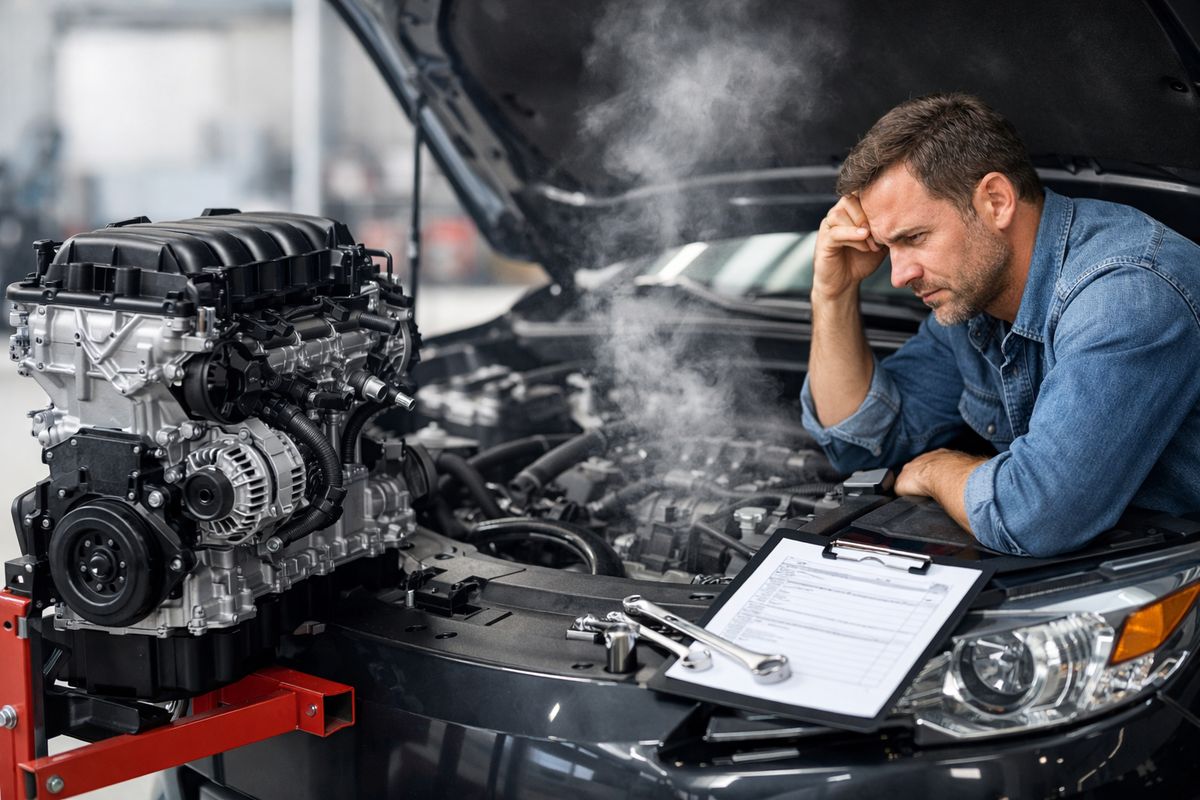
In Florida, an engine replaced still problems case does not end when the dealer installs a new motor. For owners and lessees of 2024 to 2026 vehicles, the real issue is what happened next: continued defects, more repair visits, and weeks without reliable transportation.
The florida owner whose engine was replaced but the case did not end
In one Florida warranty dispute involving a late-model vehicle, the owner reported major drivability problems, obtained an engine replacement through the dealer’s service department, and then returned with continuing complaints after the repair. According to the repair history, the engine swap was treated by the service network as the major fix. The claim did not end there.
The central result in this case was straightforward. A replacement engine did not erase the prior defect history, and it did not prevent further review for buyback, replacement, or compensation. Under the claim analysis applied in Florida defect cases, the relevant facts remained the same: the vehicle was still under warranty, substantial problems were still being reported, and the service records showed an ongoing pattern rather than a closed file.
That distinction matters because manufacturers often present a component replacement as proof that the issue was addressed. The records in this file showed something narrower. A large repair had been performed, but reliable use had not been restored.
Background: repeated repairs before and after the engine replacement
The claimant was a Florida owner or lessee of a 2024 to 2026 vehicle still covered by the manufacturer’s warranty. Before the engine replacement, the vehicle had already developed a pattern familiar in serious warranty cases: repeated dealership visits, recurring performance concerns, and stretches of lost use that interrupted daily transportation.
By the time the engine was replaced, the file already reflected more than frustration. It reflected chronology. Dates, mileage, complaints, diagnostics, and repair attempts formed the backbone of the dispute. That paper trail mattered more than any verbal assurance given at the service counter.
The original symptoms that sent the vehicle back to the dealer
The initial complaints included the kind of issues that usually trigger urgent dealer visits. Owners in similar files have reported stalling, repeated warning lights, knocking, overheating, hesitation, loss of power, hard shifting, and transmission-related drivability concerns. In this case, the dealership records showed substantial mechanical complaints serious enough to lead to a major repair recommendation.
Those early records carried unusual weight because they showed the defect history before the engine replacement ever happened. A case does not begin when the biggest repair occurs. It begins when the vehicle first enters the shop with a documented nonconformity.
That is why claim reviews focus so heavily on repair orders. The service department may describe the problem differently on each visit, but the records often reveal the same underlying failure pattern. Related issues such as rough operation, warning lights, or repeat no-start events can matter just as much as a single repeated phrase on the invoice. For a broader explanation of how repeated visits are evaluated, the analysis in repair-attempt rules under Florida claims lays out the framework.
What changed after the replacement, and what did not
After the engine replacement, one thing changed on paper: the dealer could point to a major completed repair. But the ownership problem remained. According to the continued service history, warning lights returned, drivability concerns persisted, and confidence in the vehicle did not come back with the new engine.
In some cases, post-replacement complaints take the exact same form as the original issue. In others, the symptom profile shifts. A vehicle that previously stalled may later misfire, surge, overheat, leak fluids, or produce new vibration and noise after installation. The legal and practical point is the same. If the vehicle still fails to perform as warranted, the engine swap did not solve the ownership problem.
The challenge: the manufacturer treated the replacement as the solution
The dispute turned on a position commonly seen after large warranty repairs. The manufacturer and dealer treated the completed engine replacement as the answer, while the owner continued to report substantial unresolved defects.
That created the core issue in the file: whether a consumer still had a valid claim after receiving one of the largest repairs a dealership can perform. The answer, based on the documented facts, was yes. The claim analysis did not stop at the invoice line showing “engine replaced.”
Why an engine replacement does not automatically close a defect claim
A defect claim is not decided by the price or size of a repair. It is decided by whether the vehicle was brought into conformity with the warranty and whether the history shows repeated unsuccessful attempts or significant time out of service.
That is the gap many owners and lessees run into. A manufacturer may view a major component swap as decisive because it demonstrates effort. A claim review looks at outcome. If the defect continues, returns, or is replaced by related drivability problems, the major repair can become part of the proof rather than the end of the dispute. Related guidance on how engine swaps fit into a larger defect file reaches the same conclusion.
The difference between a large repair and a successful repair is simple. One describes what the dealer did. The other describes whether the vehicle was actually fixed.
The financial pressure on the owner or lessee
The pressure on the claimant did not stop while the vehicle was in the shop. Monthly loan or lease payments continued. Insurance bills continued. Work obligations continued. In many cases, so did towing costs, rental expenses, rideshare bills, and missed time.
That pressure often explains why a claim escalates after an engine replacement fails to restore normal use. By that point, the owner or lessee is no longer dealing with a routine service inconvenience. The person is carrying the cost of a late-model vehicle while losing the benefit of owning or leasing it.
Another pressure point appears when the dealer or surrounding market pushes the idea of trading the vehicle. That option often converts a warranty problem into a financial loss for the consumer. The risk is explained in detail in this discussion of why unloading a defective vehicle often means taking a hit.
The approach: building the case around records, chronology, and warranty status
Once the post-replacement problems continued, the matter was no longer treated as a debate over mechanics alone. The case was organized as a documented warranty dispute built around records the manufacturer’s own network had created.
That approach matters because opinions about what “should” have fixed the vehicle are less persuasive than service documentation showing what actually happened over time. A good case file is chronological before it is argumentative.
The repair timeline that mattered most
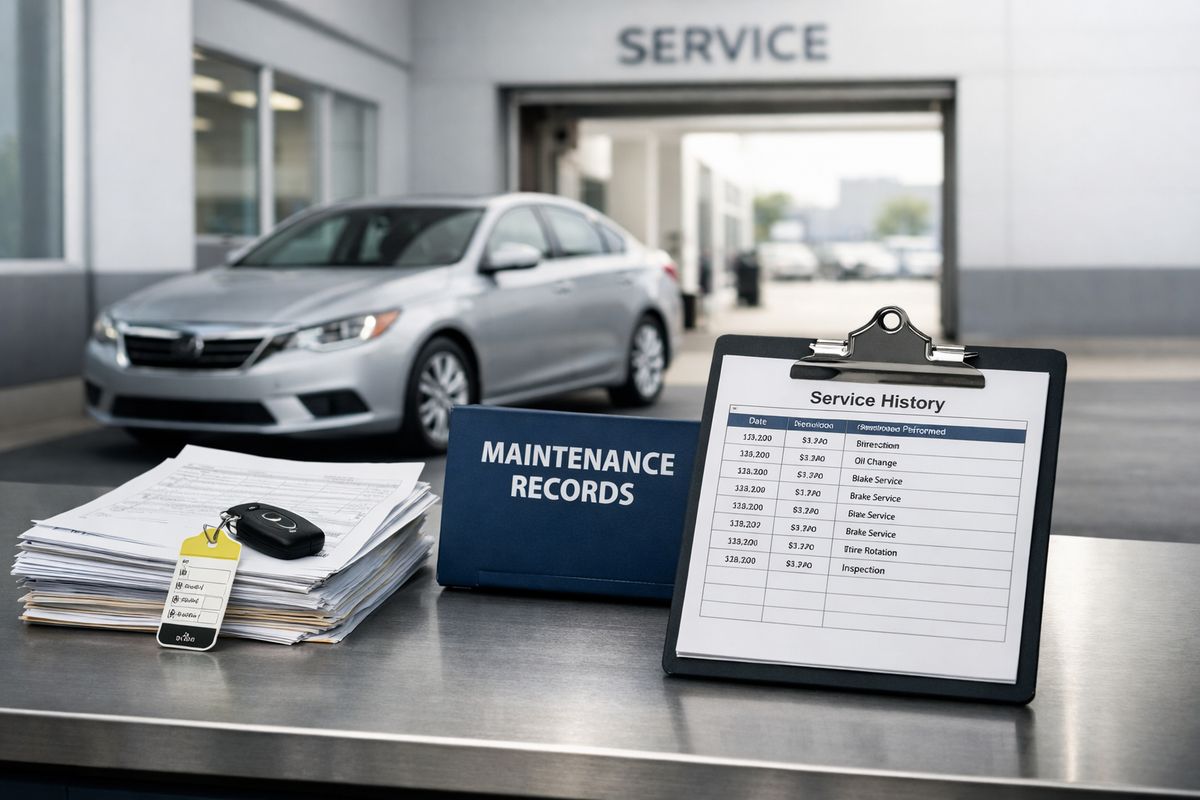
The most important records included the purchase or lease agreement, warranty information, repair orders, mileage at each visit, dates when the vehicle entered service, and dates when it was returned. Where the engine had been replaced, the file also needed the repair order identifying the component replacement and any associated diagnostics.
Chronology did the heavy lifting. If the vehicle went in for warning lights in February, received repeated repairs in March and April, got an engine replacement in May, and came back in June and July with similar drivability complaints, the timeline told the story clearly. That kind of record sequence often carries more weight than a later statement that the issue had been resolved.
The qualifying facts beyond the engine itself
The review did not depend only on the replaced engine. It looked at the full pattern of unresolved defects. Repeated repair attempts, continuing warning lights, transmission failures, safety-related drivability issues, and long periods in the shop all remained relevant.
That broader view is often what keeps these claims viable. An owner may begin by focusing on the engine, but the case may actually be strengthened by the total service history. When another major system is involved, similar reasoning applies to continued transmission trouble after a major swap.
The florida-specific screening questions
In Florida, the screening questions that drive early review are practical and direct: the vehicle’s year, make, and model; whether it was purchased or leased; the warranty status; how many times it was repaired; and how long it spent out of service.
Those details are not formality. They determine whether the file aligns with the state-specific standards discussed in Florida qualifying vehicle defect claims. A late-model vehicle still under warranty, paired with repeated repair history and substantial downtime, presents a very different review profile than an older vehicle outside warranty coverage.
Implementation: how the claim moved from dealership frustration to formal review
After the owner stopped relying on another routine service visit as the answer, the file moved into formal evaluation. The process was built around collecting records, identifying the recurring defect pattern, and measuring the actual loss of use.
This step changed the frame of the dispute. At the dealership, the issue had been treated visit by visit. In formal review, it was assessed as one continuous problem history.
Gathering service records from every visit
The first task was collecting the paperwork from every dealer visit, not only the engine replacement appointment. That included complaint lines, diagnostic notes, repair codes, recommendations, advisor comments, and the dates the vehicle remained at the dealership.
Missing records often create delays because they leave holes in the timeline. Complete paperwork does the opposite. It shows frequency, duration, and continuity. In many files, the most useful documents are not dramatic. They are routine repair orders that quietly prove the vehicle kept returning for the same unresolved trouble. A related breakdown of which papers tend to matter most in these disputes underscores that point.
Identifying whether the same problem kept returning
The next step was matching complaints across different service visits, even when the wording changed. One repair order may say “check engine light,” another may say “loss of power,” and a third may say “vehicle hesitates after engine replacement.” Read separately, those entries look different. Read together, they often show one continuing drivability issue.
That matching process is especially important after a major repair. Dealers may classify later complaints as new concerns, but the chronology may show the same nonconformity never truly left. A post-replacement file often rises or falls on that connection.
Tracking days out of service and loss of use
The strongest fact in some cases is not the number of repair attempts at all. It is the amount of time the vehicle spent unavailable for ordinary use.
For that reason, the review tracked each period when the car remained at the dealership, whether awaiting diagnosis, approval, parts, installation, testing, or follow-up work. Parts delays after engine replacement can extend downtime dramatically. When a late-model vehicle remains in the shop for weeks, the loss of use becomes part of the central claim, not a side note. The standards discussed in how long is too long for a vehicle to stay in service custody often become highly relevant at that stage.
Obstacles during the process and how the case adjusted
The path after a failed major repair is rarely clean. This file involved the usual complications: dealer assurances that the replacement solved everything, symptom changes after installation, and increasing reliance on downtime as a primary fact.
Each obstacle required the claim to be framed more carefully, not abandoned.
When the dealer said the replacement fixed everything
One recurring point of resistance came from the service position that a new engine should have resolved the issue. That argument is common because it sounds final. The records often say otherwise.
If the owner returned with further complaints, the assertion of a completed fix lost force. Continued repair visits, additional diagnostic work, and renewed drivability reports directly undercut the idea that the problem had been fully cured. Similar disputes arise whenever the service department insists the condition is normal, even though the vehicle keeps going back.
When the symptoms changed after the repair
Another obstacle appeared when the symptoms looked different after the engine replacement. Instead of the original pattern, the owner reported new noises, leaks, misfires, overheating, reduced power, or fresh warning lights.
That shift does not destroy the file. In many cases, it strengthens the practical argument that the vehicle still has not been restored to reliable condition. A consumer does not lose a claim because the defect evolved from one serious drivability problem into another. The issue remains unresolved function under warranty.
When downtime became the strongest part of the claim
In some files, proving a single repeated defect becomes less important than proving prolonged loss of use. That happened here as the time in the shop accumulated around diagnostics, parts availability, and post-replacement follow-up.
Once that occurs, the structure of the claim changes. The engine replacement becomes one chapter in a larger record showing the owner or lessee paid for transportation that was repeatedly unavailable. In Florida reviews, that fact pattern often carries substantial weight, especially where the shop time extends over multiple visits rather than one isolated stay.
Results: what outcomes remained available after the failed engine fix
The case was evaluated around three remedy categories supported by the documented facts: buyback, replacement, or compensation. The engine replacement did not remove those outcomes from consideration.
Which category fit best depended on the service history, warranty status, and the claimant’s documented loss.
Buyback when the defect history remained unresolved
A buyback remained a live remedy because the defect history had not been cured by the engine replacement. Where the file shows persistent nonconformity, repeated unsuccessful repairs, or substantial downtime, repurchase analysis remains relevant even after a major component has been replaced.
That result surprises many owners because they assume the manufacturer gets one complete reset after installing a new engine. The records do not support that theory. Earlier repair attempts still count, and later failures still matter.
Replacement vehicle when repair confidence was gone
A replacement vehicle also remained available where the documented facts supported continuing warranty relief. Some claimants prioritize a functioning comparable vehicle over additional payments tied to a vehicle they no longer trust.
That preference becomes especially understandable when the file includes a major repair followed by continued defects. At that point, confidence in future reliability is often gone even before the legal review is complete.
Compensation when the owner kept the vehicle
Compensation remained another possible path where the owner retained the vehicle but the records still showed substantial warranty-related loss. In those situations, the file is not built around exiting the vehicle entirely. It is built around documented inconvenience, diminished use, and a repair history that never should have occurred in a nearly new vehicle.
That option is often discussed alongside financial recovery when the vehicle stays with the owner, especially where the defect history supports relief but the claimant decides not to pursue a full repurchase outcome.

What this case study shows about “engine replaced, still problems” claims
The central lesson from this case is plain. A replaced engine is a repair event, not a legal reset button.
Manufacturers and dealers often treat major repairs as if they close the file by definition. The documented history in cases like this shows that the question is not what part was replaced. The question is whether the vehicle was actually brought into conformity with the warranty.
Major repairs do not erase earlier repair attempts
The first defect visit remains part of the case history even after the most expensive repair on the vehicle is performed. Earlier visits establish the beginning of the problem, the attempts already made, and the amount of time the consumer spent seeking repair.
That sequence matters because a major repair near the end of the timeline does not wipe away what came before it. It simply becomes another repair attempt in the overall record.
A recurring problem matters even if the parts are new
New parts do not guarantee a resolved claim. If the vehicle continues to stall, lose power, show warning lights, overheat, hesitate, or return to the shop for related drivability concerns, the defect remains the relevant fact.
In other words, the case turns on function and reliability, not on the novelty of the installed component. A vehicle can still qualify for relief even after substantial mechanical work if the underlying ownership problem remains.
Long shop time can be as important as the repair count
Many strong files are built as much on downtime as on the number of visits. A late-model vehicle that spends weeks at the dealership while major repairs are attempted is not providing normal transportation, regardless of how many parts orders or diagnostic updates appear in the background.
That is why loss of use often becomes the cleanest fact in these disputes. It is measurable, documentable, and difficult to explain away when the service records are complete.
Lessons florida owners and lessees can apply to similar cases
This case shows that formal defect claims are usually won or lost on records, timing, and consistency. The emotional frustration is real, but the paperwork is what carries the file.
It also shows when a case has moved beyond ordinary service trouble and into something more serious.
The records that carry the most weight
The documents that matter most are repair orders, warranty materials, purchase or lease paperwork, mileage entries, and records showing exactly how long the vehicle remained in the shop. These materials tend to outweigh oral statements from advisors that the issue was repaired, normal, or no longer present.
A complete file also helps connect the period before the engine replacement to the period after it. Without that bridge, the manufacturer is more likely to present the replacement as a clean break rather than part of the same continuing problem.
The warning signs that the problem is no longer “just one repair”
The pattern usually becomes clear when the vehicle returns to the dealer multiple times, suffers another breakdown after a major repair, spends weeks unavailable, or leaves the owner facing pressure to sell or trade it at a loss.
At that stage, the issue no longer resembles routine maintenance or an isolated warranty visit. It resembles the kind of documented unresolved defect history seen in formal claim reviews. Related discussion of what changes after repeated unsuccessful visits makes the same point from another angle.
The core case-review details that determine next steps
The most important intake facts remain basic: the vehicle’s year, make, and model; whether it was purchased or leased; how many repair attempts occurred; what major components were replaced; how many days the vehicle was out of service; and whether the warranty remained in effect.
Those details determine whether buyback, replacement, or compensation remains available. They also determine how the case should be framed from the beginning. Once those facts are organized, the difference between a frustrating repair history and a viable formal claim becomes much easier to see.
Frequently asked questions
If an engine was replaced, does that end the claim?
No. A replaced engine does not end the claim if the vehicle continues to suffer substantial defects, returns for more repairs, or spends extended time out of service. The review focuses on unresolved nonconformity, repair history, and downtime.
Do repair attempts from before the engine replacement still count?
Yes. Earlier repair visits remain part of the defect history. The case timeline begins with the first documented complaint, not the date the dealer installed the replacement engine.
What if the problem changed after the engine replacement?
A changed symptom does not automatically defeat the claim. If the vehicle still has serious drivability, safety, or reliability problems after the repair, the file can still support buyback, replacement, or compensation.
Does downtime matter if the dealer keeps saying it is waiting on parts?
Yes. Time out of service is often one of the strongest facts in the file. Delays for diagnostics, approvals, or parts still reflect lost use of the vehicle while warranty repairs remain unresolved.
Can a lessee pursue relief for a vehicle with a replaced engine and continuing defects?
Yes. Lessees, like owners, can have valid warranty-based defect claims when a late-model vehicle remains under warranty and continues to present substantial problems after repeated repair efforts.
Is trading in the vehicle the safest way out?
Not necessarily. Trading in a defective vehicle often shifts the financial loss to the consumer. Many owners seek formal review first because a documented claim may preserve buyback, replacement, or compensation options that a trade-in does not.
Talk to jonathan about your vehicle
Jonathan D. Schwartz, the attorney behind Bad Vehicle, helps vehicle owners understand their Lemon Law options. He can review repair history, answer questions, and determine the next steps for a potential claim.
The case review is free, and there are no attorney fees unless there is a recovery.
Schedule a free consultation with Jonathan: https://badvehicle.com/schedule-your-consultation/
Think your vehicle may qualify?
Have your repair history reviewed and find out what options may be available under Lemon Law or warranty law.