

If the dealer never fixed problem, you’re not dealing with a minor service headache anymore. You’re dealing with a recurring defect, a weak paper trail, and a clock that keeps running while your vehicle keeps failing, and that matters a lot if your 2024, 2025, or 2026 vehicle is still under warranty in Florida.
What it means when the dealer never fixed the problem
Hit the definition fast: this usually means your vehicle keeps having the same issue after one or more repair visits, the dealer writes “could not duplicate” or “no problem found,” or your car sits for days or weeks without a real fix.
That matters because the dealership is only the repair arm. The manufacturer is the one backing the warranty. So when the dealer can’t solve the defect, the issue can shift from “bad service” to a warranty or lemon law problem.
In plain English, your vehicle doesn’t need to be completely dead to qualify as a serious unresolved problem. A transmission that still slips after software updates, an engine that stalls after a replacement, electrical faults that keep tripping warning lights, or a vehicle that spends a month waiting on parts can all point to the same basic problem: the repair process is not restoring the vehicle to normal use, value, or safety.
For a closer look at how Florida claims are usually analyzed, start with what can make a vehicle qualify under Florida law.
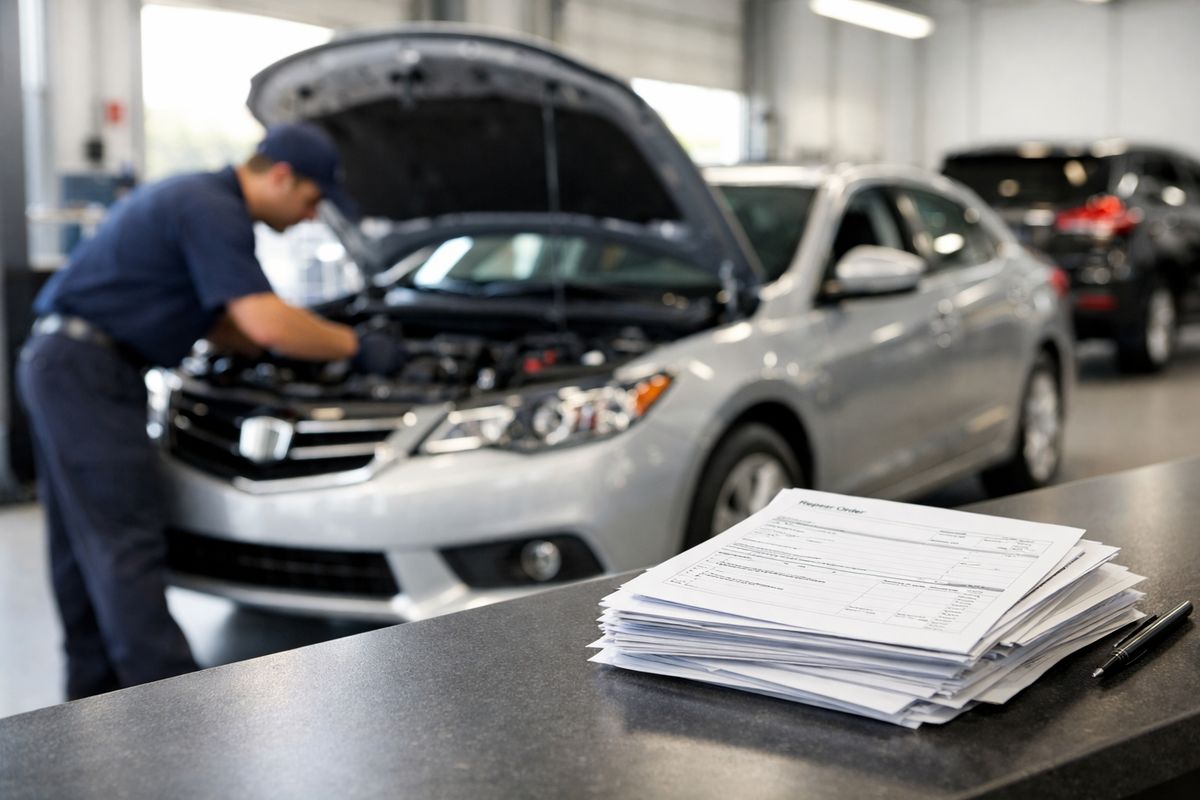
Hit 3 warning signs that your repair problem is bigger than “bad service”
Set the goal here: spot the line between frustrating dealer visits and a real claim. Three signs usually show up first.
The same problem keeps coming back after multiple repair attempts
Start with repetition. If you’ve gone back for the same stalling, shuddering, slipping, warning light, rough shifting, battery drain, infotainment crash, or electrical glitch more than once, that’s not a clean repair. That’s a recurring defect.
Dealers often swap parts, clear codes, update software, and send you back out with “monitor and return if it happens again.” Sometimes that works. A lot of times it doesn’t. When the exact symptom returns, the record starts to show the defect was never actually fixed in the first place.
That repeat pattern is one of the strongest facts in these cases. If you’re stuck in that loop, read more about what repeated repair visits can mean for your claim.
Your vehicle has been in the shop for weeks
Track the total shop time. A vehicle that sits for long stretches can be just as serious as one with multiple failed repairs, especially when parts are backordered or the dealer keeps “diagnosing” without finishing the job.
This hits hard in real life. You’re making payments, insurance payments, lease payments, maybe towing charges, and still don’t have reliable transportation. Even worse, a long delay can hide the fact that no actual repair progress is happening.
Days out of service often become a big part of the claim analysis. If your car has been tied up far too long, it helps to understand how excessive downtime can affect a Florida case.
The dealer says “no problem found” or “operating as designed”
Don’t let those phrases end the conversation. “No problem found,” “unable to duplicate,” and “operating as designed” show up all the time in unresolved warranty cases.
Here’s the catch: that language doesn’t erase your symptom. If the transmission still jerks, the engine still hesitates, or the vehicle still shuts off, the issue still exists even if the dealership didn’t reproduce it during a short road test. The same goes for “normal” explanations when your experience says otherwise.
That kind of writeup can be frustrating, but it can also become part of the story. It shows you reported the problem and the dealer failed to correct it. If that sounds familiar, dig into what it really means when a dealer calls the problem normal.
Start the paper trail in 15 minutes
Log 15 minutes today. Pull together your purchase or lease contract, warranty booklet, every repair invoice, text messages with the service department, emails, towing bills, and notes about what happened, when it happened, and the mileage each time.
This is not busywork. Documentation is the scoreboard. Without it, your case turns into your word against a repair file that may be vague, incomplete, or flat-out wrong.
Write down the defect like a running timeline. Note when the symptom started, how often it happens, whether it affects safety, and how long the vehicle stayed out of service each visit. Keep it simple and factual.
Log every repair order and make sure it tells the truth
Read every repair order before you leave. If you told the advisor “the transmission slips and jerks between 35 and 45 mph after driving 20 minutes,” the repair order should say that, not “check transmission” or “customer states noise.”
Vague writeups hurt. Specific writeups help. The paperwork should reflect what the vehicle is actually doing, when it happens, and how it affects driving. If the symptom involves stalling in traffic, loss of power, hard shifting, failure to start, or repeated warning lights, that should be in the file.
Good records can make the difference between a weak complaint and a clear defect history. If you want a sharper checklist, review the records that usually support this kind of claim.
Track 2 numbers: repair attempts and days out of service
Track two numbers from today forward: how many repair attempts relate to the defect, and how many total days the vehicle has been in the shop.
That count creates a clean timeline. It also gives you something much stronger than “it’s been a lot.” You’ll know whether you’re looking at two visits, four visits, or seven. You’ll know whether the car was down for nine days or thirty-two.
Those numbers matter because unresolved warranty and lemon law cases often turn on patterns, not just single bad moments.
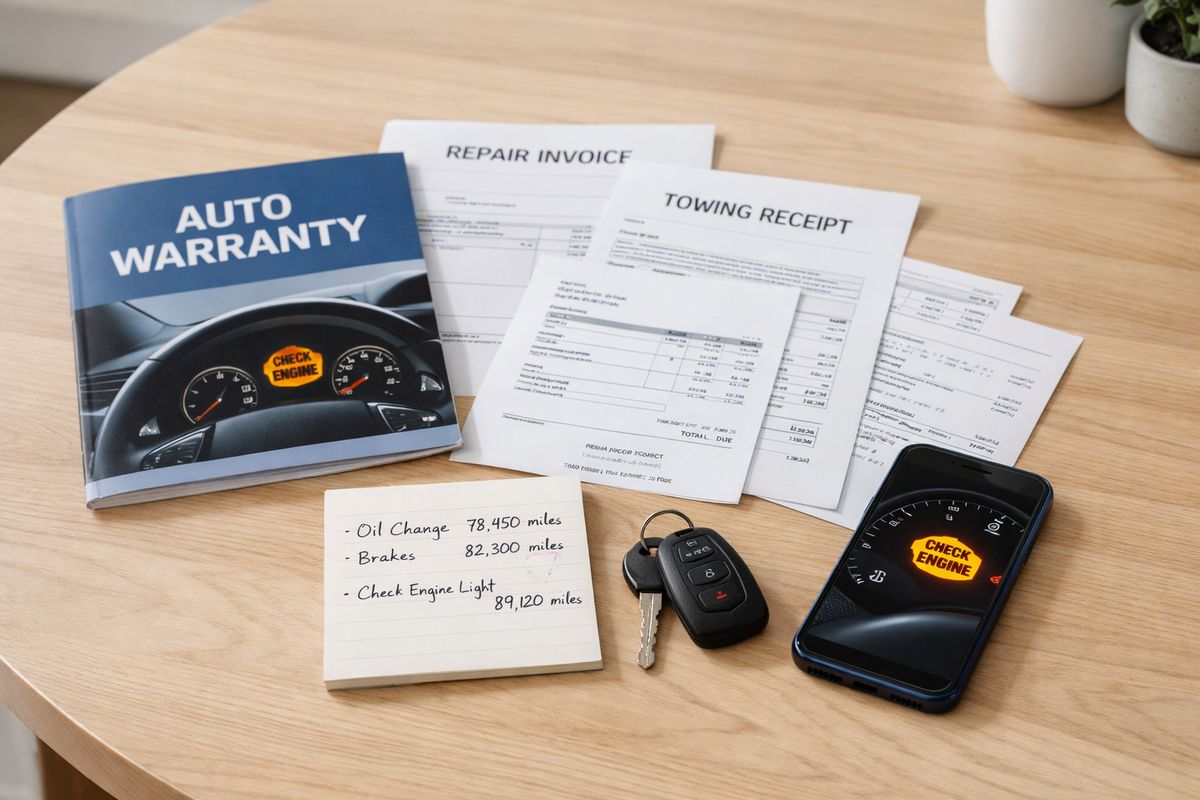
Run the 5-Step playbook before the next dealer visit
Hit these five steps before the next drop-off. This is your game plan.
1. Ship a written complaint before you drop off the vehicle
Send a short email or text before the appointment. Describe the symptom, when it happens, prior repair history, and any safety issue. Keep it tight. “Vehicle shudders at highway speed after warm-up. Reported twice before. Transmission warning returned. Unsafe in traffic.”
That written record matters because verbal conversations disappear.
2. Repeat the exact symptom, not a guess about the cause
Describe what happens. Don’t play technician. “Engine loses power when accelerating from a stop” is better than “fuel injector issue.” “Transmission jerks after 20 minutes of driving” is better than “bad torque converter.”
Symptom-first reporting locks the complaint to real drivability behavior. That makes it harder for the issue to get watered down on paper.
3. Ask for a copy of every repair order before you leave
Don’t drive off without the paperwork. The repair order should show your complaint, the mileage, diagnosis, repair performed, and the in and out dates.
If something is missing or wrong, fix it while you’re still there. Waiting until later usually means the bad version stays in the file.
4. Hit escalation fast: service manager, manufacturer, case number
Move up the ladder fast when the problem remains. Ask for the service manager. Then call the manufacturer’s customer care line and open a case. Save the case number, the date, and the name of the person you spoke with.
That step matters because the dealership is not the final decision-maker on a buyback, replacement, or settlement. The manufacturer is. If you’re wondering how long to keep returning to the same place, it helps to read when repeated trips back to the dealer stop making sense.
5. Keep the vehicle maintained and follow warranty rules
Stay current on required maintenance. Keep receipts. Follow the manual. Don’t hand the manufacturer an easy excuse.
Even when the real problem has nothing to do with oil changes or scheduled service, missed maintenance can still show up later as a defense. Don’t give away that angle.
What florida lemon law and warranty rights usually cover
Set the goal: understand the legal framework without getting buried in legal jargon. The short version is simple. The dealer repairs. The manufacturer answers for warranty obligations.
New vehicle lemon law basics for florida drivers
Florida’s lemon law generally focuses on new vehicles with substantial defects that the dealer cannot fix within a reasonable number of repair attempts, or vehicles that spend too many days out of service for warranty repairs.
The key themes are defect severity, repeat repair history, and downtime. Safety issues often get attention fast, but non-safety defects can still matter if they seriously affect use, value, or reliability. For a stronger foundation, read the basics of Florida lemon law for vehicles.
Warranty claims can still matter even if the dealer keeps stalling
Not every valid claim fits neatly into the simplest lemon law fact pattern. Sometimes the dealer keeps trying repairs, changing parts, or pushing delays while the defect keeps coming back. That still matters.
A recurring nonconformity under warranty can support a claim even when the fight is over how many attempts were “enough.” If your repairs keep failing, this is where unfinished warranty work can point to a bigger problem becomes relevant.
Leased vehicles, used vehicles, and end-of-warranty problems
Leased vehicles are often part of these claims, which surprises a lot of people. A lease doesn’t automatically take you out of the picture.
Used and certified vehicles can be more fact-specific, especially depending on warranties that still apply. End-of-warranty timing can matter too. If the defect was reported while coverage was active, that history may still carry real weight even if the problem drags on after the warranty period closes.
Common scenarios that often lead to buyback, replacement, or compensation
Start with reality, not theory. Certain patterns show up over and over in strong vehicle defect cases.
Engine or transmission replacement Didn’t solve it
A major component replacement is not an automatic finish line. If your engine was replaced and the stalling, knocking, warning lights, misfires, or loss of power continued, the core problem may still be unresolved. Same idea with transmissions. A replacement unit that still slips, shudders, jerks, or delays engagement is not a success story.
That history can actually strengthen the record. You had a major failure, a major repair, and still no lasting fix. If that’s your situation, take a look at why a major engine repair may still leave you with a valid claim.
The dealer keeps trying repairs but never finishes the job
This is the endless loop case. Software update. Return if it happens again. Part replacement. Return if it happens again. Backordered module. Return next month. Temporary improvement. Same symptom again.
That cycle feels like motion, but it often isn’t progress. Each failed attempt can build the paper trail showing the defect remained despite repeated chances to fix it.
You’re Thinking about trading it in at a loss
Pause before you dump the vehicle just to escape the headache. Trading in a defective vehicle too early can lock in a financial hit and reduce your leverage.
If the car has a recurring defect, weak value, and ugly repair history, the trade number may reflect all of that. Before taking that loss, review why unloading a bad vehicle too soon can cost you real money.
What you may be able to recover
Hit the money question directly. Most people dealing with an unresolved defect want to know the same thing: what can actually happen if the case is strong?
Manufacturer buyback
A buyback usually means the manufacturer repurchases the vehicle and refunds qualifying amounts, often subject to case-specific deductions or offsets based on mileage or use.
That can be the cleanest outcome if you’ve lost confidence in the vehicle and don’t want another repair attempt.
Replacement vehicle
In some cases, a comparable replacement vehicle may be offered instead of a refund. That can make sense if you still want the same model line and your main goal is getting back into reliable transportation.
Some drivers like that route. Some don’t. A lot depends on how badly trust in the vehicle has been damaged.
Cash settlement or compensation
Sometimes the result is cash and keep. You keep the vehicle and receive compensation tied to the defect, the failed repair history, the loss of value, or the loss of use.
That outcome can fit when the problem is real but a full repurchase is not the path that makes the most sense. If you want the plain-English version, read how cash compensation sometimes works in these vehicle cases.
FAQ: fast answers when the dealer never fixed the problem
Do you have to give the dealer unlimited chances to fix it?
No. You do not have to keep running endless repair laps forever. At some point, repeated attempts, major failures, or long downtime can be enough to support a claim.
What if the dealer says the car is fine?
That does not automatically kill the case. If the problem keeps showing up and your records show repeated complaints, “car is fine” may just mean the dealer failed to fix or duplicate the defect.
Can you still have a case if the problem started near the end of warranty?
Yes, timing near the end of warranty does not automatically block a claim. What matters a lot is whether the issue was reported and documented before the warranty expired.
Does this apply to a lease?
Yes, leased vehicles can qualify in many situations. A lease does not automatically strip away vehicle defect rights.
Can a buyback happen even after big repairs were already done?
Yes. An engine replacement, transmission replacement, or repeated part swap does not automatically end the issue. If the vehicle still has the defect, the case may still be alive.
Start your next move this week
Log your numbers today: year, make, model, repair count, and total days out of service. Pull every repair order. Save every text and email. Then line up the facts in order.
That’s the fastest way to see whether your “dealer never fixed problem” situation is just frustrating, or whether it has crossed into a real Florida claim with buyback, replacement, or compensation potential.
Talk to Jonathan About Your Vehicle
Jonathan D. Schwartz, the attorney behind Bad Vehicle, helps vehicle owners understand their Lemon Law options. He can review your repair history, answer your questions, and help you determine the next steps for your potential claim.
Your case review is free, and you pay no attorney fees unless you win.
Schedule your free consultation with Jonathan: https://badvehicle.com/schedule-your-consultation/
Frequently asked questions
How many repair visits is too many for the same issue?
There’s no magic number that fits every case, but repeat visits for the same defect are a major warning sign. If the same symptom keeps coming back after multiple attempts, start treating it like a claim file, not just a service appointment.
Does “could not duplicate” mean you lose?
No. That phrase shows up all the time. If the defect keeps happening and your notes, videos, invoices, and timeline back it up, the issue may still support a claim.
Should you keep driving the vehicle if the problem feels unsafe?
If the defect affects stalling, steering, braking, power loss, or another safety-related function, stop minimizing it. Report it in writing right away and make sure the safety concern appears on the repair order.
What if parts are backordered for weeks?
Backorders do not erase the downtime. If your vehicle sits waiting on parts for a long stretch, those days can still matter in the overall claim analysis.
Can you still have a case after an engine or transmission replacement?
Yes. A major repair does not automatically solve the legal problem. If the vehicle still has drivability issues, warning lights, or repeat failures after the replacement, the unresolved defect may still support a claim.
Think your vehicle may qualify?
Have your repair history reviewed and find out what options may be available under Lemon Law or warranty law.