

If your car keeps going back to the dealership for the same issue, the worst part is not just the inconvenience. It is that nagging feeling that nobody is really fixing it, even after days without your vehicle, repeated promises, or a major repair that should have solved everything. If you are searching for what to do after multiple repairs, here is the straight answer: start treating the problem like a record-building process, not just another service visit.
What counts as “multiple repairs” for the same car problem
“Multiple repairs” does not always mean the exact same part was replaced over and over. In real life, it usually means you brought your vehicle in more than once because the same real-world problem kept happening. Maybe the check engine light returns every few weeks. Maybe the transmission still slips after software updates and a valve body replacement. Maybe the vehicle stalls, hesitates, jerks, refuses to start, or loses power even though the paperwork uses different technical terms each time.
That distinction matters. A recurring defect is different from a random string of unrelated repairs. If one visit was for a dead battery, another for a rattling sunroof, and another for a tire issue, that is not the same story. But if your complaint was always some version of “the car shudders, won’t accelerate correctly, and feels unsafe in traffic,” that may still be one ongoing problem even if one invoice says “reprogrammed module” and another says “replaced sensor.”
Here’s the thing: service departments often document the repair attempt by what was done, not by what you kept experiencing. Your job is to keep the focus on the symptom and pattern. That is how an unresolved defect becomes easier to understand and much harder to shrug off.

What you’ll need before you start
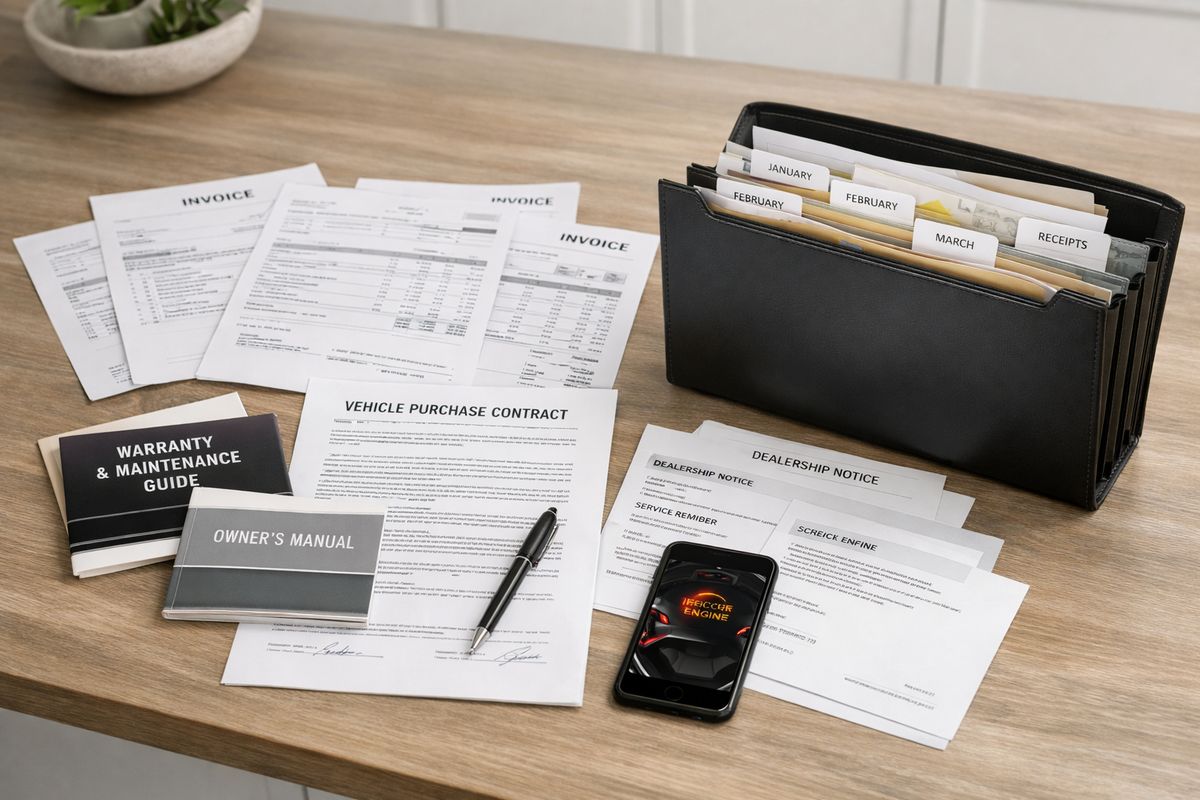
Before doing anything else, gather your basic file. Not a perfect file, just a usable one. If your documents are scattered between your glove box, email inbox, kitchen counter, and dealer text messages, pull them into one folder so you are not trying to piece together the story later.
A good recurring-repair file usually includes repair orders, invoices, warranty papers, purchase or lease documents, notes about dates in and out of service, photos, videos, warning messages, towing receipts, and any communication with the dealer or manufacturer. One afternoon of organization can save a lot of confusion later.
Your repair orders and invoices
Every dealership visit should leave a paper trail. That includes visits where the problem was not fixed, visits where the dealer said “could not duplicate,” and visits where no parts were replaced. Those records still count because they show you reported the issue and gave the dealership a chance to diagnose it.
Before leaving the service department, read the repair order. Not later in the driveway, right there at the counter if possible. Make sure your complaint is described clearly. If you said the engine stalls while slowing down at red lights, the paperwork should say that, not something vague like “customer states concern.” If the wording is muddy, ask for it to be corrected while the visit is still open.
Your warranty and purchase or lease paperwork
Pull out the paperwork that shows when you bought or leased the vehicle, what kind of coverage applies, and whether the vehicle is still under warranty. That usually includes the retail installment contract or lease agreement, manufacturer warranty booklet, and any extended coverage documents if you have them.
These papers help answer basic questions fast. Was the vehicle new or leased? When did the problem start? Was the defect reported during warranty coverage? Those details matter when you start looking at how warranty-related defect cases are evaluated.
A timeline of shop visits and days without your vehicle
Build a simple timeline. Nothing fancy. A note on your phone, a spreadsheet, or one sheet of paper works fine as long as it is consistent.
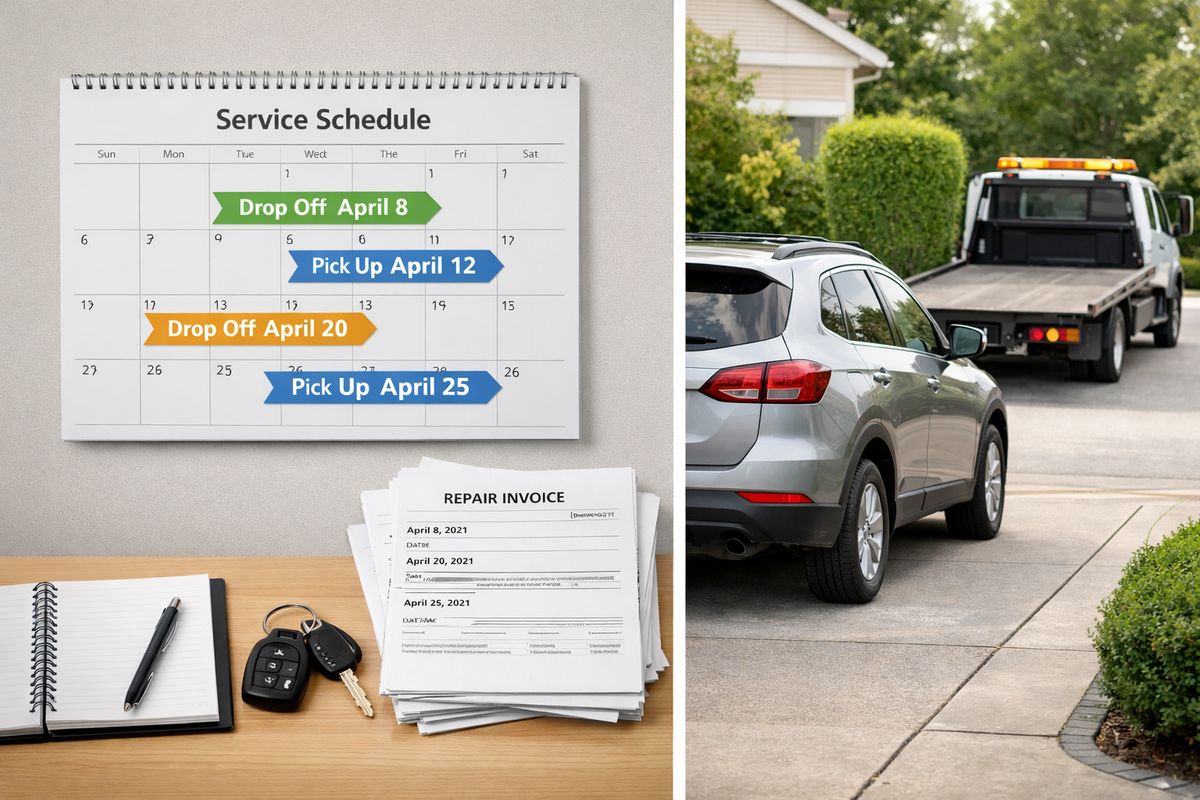
List each repair visit with the drop-off date, pick-up date, mileage, problem reported, and what the dealer said was done. If you had a loaner, note that too. If your vehicle sat waiting on a part for twelve days, write that down. A clean timeline tells the story faster than a stack of loose papers ever will.
Photos, videos, warning messages, and towing records
Some defects are easy to prove because the vehicle fails right in front of the technician. Others vanish the second you pull into the service lane. That is where everyday evidence helps.
Save photos of dashboard warnings, short videos of rough idle or hard starts, screenshots of error messages, and towing records if the vehicle had to be hauled in. A warning light captured in your driveway at 7:10 a.m. before work can be more useful than trying to describe it from memory a month later.
Step 1: confirm that the problem is really the same recurring issue
Before you count repair attempts, get clear on whether you are dealing with one ongoing defect or several different ones. This sounds obvious, but it trips people up all the time because dealership paperwork can make one recurring issue look like three or four unrelated events.
- Gather all repair orders for the problem.
- Highlight the complaint section on each one.
- Compare what you actually experienced during each episode.
- Group visits together if the symptom pattern stayed basically the same.
- Separate out clearly unrelated repairs.
Your goal here is simple: identify the repeating story.
Compare the symptoms, not just the repair names
A recurring defect can wear different labels. One visit may say “updated transmission control module.” Another may say “replaced shift solenoid.” A third may say “road tested, operating as designed.” Yet you are still dealing with the same jerk between second and third gear every morning.
That is why symptoms matter more than repair names. Focus on what the vehicle does, not how the dealership classified the fix attempt. If the same drivability problem keeps showing up, you may be dealing with one unresolved defect even when different parts were changed. If you want a deeper explanation of that pattern, this breakdown of why the same issue keeps resurfacing after repairs helps connect the dots.
Watch for common repeat-problem patterns
Certain patterns show up again and again in unresolved vehicle cases. Engine hesitation that returns after a prior repair. A transmission that still slips after replacement. Repeated check engine lights tied to the same drivability complaint. Battery drain that strands you more than once. A vehicle that stalls in traffic, gets “fixed,” then does it again two weeks later.
Write these patterns in plain English. “Still bucks when shifting into third after prior repair.” “Still loses power merging onto highway after engine work.” “Still no-start after overnight parking.” Simple beats technical every time because it is harder to distort later.
Note when the issue happens
Recurring problems often have triggers. The vehicle may act up only after sitting overnight, only in heavy rain, only when the engine is warm, or only during stop-and-go traffic. Those details matter because intermittent defects are often dismissed when the conditions are missing.
Start tracking time of day, weather, speed, road conditions, fuel level if relevant, and whether the vehicle had been sitting. The more specific your pattern, the easier it becomes to reproduce and document.
Checkpoint: by the end of this step, you should be able to describe the problem in one or two consistent sentences without changing the wording every time.
Step 2: document every repair attempt the right way
Once you know the issue is recurring, document each repair attempt like it may matter later, because it might. A strong paper trail does not just show that the car had problems. It shows that you did your part and kept giving the dealer a fair chance to repair it.
- Review the complaint wording before the repair order is finalized.
- Save every page from every visit.
- Keep one running symptom log between appointments.
- Store all dealer and manufacturer communications together.
- Back up everything digitally.
You do not need a legal filing cabinet. You just need a reliable record.
Make sure your exact complaint is written on the repair order
This is one of the biggest pressure points in the entire process. If your complaint is vague, the paper trail gets weak fast. If your transmission jerks between second and third gear after warming up, that language should appear on the repair order. If your engine stalls while turning left from a stop, say that plainly.
Avoid guessing the cause unless you truly know it. “Vehicle loses power and shakes at 45 to 55 mph” is better than “I think the fuel injectors are bad.” Let the dealer diagnose the cause. Your job is to report the symptom clearly and consistently.
Ask for all pages, not just the final invoice
Do not leave with only the payment page or summary sheet. Ask for the full repair order, technician notes if available, diagnostic findings, parts replaced, and any page showing whether the problem was duplicated. Tiny notes buried in the paperwork can matter later, especially if a technician observed the symptom but the front page makes the visit sound routine.
If the dealer says the issue could not be reproduced, make sure that phrase is actually on the paperwork. It is frustrating, but it still documents that you brought the vehicle in for the problem.
Keep a symptom log between visits
A simple running note works. Use your phone if that is easiest. Each entry should include the date, mileage, what happened, how long it lasted, and anything unusual around it like weather, start-up conditions, sounds, warning lights, or loss of power.
Short and steady beats perfect and abandoned. “6/14, 18,204 miles, car hesitated pulling onto I-95, RPM jumped, hard shift into third, check engine light flashed then went off, hot afternoon.” That kind of entry is useful because it is specific and believable.
Save communication with the dealership and manufacturer
Keep texts from the service advisor, appointment confirmations, voicemail screenshots, case numbers, towing records, roadside assistance logs, and emails with manufacturer customer care. Save everything in one folder so you can find it quickly.
This kind of communication helps show how many times you tried to get the defect fixed, how long you waited, and whether promises were made but not carried out. If your situation starts sounding like the dealer keeps circling without solving anything, it helps to compare your file against what happens when repair visits pile up and the issue still remains.

Step 3: give the dealership a clear chance to diagnose and repair the defect
Frustration makes it tempting to walk into the service lane ready for a fight. That usually does not help. A better approach is clear, calm, specific, and firm. Your goal is to make the problem easy to understand, easy to document, and hard to minimize.
- State the symptom in plain language.
- Ask that the complaint be written exactly.
- Request a ride-along if the issue is intermittent.
- Ask direct questions about safety if the defect affects driving.
- Review the final paperwork before leaving.
You are not there to perform a diagnosis. You are there to create a clean repair opportunity and a clean record.
Describe the symptom in plain language
Use real driving language. “The engine loses power merging onto I-95.” “The vehicle shudders at 30 mph and then slams into gear.” “The car will not start after sitting overnight.” Those descriptions are strong because they match what happens in your hands, not what somebody guessed under the hood.
Specificity matters because vague complaints make vague paperwork. And vague paperwork is how recurring problems get brushed aside.
Request a test drive if the issue is intermittent
If the defect comes and goes, ask for a test drive with a technician, foreman, or service advisor. A five-minute ride where the vehicle acts up can accomplish more than three visits with thin notes.
Try to recreate the conditions that trigger the issue. If it happens during a cold start, say so. If it appears after twenty minutes in traffic, mention that too. Intermittent does not mean imaginary. It just means the setup matters.
Ask whether the vehicle is safe to drive
Do not dance around safety. If the vehicle stalls, overheats, loses steering assist, slips badly, jerks into gear, or fails to accelerate when you need it to, ask directly whether the vehicle is safe to drive. Get the answer documented if possible.
This matters for practical reasons and for the paper trail. A defect that affects use, value, or safety gets taken more seriously than a vague annoyance.
Confirm what was repaired before you leave
Before driving off, ask what was actually done. Was a part replaced? Was software updated? Was the problem duplicated? Was no issue found? Was the vehicle only test-driven? The trick is to pin down the answer before you are gone and the details blur together.
Checkpoint: after each repair visit, you should leave with a document that clearly shows what complaint you reported, what the dealer did, and whether the symptom was confirmed.
Step 4: track how many repair attempts and out-of-service days have added up
Once the same problem has been repaired more than once, counting matters. Not obsessively, just accurately. This is where a lot of people underestimate what has really happened because the visits blur together and the days in the shop disappear from memory.
- Count each visit tied to the same recurring issue.
- Add the drop-off and pick-up dates for every related stay.
- Include waiting time for parts or additional diagnosis.
- Keep major repairs on the same timeline if the problem continues.
- Note how the downtime affected daily life.
This is where the story starts to look very different on paper.
Count visits for the same issue
Count each repair attempt for the recurring defect, even if the dealer used different technical language or replaced different components. If you kept bringing the vehicle in because the same symptom returned, that series matters.
A lot of people assume only “successful” repairs count. Not true. Visits where the dealer said “no problem found” or “could not duplicate” can still matter because the vehicle was presented for the same issue. If you need a closer look at how those counts are often viewed, this guide on how repeated fix attempts are usually measured lays it out in plain English.
Add up total days in the shop
Now total the days your vehicle was out of service. Include time spent waiting for diagnosis, waiting on backordered parts, waiting for approval, and waiting for the dealer to get back to it. If your car went in on June 3 and you got it back on June 19, count the full span.
Long downtime changes the picture. A vehicle that has been unavailable for weeks is more than an annoyance. It is a reliability failure, and in some situations it may point toward a car spending too much time stuck at the dealership.
Include time after major component replacements
Engine replacement and transmission replacement sound like big finish-line repairs. Sometimes they are. Sometimes they are just the next chapter in the same problem. If the vehicle still has the same or closely related symptoms after a major repair, keep the full history connected.
Do not treat a component swap like a reset button if the issue keeps coming back. In fact, post-replacement problems deserve extra attention, especially if your situation looks like major engine work followed by more trouble.
Note the impact on your daily life
Write down what this has cost you in practical terms. Missed work. Towing. Rental charges. Repeated drives to the dealership. Canceled plans. Sitting in a service lounge for three hours on a Tuesday because the check engine light came back again.
This does not replace the mechanical evidence, but it adds real-world context. A recurring defect is not just a line item on a repair invoice. It disrupts your life.
Step 5: escalate the issue beyond the local dealership
If the dealership keeps cycling through the same routine and the problem still is not solved, move the issue up the chain. Local service departments are not the final stop. At some point, repeating the same conversation at the same counter stops being productive.
- Contact the manufacturer’s customer assistance line.
- Open a formal case.
- Ask for a case number and save it.
- Request deeper review if local repairs are going nowhere.
- Confirm all follow-up in writing.
Escalation is not overreacting. It is what comes next when the normal process is not working.
Open a case with the manufacturer
Call the manufacturer’s customer care department or use the official online channel if available. Have your year, make, model, VIN, current mileage, dealership name, repair dates, and a short summary ready.
Keep the explanation clean: what the recurring problem is, how many times the vehicle has been in, how many days it has been unavailable, and whether any major repairs were already done. Ask for a case number and write it down immediately.
Ask for a regional or factory review
If the local dealership keeps missing the problem or repeating shallow repairs, ask whether the issue can be escalated for regional or factory-level review. In some situations, a field engineer, district representative, or similar person may get involved.
The point is not to use fancy terms. The point is to ask for a higher-level look when the local loop is not resolving the defect.
Confirm everything in writing
After a phone call, send a short follow-up email if you have an address. If you used chat, save the transcript. If you got a case number, attach it to your notes. Written confirmation keeps the record straight.
Verbal updates are slippery. Written ones hold still.
Stay polite but direct
You do not need a speech. Just a timeline and a simple ask. “This problem has continued through multiple repair visits. The vehicle has been out of service for X days. I need the case reviewed for a real resolution.” That is enough.
A calm tone helps, but so does clarity. You are not asking for a favor. You are asking for a response to a repeating warranty problem.
Step 6: learn how florida lemon law issues may apply to your situation
If your 2024, 2025, or 2026 vehicle keeps having the same serious defect, Florida lemon law concepts may become relevant. That does not mean every frustrating repair history qualifies. It does mean recurring defects, repeated repair attempts, and long out-of-service periods deserve a closer look.
- Review how many times the same issue was presented for repair.
- Review how long the vehicle has been out of service.
- Focus on whether the defect seriously affects use, value, or safety.
- Keep late-model warranty history organized.
- Compare your situation against Florida-specific standards.
If you want a broader foundation first, this overview of how Florida vehicle defect rules generally work is a useful starting point.
What a “reasonable number of repair attempts” means in everyday terms
In plain English, it means the manufacturer or dealer had enough chances to fix the problem, and the problem still is not solved. The exact count matters, but it is not the whole story. A vehicle that keeps returning for the same defect may reach that point faster than people expect, especially if the issue is serious.
The key idea is fairness. At some point, repeated attempts stop looking like ordinary warranty service and start looking like an unresolved defect pattern.
Why the same defect issue matters
If your engine problem, transmission failure, electrical fault, or drivability issue keeps returning, the pattern matters more than the wording on any single invoice. The issue does not have to look dramatic on paper to be serious in real life. If it significantly affects your ability to use the vehicle, its resale value, or its safety, that matters.
“Substantially impaired” sounds legal, but the everyday meaning is simple: the defect is serious enough that the vehicle is not what you reasonably expected to own or lease.
How days out of service can affect your options
Downtime matters because a vehicle that spends large stretches in the shop is not doing its job. Even if the dealer keeps trying new fixes, weeks without your vehicle can change how the situation is evaluated.
A car that has been sitting at the dealer since early June, waiting on diagnosis, approval, or a backordered part, tells a very different story than a one-day oil leak repair. Long service gaps are one reason it helps to understand when too many days without your car starts to matter.
Special notes for leased vehicles
Leased vehicles can have recurring defect issues too. Monthly payments keep coming. Mileage concerns keep hanging over you. And losing the use of the vehicle can feel even more frustrating when it is technically not yours to keep long term anyway.
Leasing does not erase warranty rights or make repeat repair problems disappear. Keep the lease agreement, payment records, and repair file together from the start.
Why newer 2024-2026 vehicles deserve close attention
A newer vehicle should not feel like a standing appointment with the service department. When a late-model vehicle has repeated engine trouble, ongoing transmission issues, electrical failures, or extended downtime, the frustration hits harder because you paid for something that should still feel dependable.
That is especially true when a major component has already been replaced and confidence in the vehicle is gone. A nearly new car should not leave you wondering whether it will make it through the next merge lane.
Step 7: decide whether to keep repairing, trade it in, or pursue a buyback or replacement
After enough repeat visits, you reach a fork in the road. Keep pushing through more repairs, unload the vehicle, or explore relief such as a buyback, replacement, or compensation. The cheapest-looking move in the moment is not always the least expensive overall.
- Evaluate whether the newest repair plan is actually different.
- Consider the financial downside of trading too early.
- Look at whether a buyback review makes sense.
- Compare a replacement option if available.
- Review any compensation offer carefully before agreeing.
This is the point where frustration can lead to expensive shortcuts. Slow down and look at the full picture.
When another repair attempt still makes sense
Sometimes one more repair attempt is reasonable. Maybe the dealer finally identified a root cause after earlier guesswork. Maybe a software update or redesigned part just became available. Maybe the prior visits were diagnostic steps and the actual repair plan is now substantially different.
The key question is simple: is this truly a new fix path, or just the same loop with new wording? If it is another round of “we reset it and hope for the best,” your patience may be buying very little.
Why trading in too early can cost you
A defective vehicle often loses value the minute you try to bail out of it, especially if the drivability issue is obvious or the market already knows the model has problems. The trade offer can feel like a way out, but it may lock in a loss that did not need to become your burden.
That is why it helps to understand how much a bad vehicle can drain from your trade value before making a rushed move. Once you sign away the vehicle at a discount, it can be much harder to recover financially.
When a manufacturer buyback may be worth exploring
A buyback becomes worth exploring when the problem keeps returning, the dealership has had multiple chances, the vehicle has spent a long time out of service, or a major repair did not actually solve the defect. In practical terms, a buyback usually means the manufacturer takes the vehicle back under certain conditions.
That does not mean every case ends that way. But if the pattern is strong, it makes sense to learn more about what kinds of repurchase outcomes Florida drivers sometimes pursue.
When a replacement vehicle may be the better fit
A replacement can make more sense if you want to stay in a comparable vehicle and avoid some of the uncertainty of a cash-based resolution. But do not assume replacement is automatically simpler. You still need to compare trim level, options, financing effects, timing, and what happens with taxes, fees, or payoff issues.
In some situations, the better answer is not “buyback or nothing,” but rather a realistic comparison of both.
When compensation short of a buyback may come up
Not every recurring defect case ends with the vehicle going back. Sometimes compensation, goodwill assistance, or another negotiated outcome gets discussed instead. That can happen when a defect history is real but the parties land somewhere short of full repurchase or replacement.
Read any proposed terms carefully. A quick payment can sound attractive when you are tired, but details matter, especially if you are being asked to sign away future claims.
Step 8: prepare for a free case review or legal consultation
If you are ready to speak with a consumer warranty or lemon law attorney, preparation makes the conversation much more useful. The goal is not to show up with a dramatic story. It is to show up with a clear one.
- Pull your core vehicle details into one page.
- Count the repair attempts tied to the recurring issue.
- Add up the out-of-service days.
- Summarize the problem in a few clear sentences.
- Gather all repair orders, warranty papers, and communication records.
- Note any engine or transmission replacement.
A strong consultation file often fits into one digital folder and one short summary.
Gather the core facts in one place
Have the year, make, model, VIN, purchase or lease date, mileage, dealership name, repair count, and total days out of service ready. That one-page snapshot saves time immediately because it answers the basic timeline questions up front.
If you have ever tried to explain six repair visits from memory while digging through screenshots in a parking lot, you already know why this matters.
Be ready to explain the pattern
Describe what keeps happening, how often it happens, what repair attempts were made, and whether the issue still affects use, value, or safety. Keep it simple. “The SUV has been back four times for stalling and loss of power. It spent 27 total days at the dealer. After the last repair, it still stalled at a traffic light.”
That kind of summary is clear, credible, and easy to follow.
Share whether the engine or transmission was replaced
Major repairs deserve special attention. If the engine or transmission was replaced and the vehicle still has problems, say that right away. It changes the context fast because confidence in the vehicle usually takes a serious hit at that point.
The same is true if the replacement seemed to solve one symptom but another closely related one remained.
Ask the right questions during the review
Use the consultation to understand possible paths, not just to retell the frustration. Ask what outcomes may be on the table, how long the process may take, what records still need to be gathered, and whether attorney fees are paid separately in qualifying cases.
It also helps to know what usually happens after you submit your file for legal review, because that part feels much less mysterious once the process is explained clearly.
Step 9: protect yourself while the case or repair process is still ongoing
This part gets overlooked. While the vehicle is still being repaired, reviewed, or evaluated, small decisions can create bigger problems if you are not careful. Think of this as preserving your position while the story is still unfolding.
- Keep your loan or lease account current unless you get specific legal guidance otherwise.
- Continue saving every repair order and communication.
- Avoid outside repairs unless necessary for safety or emergency use.
- Be careful about public posts, trade-ins, and private-sale decisions.
- Keep insurance active and records current.
You do not want a paperwork mistake to become the new headline.
Keep making payments if you financed or leased the vehicle
A bad vehicle and a loan account are usually two separate tracks. As unfair as it feels, stopping payments without a clear strategy can damage your credit and create another problem on top of the original one.
Keep the financial account current unless you receive direct advice tailored to your situation. The vehicle defect does not automatically pause the contract.
Do not stop documenting just because a case was opened
Opening a manufacturer case or speaking with an attorney is not the end of the record. Keep collecting new repair orders, emails, text messages, status updates, and symptom notes until the matter is fully resolved.
The story is still being written. A weak final chapter can blur a strong beginning.
Avoid unauthorized repairs unless necessary
Whenever possible, let authorized warranty channels handle repairs tied to the recurring defect. Outside repairs can complicate arguments about what caused the problem or whether the manufacturer got a fair chance to fix it.
That said, safety comes first. If an emergency requires outside work, save every receipt, note why it was necessary, and keep the documentation clear.
Be careful with social media and resale moves
Public posts can be misread, especially if you say the car is “fine now” on a good day and then later need to explain that the issue kept returning. The same goes for rushing into a private sale or trade while still sorting out your options.
Once the vehicle is gone, some paths can get harder. A fast exit is not always a clean one.
Step 10: know what outcomes to expect after multiple repair attempts
At some point, the question changes from “what is wrong with the car?” to “how is this likely to end?” Not every unresolved repair case lands in the same place, but the common outcomes are easier to understand than most people expect.
- The final repair may actually solve the problem.
- The manufacturer may review the case for repurchase.
- A replacement vehicle may be offered instead.
- Some situations may end in cash compensation or another negotiated result.
Knowing the possible paths helps you make better decisions now.
Possible repair resolution
Sometimes the final repair really does fix the defect for good. That happens. If it does, keep every record anyway. A solved issue is better than an unresolved one, but you still want the full history in case the problem returns later.
Do not throw away the file just because the dashboard is quiet for a month.
Possible buyback outcome
A buyback usually involves returning the vehicle and working through paperwork that may include payoff handling, title or lease details, and possible refund components depending on the situation. The details can vary, but the general idea is simple: the manufacturer takes the vehicle back under an approved resolution structure.
If your case seems to be heading in that direction, it helps to compare how repurchase and swap outcomes can differ in practice.
Possible replacement outcome
A replacement outcome generally means a comparable vehicle is provided instead of a repurchase. Sounds simple, but compare everything carefully. Trim level, options, taxes, fees, financing terms, and timing all matter. If the replacement is not truly comparable, that can become a problem of its own.
Convenience matters too. Some people prefer to move on with cash. Others want another vehicle and less disruption.
Possible cash settlement or compensation
In some situations, the resolution may involve compensation short of full repurchase or replacement. This can include a negotiated payment or another financial adjustment tied to the defect history.
Read the terms carefully before accepting anything. Once you sign, you may be giving up rights you still needed. If that path comes up, it helps to understand when defect cases sometimes end in money rather than a full return.
Common mistakes to avoid after repeated repairs
After enough frustration, people start making tired decisions. That is normal. It is also expensive. Most mistakes in this stage are not dramatic. They are little paperwork or timing errors that weaken your record or lock in a loss.
Waiting too long to organize your records
Repair visits blur together fast. Dates get fuzzy. You forget which invoice mentioned stalling and which one mentioned a software update. Start building your timeline now, even if it is messy at first.
An imperfect file today is better than a memory project three months from now.
Accepting vague repair paperwork
“Checked vehicle.” “No issue found.” “Operating normally.” Those phrases are not useless, but standing alone they do not say much. If the write-up leaves out your actual complaint, ask for a clearer description before you leave.
You do not need to be argumentative. Just be accurate.
Describing the issue differently every time
If you say “hesitation” one visit, “stalling” the next, and “rough shifting” the next, a recurring drivability issue can start to look like separate problems even when it is not. Keep your wording steady unless the symptoms truly changed.
Consistency helps everybody see the pattern.
Trading in the vehicle before learning your options
A rushed trade-in often means you absorb the financial damage while the manufacturer walks away from the defect history. That is backwards. Before unloading the vehicle at a discount, at least understand what other paths may exist.
The fast exit can become the expensive exit.
Assuming a major repair solved the legal or warranty issue automatically
An engine replacement or transmission replacement is not a magic eraser. If the defect continues, the history still matters. A major repair can be part of the recurring-problem story, not the end of it.
Big invoice, same problem. That happens more than it should.
Troubleshooting: if the dealer says “could not duplicate” or “no problem found”
Few phrases frustrate people faster than “could not duplicate.” You know the vehicle acted up. The dealer says it behaved perfectly. Now what?
Treat that response as a signal to tighten the conditions and evidence around the problem, not as the end of the road.
Recreate the conditions
Write down everything surrounding the failure. Was the engine cold? Was it raining? Had the vehicle been sitting overnight? Did the problem happen after 20 minutes of driving? Was the gas tank near empty? Was the road uphill?
Little details can unlock the diagnosis. Intermittent issues often need the right setup to show themselves.
Use video and timestamped evidence
A short video can do a lot of work. Capture warning lights, failed starts, rough idle, slipping shifts, unusual noises, or instrument-cluster messages when they happen. Time-stamped clips are especially helpful because they show the issue existed outside your memory.
You do not need a perfect production. Twenty seconds of honest evidence beats a detailed retelling later.
Request a foreman or shop lead test drive
If the first pass goes nowhere, ask whether a foreman, shop lead, or more experienced technician can test-drive the vehicle with you. Fresh eyes can make a big difference, especially when the defect is subtle but repeatable.
Sometimes the issue is not that nothing is wrong. It is that the right person has not experienced it yet.

Troubleshooting: if the car has been in the shop for weeks
Long service delays create a different kind of frustration. At first it feels like the repair is “still in progress.” After enough days, it starts to feel like your vehicle has simply disappeared behind the service doors.
At that stage, clarity becomes your best tool.
Ask for status updates in writing
Ask for written updates on diagnosis, parts status, approval delays, and estimated completion. Keep the request simple and specific. “Please confirm the current diagnosis, whether parts have been ordered, and the expected completion date.”
Written updates help pin down what is actually happening versus what was casually mentioned on the phone.
Track every out-of-service day
Count every day the vehicle is unavailable, including waiting time. Do not guess later. If the car has been at the dealership since June 4, put those dates in your timeline now.
The difference between “it was there a while” and “it was out of service for 24 days” is huge on paper.
Ask about loaners, rentals, and reimbursement
If your vehicle is stuck at the dealer, ask whether a loaner, rental help, or reimbursement is available. Even if the answer is no, get that answer documented.
Transportation disruption matters, and documented requests show you were actively trying to manage the loss of use.
Troubleshooting: if the engine or transmission was replaced and the problem is still there
This is one of the hardest scenarios emotionally because a major component replacement feels like it should have been the final answer. When it is not, confidence in the vehicle usually drops hard.
That reaction makes sense.
Confirm whether the original symptom changed at all
Compare the before-and-after behavior carefully. Did the main symptom disappear and get replaced by a different one, or is it really the same problem in slightly new clothing? Maybe the transmission no longer slips at 50 mph but now bangs into gear from a stop. Maybe the engine no longer stalls at idle but still loses power under load.
Be honest and specific. Improvement is not the same as resolution.
Get the full repair history tied together
Keep the pre-replacement and post-replacement visits on one timeline if they relate to the same overall defect pattern. A major repair does not wipe the slate clean. It becomes part of the story.
That is especially true when your situation resembles a transmission swap followed by more drivability trouble.
Escalate quickly
If a major repair was supposed to solve the issue and did not, move faster, not slower. Open or update the manufacturer case, preserve every record, and stop treating the problem like a routine service hiccup.
At that point, “let’s just see how it goes” is usually not enough.
Troubleshooting: if you leased the vehicle
Leasing can make recurring defects feel even more frustrating because you are still making payments on a vehicle that may be unreliable, unavailable, or both. The fact that the vehicle is leased does not mean you just have to ride it out.
Keep lease records with the repair file
Put the lease agreement, monthly payment records, mileage information, and any communication about end-of-lease obligations in the same folder as the repair history. That makes the situation easier to explain and evaluate.
You want one clean file, not two parallel piles.
Ask how a buyback or replacement would affect the lease
If a buyback or replacement is being discussed, make sure you understand how the lease payoff, credits, remaining obligations, and replacement terms would be handled. Lease paperwork can get technical quickly, and assumptions are expensive here.
Get the details before agreeing to anything.
What your next move should look like this week
If your vehicle has been back to the dealership again and again for the same problem, keep this week simple.
Start by organizing every repair order in date order. Count the number of visits tied to the recurring issue. Add up every day the vehicle was out of service. Save your texts, emails, case numbers, and any photos or videos showing the defect. Then prepare a short summary with your year, make, model, VIN, mileage, repair history, and whether the engine or transmission was replaced.
That one step changes everything. Instead of feeling stuck in the service lane loop, you turn the mess into a clear record. And a clear record is what gives you leverage.
Quick checklist: what to do after multiple repairs for the same car problem
- Gather every repair order and invoice.
- Confirm your complaint is clearly written on each visit.
- Group repeat visits by the same recurring symptom.
- Build a timeline of drop-offs, pick-ups, and mileage.
- Add up all days your vehicle was out of service.
- Save photos, videos, warning messages, and towing records.
- Keep texts, emails, case numbers, and voicemail screenshots.
- Open a manufacturer case if local repairs are going nowhere.
- Track whether the vehicle is still unsafe, unreliable, or losing value.
- Get a free case review with your full repair history ready.
Frequently asked questions
How many repairs count as “multiple repairs” for the same problem?
There is no single everyday answer that fits every situation, but more than one repair visit for the same recurring defect should get your attention. The real issue is not just the number. It is whether the same problem keeps coming back and whether the vehicle remains seriously affected in use, value, or safety.
Does it still count if the dealer replaced different parts each time?
Yes, it can. Different parts can be replaced while you are still dealing with the same real-world symptom, such as stalling, slipping, hard shifting, no-start problems, or loss of power. Focus on the recurring behavior, not just the repair label on the invoice.
What if the dealer keeps saying “could not duplicate”?
Keep bringing the evidence closer to the conditions where the problem happens. Track time, weather, startup conditions, speed, and drive time. Save short videos, warning messages, and any failed-start clips. An intermittent problem is still a real problem, but it often needs better documentation.
Should you keep driving the vehicle while repairs are ongoing?
That depends on the defect, but safety comes first. If the problem involves stalling, overheating, braking, steering, engine failure, or transmission failure, ask directly whether the vehicle is safe to drive and get the answer documented when possible. Do not treat a possible safety issue like a minor inconvenience.
Can a leased vehicle qualify for buyback, replacement, or compensation review?
Yes, a leased vehicle can still have serious recurring defect issues. Keep your lease paperwork with your repair records, track your downtime, and make sure any proposed resolution explains how the lease payoff, credits, and remaining obligations would be handled.
What if the engine or transmission was already replaced?
A major replacement does not automatically end the issue. If the same or a closely related problem continues after an engine or transmission swap, keep the full timeline together and escalate quickly. A big repair is not a reset if the vehicle is still unreliable.
Talk to jonathan about your vehicle
Jonathan D. Schwartz, the attorney behind Bad Vehicle, helps vehicle owners understand their Lemon Law options. He can review your repair history, answer your questions, and help you determine the next steps for your potential claim.
Your case review is free, and you pay no attorney fees unless you win.
Schedule your free consultation with Jonathan: https://badvehicle.com/schedule-your-consultation/
Think your vehicle may qualify?
Have your repair history reviewed and find out what options may be available under Lemon Law or warranty law.