

If you keep ending up at the same service desk for the same issue, your frustration is not the whole story. The pattern behind same dealership repeated visits can point to a defect that is not actually being fixed, and that can matter for a warranty claim, buyback, replacement, or compensation in Florida and New York.
What this guide helps you figure out
Repeated repairs are not just bad luck. If your vehicle keeps stalling, shifting hard, losing power, flashing warning lights, or acting up again a few days after pickup, that usually means the original problem is still alive.
This guide helps you sort out what your repair history is really saying. By the end, you should be able to tell whether you are looking at an ordinary repair process or a stronger pattern of failed repair attempts that deserves a closer legal review.
What you’ll need before you start
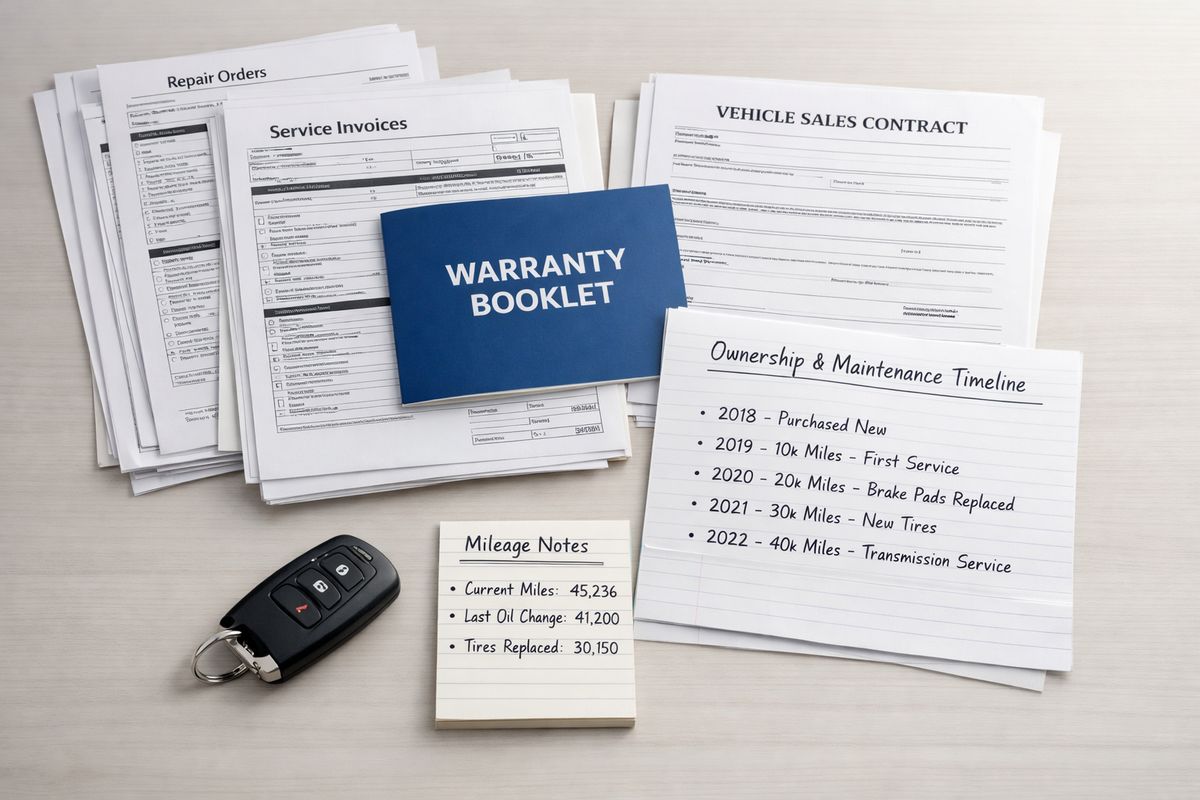
Before counting visits or arguing with repair language, get your paperwork together. Memory gets fuzzy fast, especially after the third or fourth trip to the dealership.
Repair orders and invoices
Pull every repair order, pickup sheet, invoice, and service summary you have. Include visits where the dealership wrote something like “could not duplicate concern” or “no problem found.” Those records still matter because they show you brought the vehicle in and asked for help.
If you want a cleaner way to organize everything, it helps to follow a simple system for keeping your repair proof in order.
Your warranty booklet and purchase or lease papers
Get your warranty booklet, sales contract, lease papers, and any extended service agreement. You are looking for dates, mileage limits, coverage terms, and proof that the issue showed up while warranty protection was still in place.
A simple timeline of breakdowns and shop time
Write out the basics in date order: when the problem started, when you dropped the vehicle off, when you got it back, and when it failed again. Think of it like lining up grocery receipts after a messy week. Once everything is in order, the pattern usually becomes obvious.
Step 1: confirm that it’s really the same problem
- Start with the symptoms you noticed each time. Focus on what your vehicle actually did, not just what the repair order calls it.
- Compare the visits side by side. If you kept dealing with stalling, hard shifting, hesitation, loss of power, rough starts, or warning lights, that is often the same core issue showing up under different labels.
- Mark each visit where the same symptoms returned after the vehicle was marked repaired.
Checkpoint: If the behavior stayed basically the same across multiple visits, you are probably dealing with a repeat problem, even if the dealership changed the wording.
Match the symptoms, not just the repair language
Service departments often change phrases from one visit to the next. One invoice might say “transmission concern,” another might say “harsh engagement,” and another might mention a software update. If your SUV still jerks between gears leaving a school pickup line in Tampa or Buffalo, the symptom is what matters.
Check whether parts were repaired, updated, or replaced
Look closely at what the dealership actually did. Software flashes, sensor replacements, valve body repairs, engine work, and full transmission swaps should all go on your timeline. If a major component was replaced and the same trouble came back, that is a serious red flag. More detail on that shows up in what to watch for after a major drivetrain repair.
Note if the vehicle was marked “fixed” but the issue returned
If you got the vehicle back on Friday and it started acting up again on Monday, write that down clearly. Short gaps between visits can show the repair did not solve the underlying defect.
Step 2: count your visits and out-of-service days
- Count each dealership visit tied to the same problem.
- Add every day your vehicle was unavailable, including diagnosis time and parts delays.
- Mark any visit involving a safety risk separately.
Checkpoint: Two numbers usually tell the story fast, repair attempts and total days out of service.
Total up repeat repair attempts
Count every visit for the same issue, even if the dealership says no repair was completed. A failed diagnosis is still an attempt. If you want a better sense of how those visits are usually evaluated, take a look at how repeat attempts are often measured.
Add up the days your vehicle was in the shop
Include drop-off to pickup dates, not just the hours when a technician turned a wrench. Waiting for factory approval, waiting on parts, and sitting behind a service bay door all count toward the real disruption in your life. If your vehicle has been gone for long stretches, extended downtime can matter just as much as the repair count.
Flag safety-related problems separately
Stalling in traffic, brake issues, steering problems, fire risk, or sudden loss of acceleration deserve extra attention. Inconvenience is one thing. A problem that makes you feel unsafe driving your own vehicle is another.
Step 3: read your repair orders like a detective
- Highlight repeated complaint descriptions.
- Circle phrases that show the dealership could not confirm the issue.
- Note references to parts delays, manufacturer instructions, or prior visits.
Checkpoint: You are not trying to decode every technical line. You are looking for patterns.
Find repeated complaint descriptions
Pay most attention to the customer complaint section. Phrases like “check engine light on,” “vehicle shakes at idle,” or “hesitation during acceleration” can become the backbone of your timeline. Even when technician notes wander, your repeated complaints usually stay consistent.
Watch for “unable to duplicate” and similar phrases
Do not ignore language like “could not duplicate,” “operating as designed,” or “no fault found.” Those notes still prove you returned for help. In some cases, that kind of paperwork becomes part of the bigger pattern, especially when the issue later happens again. That is exactly why a no-duplicate visit can still matter.
Look for delays tied to parts or manufacturer approval
Repair orders sometimes mention waiting on factory guidance, backordered parts, or authorization for major work. That language helps explain why a case dragged on and why your vehicle sat unusable for so long.
Step 4: document what happened between dealership visits
- Keep a symptom log after every pickup.
- Save visual proof and communications.
- Track out-of-pocket costs and missed use.
Checkpoint: Plain English is enough. Clear beats technical.
Keep a symptom log in plain english
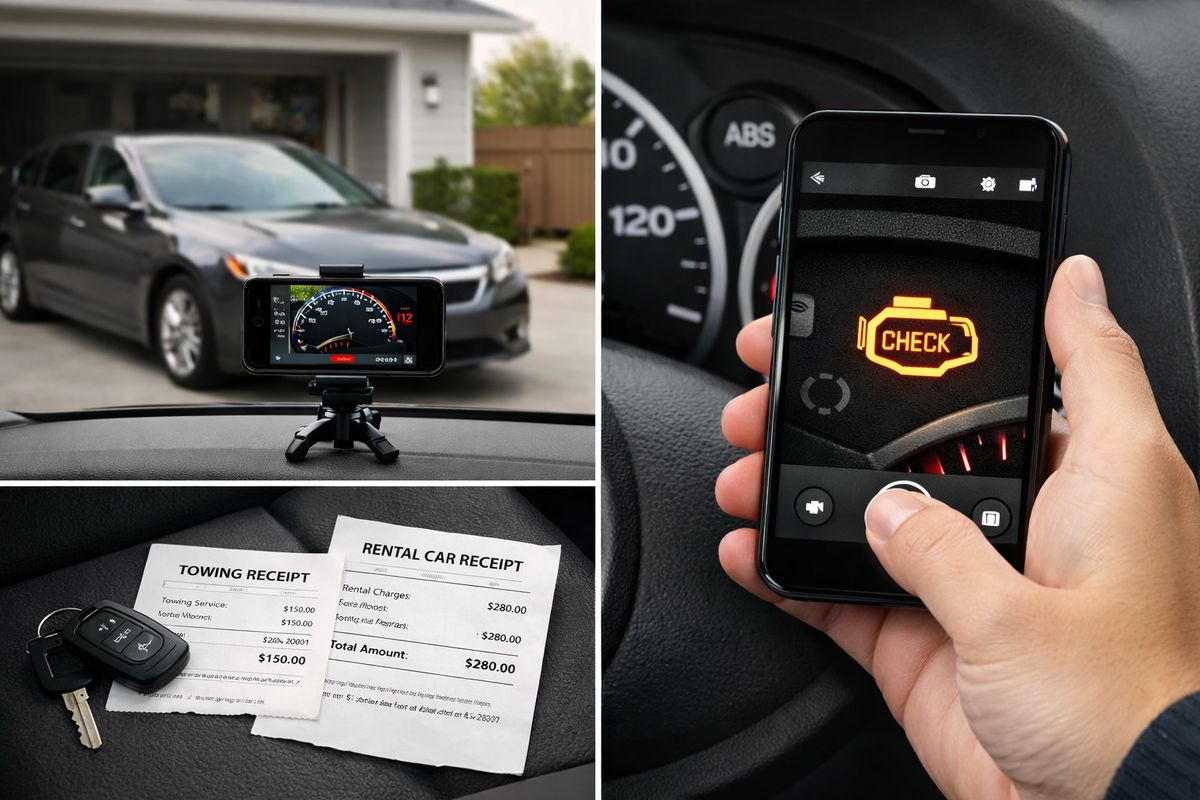
Write down the date, mileage, speed, weather, warning lights, noises, and what happened. “Hard shift entering highway at 45 mph” is useful. “Car weird again” is not. If a warning light keeps cycling on and off, it helps to compare your notes against what recurring dashboard alerts usually show.
Save photos, videos, and messages
Keep photos of warning lights, videos of rough idle or no-start conditions, and screenshots of texts or emails with the dealership. A short video from your driveway can be more convincing than a vague memory two months later.
Record towing, rental, and missed-use problems
Save towing invoices, rental bills, rideshare receipts, and notes about missed work or family obligations. If your vehicle was supposed to make life easier and instead left you stranded in a grocery store parking lot, that impact belongs in your file.
Step 5: check whether the pattern points to a possible lemon law or warranty claim
- Ask whether enough repair chances have already happened.
- Look at whether the defect involves major components or serious drivability issues.
- Factor in long periods without the vehicle.
Checkpoint: The question is not whether the dealership tried. The question is whether the problem was actually fixed.
Understand “reasonable number of repair attempts” in plain english
This simply means your vehicle got enough chances to be repaired and the issue still came back. Here’s the thing: repeated failure after multiple visits is often the strongest sign that the problem has moved beyond normal warranty frustration. For a deeper breakdown, this explanation of repeat-fix limits helps make that idea less abstract.
Consider whether major component failures strengthen the pattern
Engine replacement, transmission replacement, chronic stalling, and repeated drivability problems usually make the pattern more serious. A major repair is supposed to end the cycle, not reset it. If it did not, that says a lot.
Factor in long periods without your vehicle
Weeks in the shop can matter even if the paperwork lists different repair actions. Lost use is part of the problem, especially if you rely on the vehicle for commuting, school drop-offs, or a lease that keeps ticking while the car sits.
Step 6: contact the right party in the right order
- Ask the dealership for the full repair history tied to your VIN.
- Send written notice to the manufacturer.
- Keep every email, letter, receipt, and case number together.
Checkpoint: A clean paper trail saves time later.
Ask the dealership for a full repair history
Request every repair order connected to your VIN, not just the papers sitting in your glove box. Sometimes old visits, warranty claims, or internal notes fill in gaps you forgot about.
Notify the manufacturer, not just the service desk
The service advisor is not the final decision-maker on a buyback, replacement, or compensation request. Send a written notice to the manufacturer describing the defect, the repair attempts, and the downtime. Keep it simple and factual.
Keep every communication in one place
Use one folder, digital or paper, for emails, certified mail receipts, case numbers, call summaries, and service records. If your problem ends up needing closer review, organized repair history can make a big difference.
Step 7: get your case reviewed before you trade in or give up
- Pause before taking a loss on the vehicle.
- Gather the key facts into one short summary.
- Find out what outcomes may be available.
Checkpoint: Trading in a defective vehicle can solve the stress fast, but it can also cost you money you did not need to lose.
Know when a free case review makes sense
A case review makes sense if the same issue keeps coming back, the engine or transmission was replaced, or your vehicle spent a long time in the shop. That is especially true when the dealership keeps insisting everything is fixed and your car proves otherwise the next week.
Prepare the key facts for a fast review
Have your VIN, current mileage, purchase or lease date, repair dates, and service records ready. A short summary with dates and symptoms is usually enough to show whether the pattern deserves a closer look.
Understand the possible outcomes
Possible outcomes can include a manufacturer buyback, a replacement vehicle, or compensation. The result depends on the defect, the repair history, and how long the problem has gone on.
Troubleshooting common situations
The dealership says the current issue is “different”
Compare symptoms, not labels. If your vehicle keeps doing the same thing, a new phrase on the invoice does not magically turn it into a different problem.
You do not have every repair order
Ask for the full service history. Also check old emails, text updates, towing bills, and payment receipts. Missing paperwork is common, and a timeline can usually be rebuilt.
The vehicle was repaired after an engine or transmission swap but still feels wrong
Do not shrug off slipping, hesitation, warning lights, rough shifting, or loss of power after a major replacement. If that sounds familiar, ongoing problems after big warranty work can still point to a stronger claim.
Your lease is ending and the problem is still not fixed
A lease does not erase recurring defect issues. If the vehicle kept going back for the same problem during the lease term, that history can still matter.
What repeated visits usually mean for your next step
If the same problem keeps bringing you back to the same dealership, that is a pattern worth taking seriously. A couple of visits can be ordinary. Four visits, a stack of “fixed” invoices, and weeks without your vehicle is something else entirely.
At that point, the real question is no longer “Should you give the dealership one more chance?” It is whether your records already show a failed repair history that supports a stronger warranty, lemon law, buyback, replacement, or compensation claim.
Try this next
Line up your repair orders by date and count two things: how many times you went in for the same issue and how many days your vehicle was out of service. That one exercise can turn a vague headache into a clear pattern.
Talk to Jonathan About Your Vehicle
Jonathan D. Schwartz, the attorney behind Bad Vehicle, helps vehicle owners understand their Lemon Law options. He can review your repair history, answer your questions, and help you determine the next steps for your potential claim.
Your case review is free, and you pay no attorney fees unless you win.
Schedule your free consultation with Jonathan: https://badvehicle.com/schedule-your-consultation/
Frequently asked questions
Do repeated visits to the same dealership help a lemon law claim?
Yes, especially when the visits involve the same unresolved problem. The more clearly your records show repeat repair attempts and continued symptoms, the stronger that pattern usually becomes.
What if the dealership says it cannot duplicate the problem?
That visit still matters. A “could not duplicate” note shows you reported the issue and gave the dealership a chance to inspect it, even if the problem did not show up during that appointment.
Does a major repair like an engine or transmission replacement end the issue?
Not automatically. If the same symptoms return after a major repair, that can actually strengthen the argument that the defect was never properly resolved.
Do days waiting on parts count as time out of service?
In many situations, yes. If your vehicle was unavailable because it was waiting on parts, diagnosis, or approval, that downtime is still part of the bigger picture.
Can a leased vehicle qualify if it keeps going back for repairs?
Yes. Recurring defects during a lease can still matter, especially if the problem began during the warranty period and the vehicle spent repeated time at the dealership.
Should you trade in the vehicle if you are tired of dealing with it?
Not before reviewing the repair history. Trading it in might end the stress, but it can also mean taking a financial loss before finding out whether a buyback, replacement, or compensation option was available.
Think your vehicle may qualify?
Have your repair history reviewed and find out what options may be available under Lemon Law or warranty law.