

Hearing “that’s normal” after your car bucks, stalls, or lights up the dash again is maddening, especially when you know something is off every time you pull onto Colonial Drive or back out of your driveway. The short answer on a car buyback lemon law claim is simple: a dealer saying a problem is normal does not automatically kill your case if the defect is serious and your vehicle still is not fixed after a reasonable number of repair attempts.
When a dealer says “That’s normal,” Here’s what actually matters
That phrase carries a lot less power than it sounds like it does.
A service advisor can write “operates as designed” or “no problem found” on a repair order, but that does not erase the actual symptom. If your vehicle shakes, slips between gears, hesitates when you accelerate, flashes warning lights, or keeps going back for the same issue, the real question is whether the defect substantially affects your vehicle’s use, value, or safety.
That is the heart of a Florida lemon law analysis. Not the dealer’s opinion. Not a brushed-off explanation at the service counter. What matters is the pattern: what the vehicle does, how often it happens, how many repair visits have happened, and how long your car has been out of service.
What a lemon law buyback means in plain english
A lemon law buyback usually means the manufacturer takes the vehicle back and repurchases it because the defect was not fixed within a reasonable opportunity to repair it. Depending on the case, that can mean a refund of eligible costs or, in some situations, a replacement vehicle instead.
That is very different from simply giving up and trading the car in. A buyback is tied to your warranty rights and the defect history. A replacement swaps the bad vehicle for another one. In some cases, cash compensation may resolve the matter if keeping the vehicle still makes sense. If you want a deeper look at those outcomes, it helps to understand how repurchase, replacement, or payout options can differ.
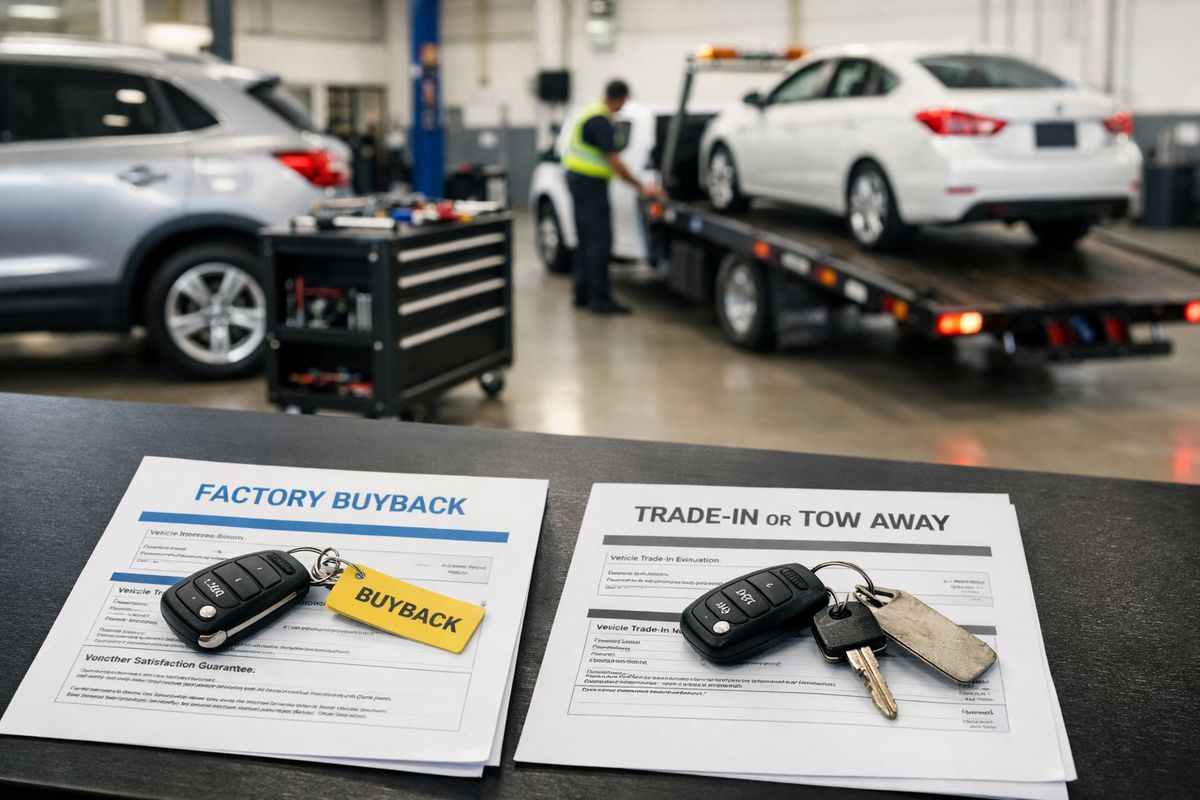
Buyback vs. trade-in: why the difference is a big deal
A trade-in usually means you absorb the loss.
If your defective vehicle has dropped in value because of repeated repairs, warning lights, drivability problems, or a replaced engine or transmission, the dealership may roll negative equity into your next loan or lease. That can leave you paying for the old problem and the new vehicle at the same time. A successful lemon law claim aims to shift that burden back to the manufacturer, where it belongs.
That is why rushing to unload the car can be expensive. Before taking that hit, it is worth seeing why getting rid of a problem vehicle too early can cost real money.
When “normal” is not a real answer
Dealers say “normal” for a few reasons. Sometimes the problem is intermittent. Sometimes the technician cannot duplicate it during a short test drive. Sometimes the paperwork is vague. Sometimes the dealership is minimizing a defect that keeps coming back.
But here’s the thing: “normal” is not a magic word.
If the vehicle hard shifts every morning, stalls at red lights, surges during acceleration, smells like something is burning, or loses power on the highway, the symptom still counts even if the dealer labels it differently. What matters is the defect itself, your repair history, and how the condition affects everyday driving.
If this keeps happening, it helps to understand what dealers often mean when they use that phrase.
Common problems dealers dismiss as “normal”
Some complaints get brushed off more often than others, especially on newer 2024 through 2026 vehicles loaded with software and electronic systems. Hard shifting, hesitation, repeated check-engine lights, infotainment failures that affect backup cameras or drivability settings, vibration at highway speed, burning smells, stalling, and sudden loss of power all show up in real-world lemon law disputes.
So do more serious repair patterns, like a transmission replacement followed by more slipping, clunking, or delayed engagement. If your vehicle dies at a stoplight, shudders during acceleration, or still feels wrong after major repairs, that deserves a second look. “Could not duplicate” does not mean “did not happen.”
The records that can prove the problem is real
Your paperwork matters more than the dealer’s shrug.
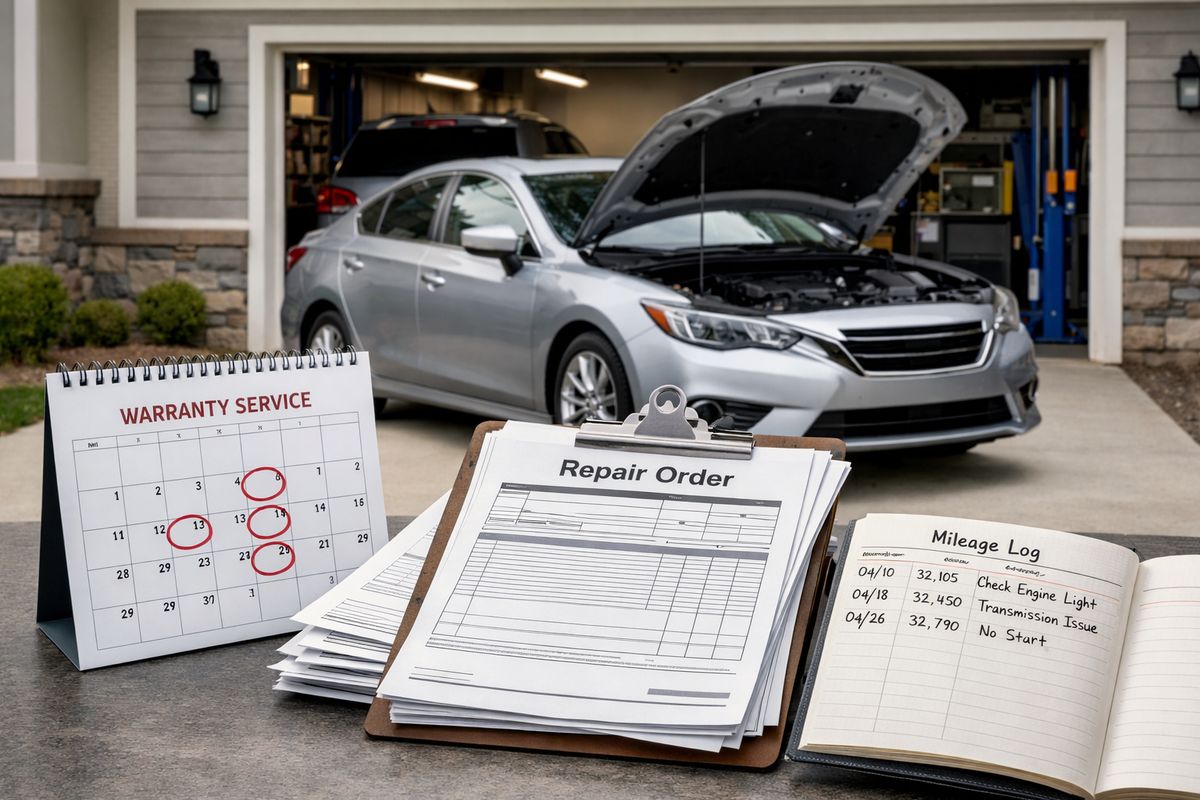
Repair orders, in and out dates, technician notes, text messages with the service department, towing bills, warning light photos, and short videos of the symptom can all help show a pattern. If your paperwork says “customer states transmission jerks between second and third gear” three visits in a row, that tells a much stronger story than “checked vehicle, no issue found.”
Even when a dealer writes “normal,” the history can still show the opposite. That is why keeping the right proof together from the start can make such a difference.
How florida lemon law applies to a car buyback claim
Florida lemon law generally focuses on new vehicles under warranty that have a nonconformity, which is a defect or condition that substantially impairs the use, value, or safety of the vehicle, and that has not been repaired within a reasonable number of attempts.
That sounds formal, but the idea is pretty practical. If your new vehicle has a serious recurring problem and the manufacturer has had fair chances to fix it but failed, you may have a claim for repurchase or replacement. Florida-specific rules matter here, so it helps to know which defects and vehicles typically qualify under state law.
Which vehicles usually qualify
Purchased and leased new vehicles in Florida are often the focus, especially 2024 to 2026 models still covered by the manufacturer’s warranty. Lessees are not shut out just because the vehicle is leased. If you are making lease payments on a vehicle that keeps going back for repair, the same core issues can still matter.
Warranty coverage is the anchor point. If the defect arose during the warranty period and repair attempts happened under warranty, that is usually where the analysis starts.
What counts as a “reasonable number” of repair attempts
There is no magical sentence on a service receipt that guarantees a buyback, and there is no single number that fits every situation. But in practical terms, repeated visits for the same unresolved problem, serious safety-related defects, and major component failures can all point toward a strong claim.
A vehicle that has been in four times for stalling is different from a one-off rattle. A transmission that was updated, then repaired, then replaced, then still slips under acceleration tells a story. So does a check-engine light that keeps returning after multiple parts swaps. If you are trying to make sense of the pattern, it helps to see how repair attempts are usually evaluated in these cases.
Why time out of service can matter just as much as repeat repairs
Some vehicles are not in and out of the shop, they are just in the shop. For weeks.
That matters. Long delays, backordered parts, repeated teardown work, engine replacement, transmission replacement, and endless waiting for a fix can show that the problem is far more than a minor inconvenience. If you are stuck in a loaner while your own car sits behind the service bay for another ten days, the impact is real. In many cases, the number of days your vehicle is unavailable is just as telling as the number of repair visits.
Signs your vehicle may be headed toward a buyback
Some patterns are hard to ignore.
If your vehicle keeps going back for the same core issue, has already had major warranty work, or has spent a big chunk of its life at the dealership, those are classic warning signs that the problem may be buyback-worthy rather than just annoying.
The same problem keeps coming back
Maybe the wording changes from visit to visit. One repair order says “harsh shift,” another says “hesitation,” another says “updated software,” and another says “customer reports jerk on acceleration.” But if the experience behind the wheel is basically the same, the pattern still counts.
That is common with rough shifting after updates, warning lights that return after clearing codes, or misfires that come back after parts replacement. If your dealer keeps “fixing” the issue but the vehicle keeps acting up, that repeated history matters.
Major components have already been replaced
An engine replacement or transmission replacement is not a small event. It usually means the manufacturer already recognized something serious had gone wrong.
And if the vehicle is still not right afterward, the claim can get stronger, not weaker. A major repair does not erase the prior history. It can actually highlight how severe the defect pattern has been, especially when drivability issues continue. That is why cases involving a transmission that was replaced but still acts up often deserve close attention.
Your vehicle has been in the shop for weeks
Time adds up fast.
A few days here, another week there, then another return visit while waiting on parts, and suddenly you have missed a month with the vehicle you are still paying for. That kind of repair history usually points to more than a minor nuisance. If your car has been sidelined for long stretches, that can strengthen the argument that the defect meaningfully affects use and value.
What to do before you push for a lemon law buyback
You do not need to turn into a lawyer. You just need a clean record of what has been happening.
The goal is to make your file tell the truth clearly, without gaps, fuzzy memory, or vague descriptions that let the problem disappear into service department shorthand.
Check your repair orders line by line
Do not just sign and toss the paperwork in the glove box.
Look at the complaint section and make sure it actually describes what you reported. “Vehicle stalls at stoplights” is useful. “Customer states normal” is not. If the write-up misses the real symptom, ask for it to be corrected before you leave or keep your own written note of what was said that day.
Describe symptoms, not diagnoses
Stick to what the vehicle does. Jerks. Slips. Stalls. Leaks. Loses power. Will not restart. Flashing warning lights. Loud clunk when shifting into drive.
That creates cleaner documentation over time. Guessing that the issue is a fuel pump, valve body, module, or sensor can muddy the record if the diagnosis changes. Your job is to report the symptom consistently.
Keep a simple timeline
A notes app is enough if you use it every time.
Track the date, mileage, what happened, how long the car stayed at the dealer, and what you were told. Include towing dates, warning lights, and loaner periods. If the same defect keeps cycling through “repaired,” “normal,” and “monitor for now,” your timeline will make that obvious.
What the lemon law buyback process usually looks like
Most people imagine a buyback claim as a black box. It does not have to feel that way.
The basic path usually starts with warranty repairs, then a review of the repair history, followed by notice and a manufacturer response. From there, the case may move toward a buyback, a replacement, or compensation depending on the defect history and how the vehicle has performed.
Case review and claim evaluation
A case review usually starts with the details you already have: your vehicle’s year, make, model, how many times it has been repaired, what the problem is, and how long it has been out of service.
That initial screening can quickly show whether the fact pattern points toward a lemon law claim, another warranty-based claim, or a weaker issue that needs more documentation. If you want a clearer picture of that stage, you can see what typically happens once your repair history gets reviewed.
Manufacturer buyback, replacement, or settlement
Possible outcomes usually include a repurchase, a replacement vehicle, or negotiated compensation. The best fit depends on the severity of the defect, whether repairs have failed, and whether you still want the vehicle.
If the car has been unreliable for months, a buyback may make the most sense. If the defect history supports relief but you prefer to keep the vehicle, cash compensation can sometimes come into play. If you are comparing paths, it helps to understand how a repurchase stacks up against getting another vehicle instead.
Why a free review can save time
If the dealer keeps repeating “normal,” it is easy to lose months second-guessing yourself.
A free review can cut through that quickly. Instead of guessing whether the pattern is serious enough, you can have the repair history looked at in light of Florida rules, the warranty timeline, and the actual defect pattern. For a lot of frustrated owners and lessees, that is the first moment the situation starts making sense.
Common mistakes that can weaken a strong claim
Some cases are not weak because the defect is minor. They are weak because the paper trail got messy.
A few avoidable mistakes can make a serious problem harder to prove than it should be.
Trading in too soon
Trading in early can lock in a loss before you know what rights you had. If the vehicle qualifies for a buyback or compensation, that option may be worth far more than whatever number gets tossed at you in the dealership appraisal lane.
Waiting too long to document the pattern
Memory is bad evidence. Paper is better.
If repair orders go missing, dates blur together, or warning lights were never photographed, it gets harder to show the full history later. Start now, even if your file is not perfect yet.
Assuming a major repair ends the problem
A replaced engine or transmission does not automatically close the book. If the defect continues, if new drivability problems show up, or if the same warning lights return, the claim may still be very much alive.
Questions to ask before you move forward
Before doing anything drastic, slow down long enough to answer three simple questions. This is usually where the situation stops feeling vague and starts looking either solvable or clearly buyback-related.
Do you have the right paper trail?
Pull together your repair orders, warranty booklet, purchase or lease paperwork, towing receipts, messages with the dealership, and your timeline of days out of service. You do not need a perfect legal file. You just need a usable history.
Is the problem affecting use, value, or safety?
Can you trust the vehicle in traffic? Does the transmission slip when you accelerate? Has the car been back to the dealer so many times that you know its resale value has taken a hit?
That language matters because it gets to the real issue. A defect is not just inconvenient. It changes whether your vehicle can be safely and normally used.
Is it time to get your case reviewed?
If your repair orders show repeat visits, major warranty repairs, or long stretches in the shop, stop relying on “that’s normal” and test the facts instead. Pull your repair orders, count the repair visits, add up the days out of service, and get the case reviewed.
Frequently asked questions
Can you get a lemon law buyback if the dealer says no problem was found?
Yes. “No problem found” does not automatically defeat a claim. If your records, repeat visits, warning lights, videos, or time out of service show a real recurring defect, the claim can still be valid.
Does a replaced engine or transmission help a buyback claim?
It can. A major component replacement often shows the problem was serious. If the vehicle still has defects after that repair, the history may support a stronger claim rather than a weaker one.
Can a leased vehicle qualify for a lemon law buyback in florida?
Yes, leased vehicles can qualify. If your leased vehicle is new, under warranty, and has a substantial defect that was not fixed within a reasonable number of attempts, the lease does not automatically block a claim.
How many repair visits are usually enough?
There is no one-size-fits-all number. Repeated repair attempts for the same issue, serious safety problems, or extended time out of service can all support a claim. The full pattern matters more than one isolated visit.
Should you keep taking the vehicle back to the same dealer?
Often, yes, at least long enough to create a clear repair history and give the manufacturer a fair chance to fix the issue. But if the same problem keeps returning, that repeat pattern may be exactly what supports your case.
Can you still have a claim if the car is drivable?
Yes. A vehicle does not have to be completely dead to qualify. If the defect substantially affects use, value, or safety, a drivable car can still be a lemon.
Talk to jonathan about your vehicle
Jonathan D. Schwartz, the attorney behind Bad Vehicle, helps vehicle owners understand Lemon Law options. He can review your repair history, answer your questions, and help determine the next steps for your potential claim.
Your case review is free, and you pay no attorney fees unless you win.
Schedule your free consultation with Jonathan
Think your vehicle may qualify?
Have your repair history reviewed and find out what options may be available under Lemon Law or warranty law.