

A 2024 J.D. Power study found that new-vehicle problems rose to 194 problems per 100 vehicles, a reminder that “new” does not always mean “reliable.” If your car in shop too long lemon law search started after weeks without your vehicle, repeated dealer visits, or a major engine or transmission failure, Florida law gives you a real framework for a buyback or replacement.
Car in the shop too long? lemon law may help
Florida lemon law protects you when a new or demonstrator vehicle has a substantial defect covered by the manufacturer’s warranty and the defect is not fixed within a reasonable number of attempts. That protection matters when your 2024, 2025, or 2026 vehicle keeps returning to the dealership, spends weeks out of service, or still drives badly after major repairs.
What this means in practice is simple: frustration alone is not the legal standard, but a documented pattern is. Once repair history shows the problem keeps coming back or the vehicle has been unavailable for too many days, the issue stops looking like a normal warranty inconvenience and starts looking like a lemon law claim.
The move that works is treating every dealer visit like evidence from the start. Dates, mileage, invoices, warning lights, and the exact symptom all matter because Florida lemon law is built around proof, not just how fed up you feel.
What “car in the shop too long” means under florida lemon law
According to the Florida Attorney General’s Lemon Law guide, the law covers nonconformities that substantially impair the use, value, or safety of the vehicle. In plain English, “car in the shop too long” means more than a dealer taking its time. It means the repair history shows the vehicle is not being brought into conformity with the warranty within a reasonable number of attempts.
That phrase, reasonable number of attempts, is where many claims turn. A single bad repair visit is annoying. A series of failed repairs, repeated diagnoses, or weeks of downtime is different. Florida law gives those patterns legal weight.
Here’s how to use it: stop thinking only in terms of how inconvenient the problem feels, and start measuring how often the problem returns and how long the vehicle is unavailable.
The florida 30-day-out-of-service rule in plain english
The Florida Attorney General explains that one way to meet the standard is if the vehicle is out of service for repair of one or more nonconformities for a cumulative total of 30 or more days during the Lemon Law Rights Period. Those days generally count while the vehicle is at an authorized service agent for warranty repairs.
That matters because many owners assume only repeated short visits count. Not true. If your vehicle spent 12 days waiting on parts, 9 days for a transmission diagnosis, and another 11 days back at the dealer for the same drivability problem, the total matters. A long downtime timeline can support your claim even if the repair orders use different wording.
The practical step is to total every day the vehicle stayed at the dealership for covered warranty repairs. If you want a deeper explanation of how those dates are counted, read about when downtime crosses the line.
What counts as a “reasonable number of repair attempts”
Florida law treats repeated failed repair attempts as another path to eligibility. For most substantial defects, the pattern usually involves repeated attempts to fix the same problem. For defects likely to cause death or serious bodily injury, the standard can be shorter because the safety risk is higher.
What this means in practice is that a stalling issue, loss of power on the highway, brake defect, or steering failure gets attention fast. A vehicle does not need to become completely undrivable to qualify. If the defect materially affects use, value, or safety and the dealer keeps trying without fixing it, that is the pattern that matters.
Your action here is to count repair attempts by symptom, not by the dealer’s changing terminology. “Harsh shift,” “hesitation,” and “loss of acceleration” may all describe the same core defect.

Which vehicles and defects usually qualify
The Florida Attorney General’s program applies to new or demonstrator motor vehicles sold or leased in Florida, and that is exactly why so many 2024 to 2026 claims fit the normal profile. If your vehicle came with a manufacturer warranty and the defect arose during the rights period, you are looking at the right law.
The defect must substantially impair the use, value, or safety of the vehicle. That phrase does real work. A defect that makes the vehicle unreliable, unsafe, or worth materially less is the kind that belongs in a lemon law analysis. For a broader breakdown, see how Florida defines a qualifying lemon.
Engine, transmission, and drivability failures
Consumer complaint data tracked by the National Highway Traffic Safety Administration repeatedly shows engine, transmission, and powertrain issues among the most serious owner-reported defects. In practice, these are some of the strongest lemon law fact patterns because they directly affect whether you can trust the vehicle to move, accelerate, idle, or shift correctly.
Think about what these problems actually do to daily driving. Stalling in traffic, slipping gears, shuddering on acceleration, sudden loss of power, hard downshifts, or repeated check-engine events are not minor annoyances. If the engine or transmission has already been replaced and the vehicle still has major drivability issues, the claim does not disappear. A replacement part is not a magic reset. More on that appears in this explanation of ongoing problems after an engine swap.
Your practical step is to describe the drivability symptom the same way every time: when it happens, how often, and what the vehicle does.
Electrical, warning-system, and safety-related defects
A 2024 Consumer Reports reliability analysis noted that newer vehicles continue to struggle with electronics and software-heavy systems, especially when those systems affect daily operation and safety functions. Electrical failures are no longer just radio problems. Modern vehicles tie screens, sensors, modules, cameras, and warnings directly to drivability and safe operation.
If your dashboard lights up with repeated airbag, braking, steering, or collision-system warnings, that matters. If your vehicle drops into limp mode, loses backup camera function tied to visibility, or throws repeated sensor errors that affect braking or lane functions, that matters too. Safety-related defects often take a shorter path through the lemon law analysis because the risk is obvious.
The action is to photograph every warning light and save every service explanation, even if the dealer says the issue cleared on its own.
Problems that usually do not qualify on their own
The Florida Attorney General’s standard focuses on substantial impairment. That means cosmetic flaws, trim noise, isolated rattles, or minor appearance complaints usually do not carry a lemon law claim by themselves. Damage from collisions, neglect, abuse, or unauthorized modifications also falls outside the normal warranty-based framework.
Here’s the simplest version of this: the law is not for every problem, it is for serious unresolved problems. If the defect changes how safely the vehicle operates, how reliably you can use it, or what it is worth in the real world, that is the lane where lemon law lives.
Your action is to separate true vehicle defects from unrelated damage or wear issues before building your claim file.
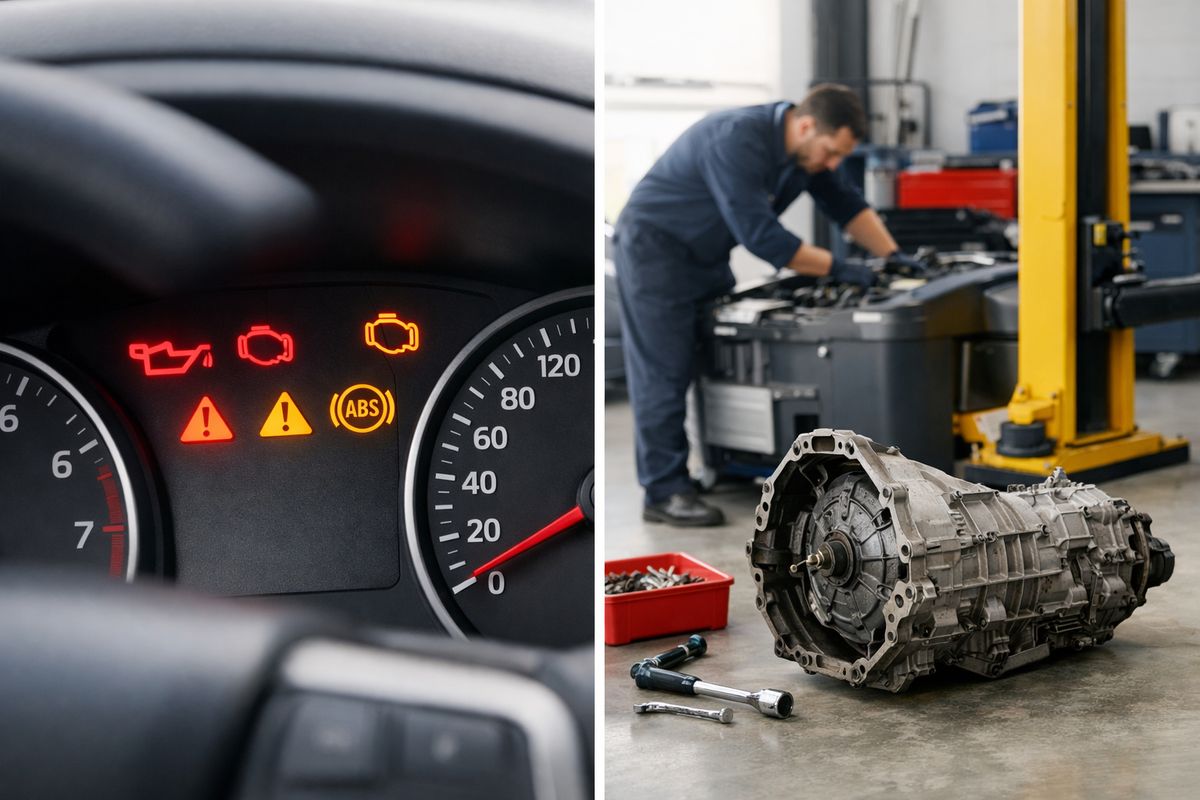
When repeated repairs turn a warranty problem into a lemon law claim
According to the Federal Trade Commission’s warranty guidance, a manufacturer warranty promises repair of covered defects during the warranty period. But here’s the catch: a warranty promise loses meaning when the same problem keeps returning.
That is the moment a routine warranty issue becomes a lemon law issue. One invoice rarely proves much. Five invoices showing the same breakdown pattern, or one invoice showing a 31-day stay, tell a very different story. If you are sorting out the overlap between warranty coverage and lemon law rights, this explanation of unresolved warranty repairs helps connect the dots.
The practical step is to stop viewing each dealer visit as separate. Read the repair history as one continuous story.
Same problem, same symptom, different repair order
Dealerships often change the wording from visit to visit. “No start,” “battery drain,” “module fault,” and “electrical concern” can all refer to the same unresolved condition. What matters is symptom consistency.
If your transmission slams into gear every week, it does not become a new problem because one advisor writes “harsh shift” and another writes “customer states jerking on takeoff.” Florida claims are built around the unresolved defect, not the dealer’s preferred phrasing.
Your action is to keep your complaint language consistent each time you drop off the vehicle.
One long repair versus multiple shorter repair visits
Some claims involve one brutal repair stay. Others involve a vehicle bouncing in and out of the shop every few weeks. Both patterns matter. A single extended repair can satisfy the out-of-service threshold, while repeated visits can satisfy the failed-attempt path.
What this means in practice is that your vehicle does not need to fit one neat storyline. Florida law recognizes both chronic downtime and chronic failed repair efforts.
The step here is to map the downtime on a calendar, not just stack invoices in a folder.
Why a replacement engine or transmission does not automatically end the claim
A 2023 CarMD vehicle health index again showed that powertrain repairs remain among the costliest automotive fixes, which is exactly why owners assume a replacement engine or transmission should solve everything. But a major replacement does not erase prior repair history, prior downtime, or continuing drivability problems.
If your engine was replaced after repeated failures and the vehicle still stalls, surges, burns oil, misfires, or throws fault codes, the substantial impairment remains. The same logic applies to a replacement transmission that still slips, jerks, hesitates, or fails to engage. For that scenario, this breakdown of continuing transmission trouble after replacement shows why the claim stays alive.
Your action is to treat the replacement as part of the evidence, not the end of the evidence.
How Florida’s lemon law process works
The Florida Attorney General’s office lays out a structured process, and timing controls everything. This is not a vague complaint system. It is a rights-based process with deadlines, notice requirements, and specific paths toward repurchase, replacement, or dispute resolution.
That structure is good news. Once your records are organized, the claim stops being emotional and starts being measurable.
The step that works is getting your dates straight before anything else.
The lemon law rights period
In Florida, the Lemon Law Rights Period generally covers the first 24 months after the date of delivery of the vehicle. That deadline matters because even a strong defect pattern gets harder to press when you wait and let the timeline drift.
If your 2024 to 2026 vehicle is still within that period, every new repair visit deserves immediate attention. Delay weakens the paper trail and compresses your options.
Your action is to confirm the delivery date today and count forward 24 months.
The final repair opportunity and written notice
Florida’s process includes a final repair opportunity after formal notice to the manufacturer. This step matters because it gives the manufacturer one last clear chance to fix the defect before the claim moves further.
A sloppy notice slows everything down. An organized notice with dates, defects, and repair history creates pressure fast. That is why documentation beats frustration every time.
Your action is to prepare a clean defect summary before sending or discussing any formal notice.
Arbitration, settlement, and what happens after a claim is filed
Once the claim is properly positioned, outcomes usually move toward a buyback, replacement, negotiated settlement, or continued dispute through the available procedures. The repair history drives the leverage. Organized files get taken more seriously because the pattern is harder to deny.
This is also where owners start comparing outcomes. If you want a side-by-side look at refund versus replacement, this comparison of your two main remedy paths lays it out clearly.
Your step is to organize your file before talking numbers.
What you need to prove your claim
A 2024 survey from Pew Research Center found that trust rises when people can verify claims with records, and that logic applies perfectly here. Lemon law claims are won on documents. Not vibes. Not memory. Documents.
The strongest case file shows when the problem started, how often it returned, how long the vehicle stayed out of service, and how the defect affects normal use. If you want a model for the paperwork that matters most, start with the records that strengthen a vehicle defect claim.
The practical step is to build one folder, digital or paper, and put every vehicle problem record in it.
Repair orders, invoices, and days out of service
Repair orders are the backbone of the case. Each one should show the drop-off date, pick-up date, mileage, your complaint, and what the dealer claims to have done. If the vehicle sat because parts were backordered, that still belongs in the timeline.
For a car in shop too long lemon law claim, the downtime chart often decides the issue. A clean list of in-date, out-date, and total days tells the story fast.
Your action is to create a running total of out-of-service days tonight.
Texts, emails, videos, and dashboard photos
Service paperwork is not the only proof that matters. Texts with service advisors, emails about delays, photos of warning lights, and videos showing hard starts, stalling, or abnormal noises all reinforce credibility.
This matters most when the dealer writes “could not duplicate” or “no problem found.” Your own records make it much harder for the defect to be minimized later.
Your action is to save every communication and back it up somewhere outside your phone.
Your timeline of events
A simple chronology ties everything together. Start with the first symptom, then list each repair visit, each return of the issue, each towing event, and each period of downtime.
That single document does two things. It reveals legal thresholds quickly, and it makes any case review faster and more accurate.
Your action is to draft a one-page timeline before you request a claim review.
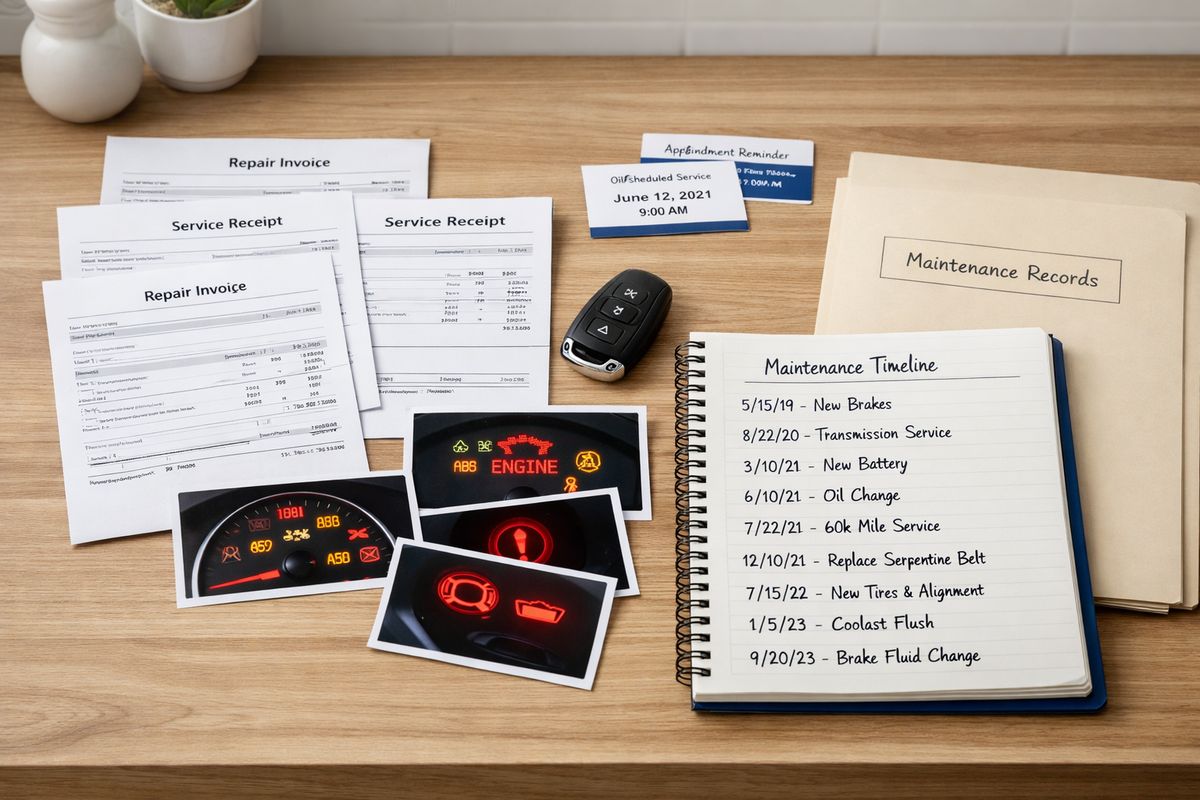
What compensation you may be entitled to
According to the Florida Attorney General, successful lemon law outcomes can include repurchase or replacement. In plain English, that means the manufacturer may have to take the vehicle back or provide another comparable one. Some claims also resolve with cash compensation instead.
What this means in practice is that you are not stuck choosing between endless repairs and taking a huge loss on a trade. You have actual remedy options when the defect history supports them.
The practical step is to compare your current financial exposure against the likely remedy path before making any trade-in decision.
Buyback: what a refund usually includes
A buyback usually includes payments you made toward the vehicle, plus taxes and certain registration-related charges, subject to the structure of the claim and a mileage offset for use. The key point is that a buyback is designed to unwind a bad vehicle transaction, not trap you in it.
If you already started pricing trade-ins, this matters even more. A manufacturer resolution often preserves more value than dumping a defective vehicle into the market at a loss.
Your action is to gather your sales contract, finance or lease paperwork, and registration costs so you can measure a refund against your losses.
Replacement vehicle: when that option makes sense
A replacement vehicle can make sense if you still want the same make or model and believe the defect was isolated to your specific unit. But after months of downtime, many owners prefer a buyback because trust in the vehicle platform is gone.
That is not emotional overreaction. It is a practical response to a long repair history.
Your action is to decide whether you still want another version of the same vehicle before negotiating any resolution.
Cash settlement versus trading in a defective vehicle
Some claims settle for cash compensation, especially when you want to keep the vehicle but recover value for the defect history. That can be a better move than trading the vehicle at a steep discount while the problem remains unresolved.
If you are already thinking about getting rid of the car, read about why unloading a bad vehicle too early can cost you. Acting before a trade-in usually preserves more leverage and more money.
Your action is to pause any trade-in until you understand the value of the claim.
Mistakes that hurt lemon law claims
A 2023 National Center for State Courts report highlighted a simple truth across consumer disputes: cases weaken when records are inconsistent or delayed. Lemon law claims are no different. Most damaged claims are not hurt by a lack of frustration. They are hurt by preventable mistakes.
The good news is that these mistakes are easy to avoid once you know what to watch for.
The practical step is to fix the record before the manufacturer defines the story for you.
Waiting too long to start the process
Delay creates timing problems inside the 24-month rights period and makes it harder to reconstruct the repair history later. When months pass, service paperwork gets lost, details blur, and the defect starts looking less clear on paper.
Your action is to start the review process as soon as repeat visits or major downtime become obvious.
Failing to describe the problem consistently
Vague complaint descriptions make the defect look random. Changing descriptions make recurring problems look unrelated. Consistency is one of your strongest tools.
Your action is to use the same plain-English symptom description at every visit.
Paying out of pocket or going outside the authorized repair network too soon
Florida lemon law is tied to warranty-covered defects and authorized repair efforts. If you immediately jump to an independent shop for routine warranty problems, you complicate the claim and invite blame-shifting.
Emergency situations are different. Routine covered defects belong with the authorized repair network first.
Your action is to route normal warranty repairs through the proper manufacturer or dealer channel.
Trading, selling, or stopping documentation
Once you trade or sell the vehicle, your leverage changes fast. Missing records also weaken the claim because the timeline gets harder to prove. Verbal updates with no paperwork are almost worthless later.
Your action is to leave every service interaction with something in writing.
Questions florida drivers usually ask
Does one month in the shop automatically make your car a lemon?
No. Thirty cumulative days out of service is a major Florida threshold, but the defect still has to be substantial, covered by warranty, and arise within the rights period. The 30-day mark is powerful evidence, not a standalone shortcut.
Does a leased vehicle qualify?
Yes. Florida lemon law protections generally apply to lessees of eligible new or demonstrator vehicles, as long as the vehicle is otherwise covered and the defect history fits the legal standards.
What if the dealership says “no problem found”?
That does not end anything. Intermittent defects still count when the symptom keeps returning. Videos, warning-light photos, repeat complaints, and consistent descriptions all help show the pattern.
What if your engine or transmission was already replaced?
A major component replacement does not erase earlier repair attempts or downtime. If the vehicle still has serious drivability problems, or if the defect history already crossed the legal threshold, the claim remains very much alive.
Do you need a lawyer to start?
No, but a free case review speeds things up because it helps you measure the repair history against Florida’s legal thresholds right away. Speed matters when the rights period is running.
What to do this week if your vehicle keeps going back to the dealer
Gather five things: your vehicle’s year, make, and model, current mileage, every repair invoice, and the total number of repair attempts. Then line up the dates the vehicle stayed at the dealer and total the days out of service. That single file gives you the clearest picture of whether your vehicle fits Florida lemon law.
Talk to Jonathan About Your Vehicle
Jonathan D. Schwartz, the attorney behind Bad Vehicle, helps vehicle owners understand their Lemon Law options. He can review your repair history, answer your questions, and help you determine the next steps for your potential claim.
Your case review is free, and you pay no attorney fees unless you win.
Schedule your free consultation with Jonathan: https://badvehicle.com/schedule-your-consultation/
Frequently asked questions
How many repair attempts are enough for a lemon law claim in florida?
There is no one-line answer for every defect, but repeated failed repairs for the same substantial problem are a core trigger under Florida law. Safety defects can reach the threshold faster than non-safety issues.
Does a backordered part count toward days out of service?
If your vehicle is sitting at an authorized service agent for warranty repair while waiting on parts, that downtime is highly relevant to the 30-day analysis. Keep the repair order that shows the vehicle remained in the shop.
Can software problems qualify under lemon law?
Yes, if the software issue substantially impairs the vehicle’s use, value, or safety. A screen glitch alone is one thing. A recurring software failure that affects braking warnings, drivability, cameras, or safety systems is very different.
What if the dealer says the problem is normal?
That statement does not control the claim. If the issue materially affects how the vehicle drives, operates, or retains value, and the defect keeps returning, the “normal” label does not erase the repair history.
Should you keep taking the car back to the same dealer?
For warranty-based defects, authorized repair visits usually need to continue through the proper channel so the record is clear. What matters most is getting each complaint documented in writing every single time.
Think your vehicle may qualify?
Have your repair history reviewed and find out what options may be available under Lemon Law or warranty law.