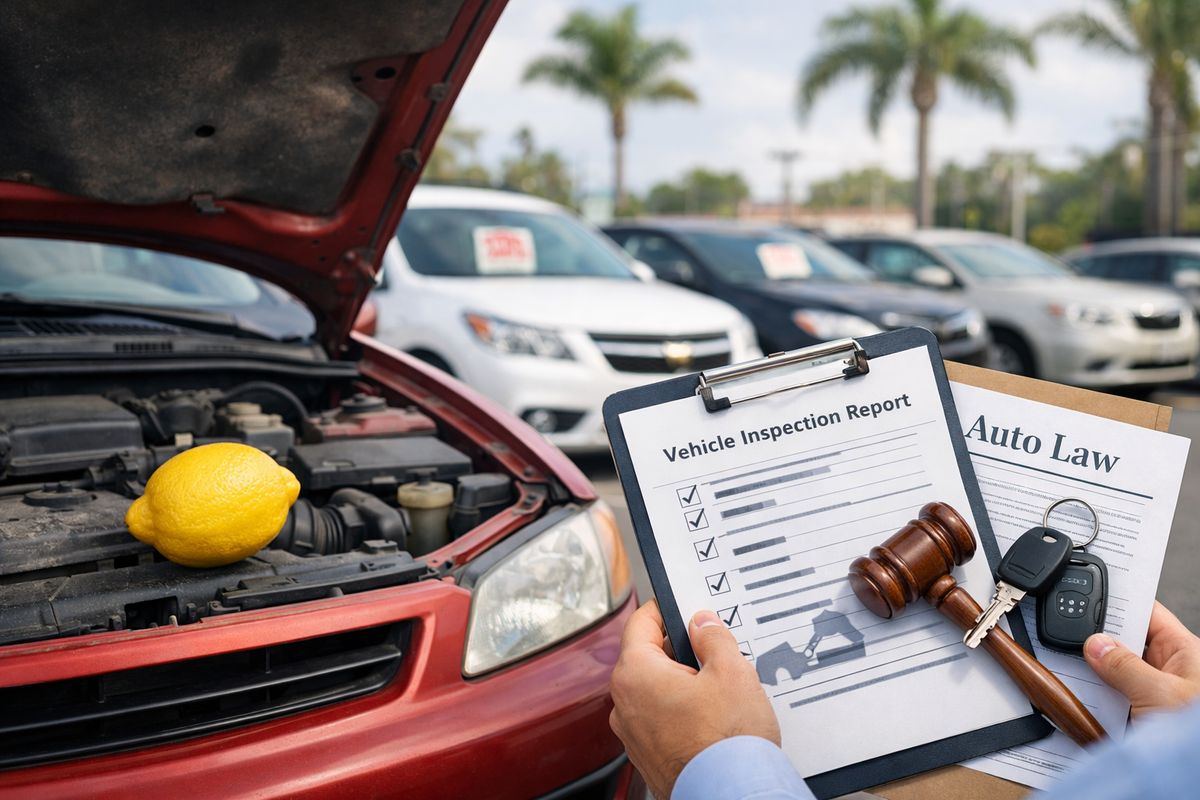

The Florida Lemon Law arbitration process can feel confusing when your car has been repeatedly in the shop.
You may be dealing with the same defect, missed work, loaner car stress, and repair papers that make little sense.
I want this guide to make the path clear, so you know what may happen before, during, and after arbitration.
What the Florida Lemon Law Arbitration Process Means
The Florida Lemon Law arbitration process is a way to resolve a dispute without first filing a normal court case.
A neutral person or panel reviews the facts and decides if the vehicle meets the Lemon Law rules.
Arbitration is not the same as a repair visit. It is a formal case. You provide proof that the vehicle has a real defect and that the manufacturer or dealer had enough opportunities to fix it.
Many drivers do not know what step comes next after the shop says, “We cannot duplicate the problem.” Your repair attempts may tell the real story if each visit is well documented.
In Florida, the process can be split into two paths. Some vehicle makers use a state-certified manufacturer-sponsored program.
Other claims may go straight to the Florida New Motor Vehicle Arbitration Board.
Manufacturer Sponsored Program vs. Florida New Motor Vehicle Arbitration Board
A manufacturer-sponsored program is an informal dispute program tied to the vehicle maker.
The Florida New Motor Vehicle Arbitration Board is the state board run through the Florida Attorney General’s Lemon Law Arbitration Division.
When a Manufacturer Program Comes First
Some manufacturers have a state-certified program. If your maker has one, you may need to file there first before the state board can take the case.
This step is easy to miss. Many people assume they can go straight to the state board. However, Florida uses the certified program first for certain brands.
Your paperwork matters here. Save every repair order, text, email, tow receipt, and call note.
If you have already sent a manufacturer notice, keep proof of when and how it was sent.
When the State Board Can Hear the Case
The state board may hear the case if there is no certified program, the program lacks jurisdiction over the dispute, the program fails to issue a decision within the required time, or you are not satisfied with the result.
The board uses a three-member panel. You can present your side, bring witnesses, and explain the repair history in plain terms.
The goal is simple. The board looks at the vehicle, the defect, the repair history, and the law.
Then it decides if you should receive a refund, a replacement, or no award.
Florida Lemon Law Arbitration Process Deadlines You Need to Know
Florida Lemon Law arbitration deadlines can determine whether your case gets heard. The main timing rules involve the 24-month rights period, the 60-day filing window, and the 40-day timing rules.
The Lemon Law rights period is the first 24 months after the vehicle is delivered to you. The defect must be first reported during that period.
The arbitration claim must be filed no later than 60 days after that period ends. If a certified manufacturer program takes final action, the state board deadline can be 30 days after that action or 60 days after the rights period ends, whichever is later.
This is why we tell people not to wait until the last week. The case timeline can move faster when the file is organized early.
What the 40 Day Rule Means in Florida Lemon Law Cases
The 40-day rule can mean different things in a Florida Lemon Law case. It can apply to the maker’s certified program, the timing of the state board hearing, or the time a maker has to comply with a board award.
First, if a certified manufacturer program does not issue a decision within 40 days of your filing, you may be able to ask the state board to take the case.
Second, after the state approves a request for board arbitration, the board must hold the hearing within 40 days. The board then has a set time to issue a decision after approval.
Third, if the board awards a refund or replacement and the maker does not appeal, the maker must comply within 40 days of receiving the written decision.
That sounds like a lot of dates. I suggest making a simple chart with the date you bought or leased the car, each repair date, each notice date, the arbitration filing date, and each answer you receive.
What Happens Before the Arbitration Hearing
Before the hearing, you build the evidence showing the defect, the repair history, and how the problem affects the vehicle. The stronger your documents are, the easier it is for decision-makers to follow your story.
Start with your repair orders. Each one should list their complaint in their own words. If your SUV shakes at highway speed, the order should not only say “customer concern.”
Next, gather:
- Sales or lease papers
- Warranty papers
- Repair invoices
- Dealer notes
- Tow bills
- Rental or rideshare receipts
- Photos or videos of warning lights
- Messages with the dealer or maker
- A timeline of every repair visit
Do not rely on memory alone. A clear file can help show what happened and when.
This is also the stage where many cases settle. A maker may offer money, a buyback, or another fix before the hearing.
What Happens During the Hearing
During the hearing, each side gives its proof and explains its position. You do not need to sound like a lawyer to tell the truth in a clear way.
You may explain when the problem started, what the dealer tried, and why the vehicle still does not work right. The maker may argue that the defect is minor, has been fixed, was caused by misuse, or is not covered.
The board or arbitrator may ask questions. They may want to know how often the defect happens, how it affects safety or use, and how many days the vehicle sat at the shop.
Keep your answers short and direct. Use dates. Use repair order numbers. Explain the real-world effects on your life, such as missed work, unsafe driving, or being unable to trust the car for family trips.
Possible Results After Arbitration
After arbitration, you may receive a refund, a replacement vehicle, or no award. Some cases may also lead to a cash offer before or after the hearing.
A refund may include certain amounts paid for the vehicle, with offsets permitted by law. A replacement means the maker provides another vehicle that meets the rules. A no-award result means the board did not find sufficient evidence under the Lemon Law.
Not every strong case ends the same way. The facts matter. The defect, repair history, mileage, and proof can all affect the result.
A Clear Arbitration Path Can Protect Your Claim
The Florida Lemon Law arbitration process gives you a way to push back when a new or demo vehicle keeps failing after repair attempts.
The key is to act before deadlines pass and to keep clean records from the start.
If your car keeps going back to the shop, do not guess your way through the next step.
Gather your documents, mark your dates, and get guidance before you file or accept an offer.
Think your vehicle may qualify?
Have your repair history reviewed and find out what options may be available under Lemon Law or warranty law.