

Repair orders and invoices are the paper trail of a vehicle defect. In a Florida lemon law claim, repair orders and invoices often do more than describe service visits. They show what went wrong, when the vehicle was in the shop, and what the dealer or manufacturer did in response.
Define repair orders and invoices
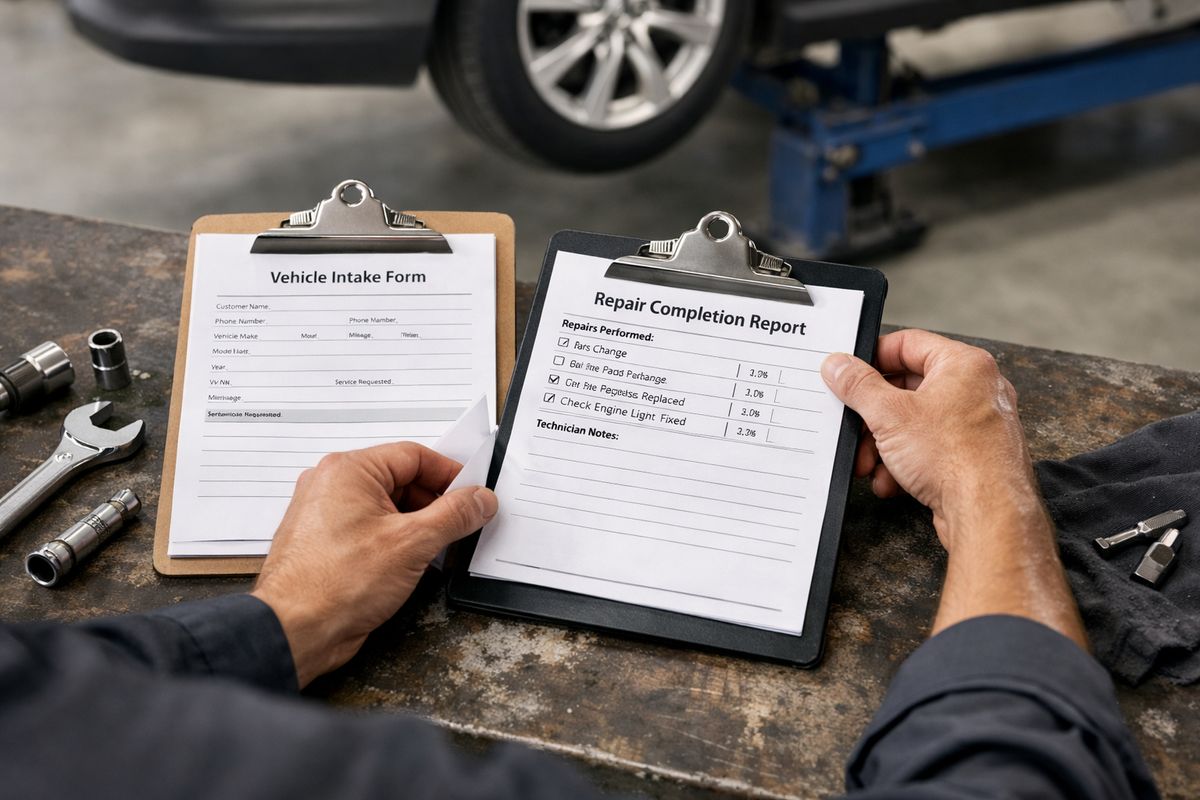
A repair order is the service record opened when a vehicle goes to the dealership or repair facility. An invoice is the closing record issued when that visit ends.
Both documents can record the date, mileage, complaint, inspection notes, parts used, labor performed, and charges or warranty submissions. In a lemon law dispute, they often serve as the main proof that a defect was reported and that repair attempts happened.
Distinguish the two records
A repair order starts the job. It usually captures the owner or lessee complaint, the vehicle condition at intake, and the work the dealer plans to inspect or perform.
An invoice closes the job. It usually states what the technician found, what work was completed, what parts were replaced, and what amounts were charged or billed to warranty.
The two records overlap. They are not the same. The intake side may contain the clearest description of the problem. The closeout side may contain the dealer’s final position on whether the defect was fixed.
Explain why both matter in lemon law
Lemon law cases often turn on patterns. A single visit may show little. Four visits for stalling, harsh shifting, or repeated warning lights can show a recurring defect.
These records also show time. Open dates and close dates can help establish how long the vehicle was unavailable for use.
Manufacturers, dealers, and attorneys review these documents to test key issues. They look for repeated repair attempts. They look for warranty coverage. They look for facts that may support a buyback, replacement, or compensation claim.
List what each document should include
A useful service record is specific. A weak one is vague.
The stronger record ties the vehicle, the defect, and the repair timeline together without guesswork. That is what gives the documents value in a lemon law review.
Vehicle, owner, and visit details
Each document should identify the vehicle by VIN, year, make, and model. It should also show the customer name or lessee name, the dealer name, the repair date, and the mileage at intake or release.
These fields matter because they link each visit to the same vehicle. They also place the defect on a clear timeline.
If a claim involves a 2024, 2025, or 2026 vehicle, early records can matter as much as later ones. The first visit often becomes the starting point for the defect history.
Complaint, diagnosis, and repair notes
The complaint section should state the symptom in plain terms. “Engine stalls at stop.” “Transmission jerks from 2nd to 3rd.” “Vehicle will not start after sitting overnight.”
That wording matters. Lemon law claims often depend on how the issue was reported, not only on what the technician later wrote.
The diagnosis and repair sections should show technician findings, fault codes, tests, and the work performed. If the dealer road tested the vehicle, updated software, replaced a module, or duplicated the concern, that should appear in the file.
Parts, labor, and warranty entries
The closing record should identify replaced parts and labor operations. It may also show campaign work, goodwill assistance, or warranty coding.
Those entries can become central facts in serious defect cases. Engine replacement. Transmission replacement. Repeated valve body work. Electrical harness replacement. Each item can show that the problem was significant, not minor.
When transmission trouble continues after major work, the service file becomes even more important. Cases involving repeat drivability issues often require close review of parts history and follow-up visits, especially in situations like ongoing failures after major transmission work.
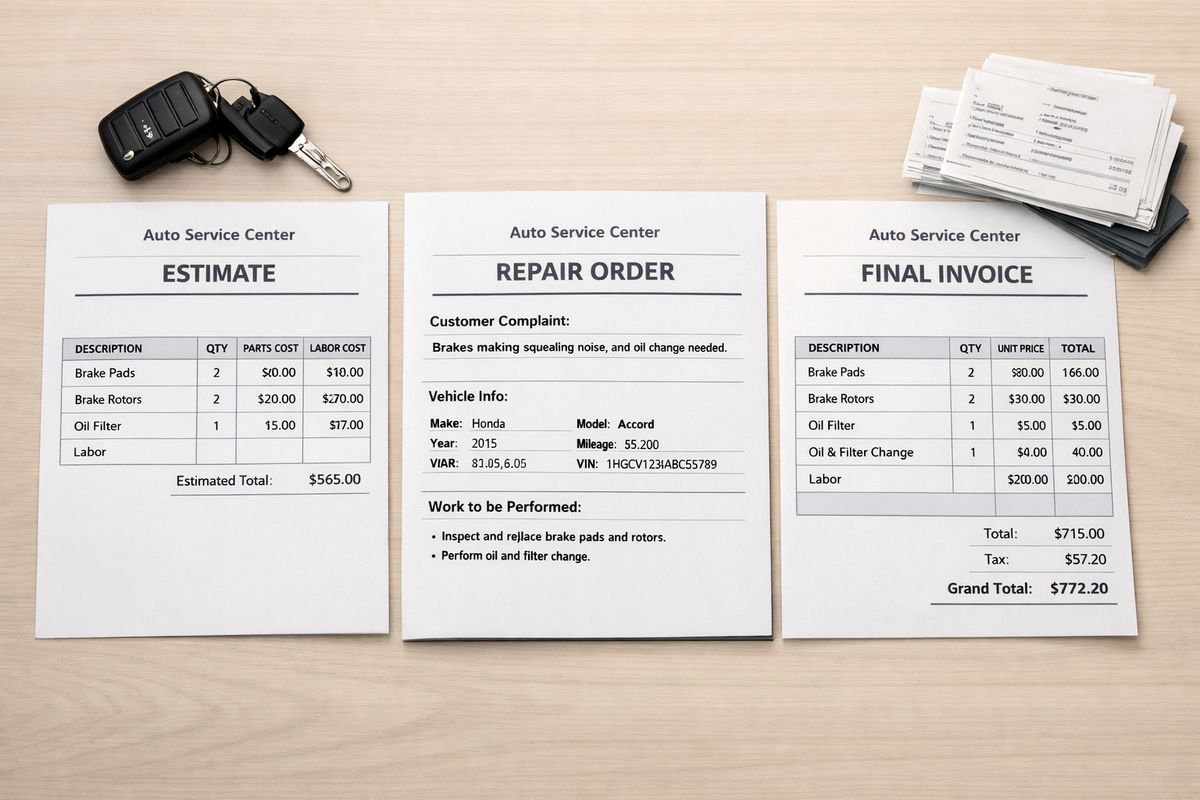
Compare repair orders, estimates, and invoices
Dealer paperwork uses several labels for similar records. That causes confusion.
For lemon law purposes, the question is simple: which document proves that the defect was reported and that the dealer took action. Repair orders and final invoices usually carry the most weight.
Repair order vs estimate
An estimate projects possible work and possible cost before the repair is done. It may list labor, parts, or recommended service.
An estimate alone does not prove that a repair attempt happened. It proves that work was discussed.
If the estimate became part of the service file and led to an opened repair order, it may still help explain the visit. On its own, it is weaker evidence than an intake repair order or a final invoice.
Repair order vs final invoice
A repair order often captures the problem at drop-off. That is where the original complaint may appear in the customer’s own words or close to them.
A final invoice reflects the closed job. It may show the dealer’s diagnosis, the repair performed, and the release date.
Both should be kept. One may contain details that the other leaves out. A short invoice may omit the intake complaint. A brief repair order may omit the final parts list.
Why missing documents create gaps
Missing paperwork creates blind spots. A lost intake sheet may erase the best description of the defect.
A vague invoice may make it hard to tell whether the dealer addressed the same issue again. A missing closeout record may obscure how many days the vehicle stayed in the shop.
That does not always end a claim. Other records can help fill gaps. Appointment confirmations, rental bills, tow receipts, text messages, and portal screenshots may support the timeline.
Show how these records support a lemon law claim
A lemon law claim is built on proof. Service records often supply that proof.
They can show repeated attempts. They can show long repair periods. They can show that the defect affects the vehicle in a substantial way.
Prove repeated repair attempts
Repeated repair orders for the same symptom can show that the dealer had more than one chance to fix the problem. The wording does not need to be identical on every visit. It needs to point to the same underlying issue.
A vehicle may come in for “hard shift,” then “hesitation on acceleration,” then “transmission slips after warm-up.” Those entries may still show a continuing transmission defect.
The same pattern appears with stalling, no-start conditions, recurring warning lights, brake noise tied to a fault, or electrical failures. The record is stronger when the complaint is specific each time.
Prove days out of service
Repair records usually show when the vehicle was dropped off and when it was released. Those dates can help measure how long it stayed out of service.
That matters in claims where the vehicle spent weeks at the dealer, even if the shop tried different fixes during that period. One long stay can matter. Several shorter stays can also matter when added together.
Rental records and tow bills can support those dates. So can text messages stating that parts were on backorder or that the vehicle was not ready.
Prove substantial defects
Service records can also help show that a defect affects use, value, or safety. That phrase appears often in lemon law discussions because not every small issue qualifies the same way.
Engine failure, transmission failure, repeated no-start conditions, electrical shutdowns, brake issues, and loss of power tend to carry more weight than trim noise or cosmetic concerns. A file showing repeated no-fix visits for a major drivability problem can support the claim that the defect is substantial.
Spot the record problems that hurt a case
Dealer files are not always clean. The problem is often the wording, not the lack of visits.
A weak record can still be useful. It just takes more effort to connect the facts.
Vague complaint wording
Some records reduce the complaint to almost nothing. “Check vehicle.” “Customer states noise.” “Inspect concern.”
Those entries hide the real symptom. A stronger record states what happens, when it happens, and whether it came back after a prior repair.
“Vehicle stalls at red lights after warm-up” is stronger than “engine issue.” “Transmission jerks after prior repair” is stronger than “customer states problem.”
“Could not duplicate” or “no problem found”
These entries do not erase the defect history. They show that the dealer did not confirm the condition on that visit.
Intermittent defects often produce this language. A vehicle may fail to start on some mornings and work normally at the shop. A transmission may shudder only after extended driving.
If the same complaint appears across multiple visits, those records can still matter. The pattern remains visible even when one technician writes “no problem found.”
Missing mileage, dates, or signatures
Missing mileage can disrupt the timeline. Missing dates can make it harder to count days out of service.
Unsigned or incomplete records can also create disputes about when the visit began or ended. Even so, incomplete paperwork may still help if other records support it.
Emails, appointment logs, text messages, rental agreements, and tow invoices can help rebuild the missing pieces. The aim is a clear chronology.
Gather and keep the right documents
Good recordkeeping reduces disputes. It also shortens the time needed to evaluate a claim.
The best file starts at the first repair visit. It does not begin after the fifth.
Ask for the repair order at drop-off
The intake document should reflect the complaint before work begins. Owners and lessees should review the wording and keep a copy.
If the vehicle came in for stalling, the record should say stalling. If it came in for slipping after an earlier transmission repair, that should appear too.
Get the final invoice at pickup
The closing paperwork should show what the dealer inspected, tested, replaced, and returned to service. That record should be saved even when the balance due is zero.
Warranty repairs often show “customer pay 0.” That does not reduce the value of the document. It still proves that the visit occurred and shows what the dealer claimed to do.
Keep a simple repair file
A single folder, paper or digital, should hold all service records. That file should include repair orders, invoices, tow bills, rental records, appointment confirmations, emails, and text messages.
A clean file helps reconstruct the defect history and the days the vehicle was unavailable. It also reduces reliance on memory months later.
Address florida lemon law context
Florida claims often depend on the repair timeline. The documents usually provide that timeline.
State-specific rules matter. The service history still sits at the center of the review.
How florida claims use repair history
Florida lemon law disputes often focus on the number of repair attempts, the nature of the defect, and the amount of time the vehicle was out of service. Repair orders and invoices are often the main source for those facts.
They show what problem was reported. They show when the vehicle was delivered for service. They show what happened before the vehicle returned to the owner or lessee.
Why newer vehicles need early documentation
Owners and lessees of 2024 to 2026 vehicles should keep records from the first sign of recurring trouble. Early visits can become key proof if the same issue continues over time.
A first visit may look minor in isolation. It can become significant when later records show the same complaint was never resolved.
When engine or transmission replacement matters
Major component replacement can support the view that the defect was serious. That is especially true if the problem continues after the repair.
The paperwork should identify the part, the date, and the mileage. If the engine or transmission was replaced and the same drivability issue returned, those records often become central to the case review.
Answer common questions about repair orders and invoices
Is a warranty repair invoice still useful if no money was paid?
Yes. A zero-balance warranty invoice still documents the visit, the mileage, the date, and the work performed.
In lemon law review, cost is not the main issue. Proof of the defect history is the main issue.
What if the dealer did not fix the problem?
An unresolved repair can still support the claim. In many cases, repeated failed repairs matter more than one successful visit.
The record should show that the same symptom returned or never went away. That is how the history develops.
Can digital records, texts, and portal screenshots help?
Yes. Electronic records can support the service timeline and confirm appointments, delays, and status updates.
Formal repair orders and invoices still carry the most weight when available. Digital records help fill gaps and confirm dates.
What information should be ready for a case review?
The basic facts should be organized in one place. That usually includes the year, make, model, VIN, purchase or lease status, defect history, number of repair visits, and total days in the shop.
That information helps frame the service record quickly. It also matches the issues most often reviewed at intake.
Frequently asked questions
Do repair orders and invoices need to use the same wording?
No. The wording often changes from visit to visit.
The better question is whether the records describe the same underlying problem. Different phrases can still show one recurring defect.
Is a dealer required to give copies of service records?
Dealers usually provide repair paperwork for completed visits. Practices vary on draft or internal notes.
The safest approach is to request the intake repair order at drop-off and the final invoice at pickup, then keep both.
Can a case still be reviewed if some records are missing?
Yes. A missing document can weaken the file, but it does not always prevent review.
Other records may help rebuild the timeline, including emails, texts, tow receipts, rental bills, and appointment confirmations.
Do major repairs like engine or transmission replacement always prove a lemon law claim?
No. A major repair does not decide the case by itself.
It can be strong evidence that the defect was serious. The full repair history still matters, including whether the problem returned after the repair.
Does a “no problem found” entry hurt the claim?
It can make proof harder. It does not end the defect history.
If later records show the same complaint again, the repeated visits may still support the claim.
Talk to jonathan about your vehicle
Jonathan D. Schwartz, the attorney behind Bad Vehicle, helps vehicle owners understand their Lemon Law options. He can review repair history, answer questions, and help determine the next steps for a potential claim.
A case review is free, and there are no attorney fees unless there is a recovery.
Schedule a free consultation with Jonathan: https://badvehicle.com/schedule-your-consultation/
Think your vehicle may qualify?
Have your repair history reviewed and find out what options may be available under Lemon Law or warranty law.