
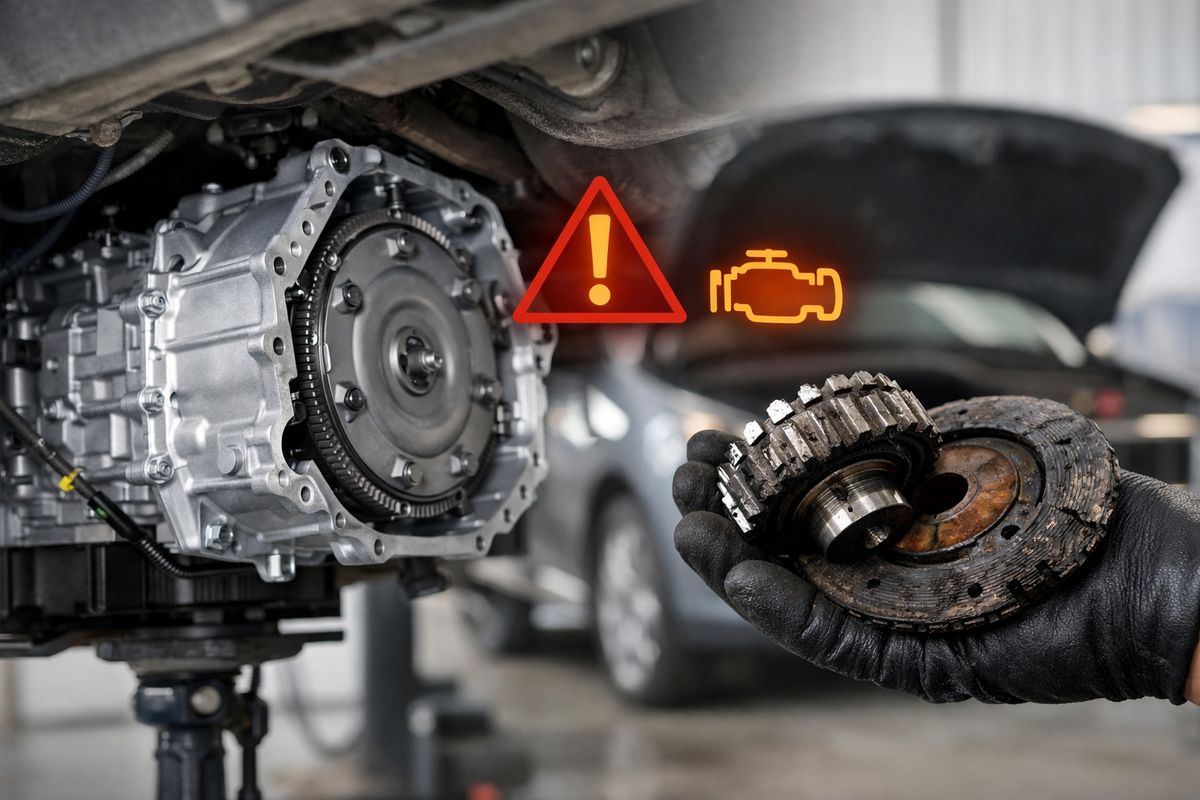
If your transmission replaced and still failing story feels impossible, it isn’t. You pick up the vehicle after a major repair expecting relief, then the same slipping, jerking, hesitation, or warning light shows up on the drive home. That is the kind of repeat-failure pattern worth looking at closely, especially with a 2024 to 2026 vehicle in Florida.
When the transmission was replaced but the same problem came right back
A transmission replacement sounds like the big fix. In most minds, it is the repair you reach after smaller attempts have already failed. So when the vehicle still bucks leaving a red light, pauses before going into gear, or flashes another warning message a week later, the problem stops feeling like a normal service issue and starts feeling like a bad loop.
That loop is more common than most drivers expect. Not because replacement never works, but because a replaced transmission does not automatically erase every related defect. In a real-world Florida warranty case, the story often goes like this: repeated complaints, a major repair, a brief period of hope, then the same driving problem comes right back.

The background: what life looked like before the replacement
Before the replacement, the pattern is usually already there. You take the vehicle in for hard shifting or hesitation. The dealership updates software, replaces smaller parts, road-tests it, and sends it back. Then the problem returns.
That cycle wears you down fast. A vehicle that should be dependable becomes something you plan around. Work schedules get shuffled. School drop-offs turn into ride coordination. A simple service visit in Orlando or Miami can eat up half a day, and that is before the extra week waiting on parts.
The first signs the transmission problem was not minor
Most transmission failures do not start with a dramatic breakdown. They start small enough to second-guess. Maybe the vehicle hesitates before moving from a stop. Maybe it shifts so hard it feels like somebody bumped you from behind. Sometimes there is a burning smell, fluid leak, whining noise, or a check-engine light that comes and goes.
Here’s the thing: early transmission symptoms often look annoying before they look serious. But once slipping, delayed engagement, loss of power, or erratic shifting starts repeating, it is not just “one weird day.” It is a pattern.
Why a full replacement feels like the final fix
A full replacement feels final because it should be. If smaller repairs did not work, replacing the transmission sounds like the last stop in the repair chain. New unit in, problem out.
That expectation is reasonable. After a repair this major, your vehicle should not still act broken. If it does, something bigger is being missed.
The challenge: replaced transmission, same failure
This is the core issue. The transmission was replaced, but the vehicle still fails, drives poorly, or keeps going back to the shop. That is not something to brush off as normal “break-in behavior” after warranty work.
A short adjustment period for a repair is one thing. Ongoing drivability problems are another. If the same complaint keeps showing up after a major replacement, the real problem may never have been fully solved.
What “still failing” can look like after replacement
After replacement, the symptoms can look frustratingly familiar. Hard shifting. Shuddering at low speed. Hesitation when accelerating. Refusing to stay in gear. Overheating. Warning lights. Sudden loss of power.
Sometimes the vehicle feels better for a few days, then slides right back into the same behavior. That detail matters. A repair that holds for one afternoon is not the same as a repair that actually fixes the vehicle.
The catch: the transmission may not be the only problem
The catch is simple: the transmission assembly is only one part of the system. The issue can involve control software, sensors, wiring, cooling components, valve body problems, or even a bad installation. In plain English, swapping the big part does not help if the real trigger sits somewhere connected to it.
That is why a replaced unit can still leave you with the same symptoms. The label on the invoice says “transmission replaced,” but the root cause may still be sitting there untouched.

The approach: how to look at the problem without getting stuck in the same repair loop
The turning point usually comes when you stop treating each visit like a separate annoyance. Instead, you look at the whole repair history as one story.
That shift matters because dealership records often tell a clearer story than memory alone. Dates, mileage, complaints, and days out of service can show a repeat defect even when each visit was written up a little differently.
Start with the repair history, not just the latest symptom
Pull every repair order. Look at the dates the vehicle went in, how long it stayed, what you reported, and what the dealership says it did. Pay attention to repeated phrases like “hard shift,” “hesitation,” “won’t engage,” or “unable to duplicate.”
This paper trail matters because recurring problems after major warranty work are about more than the newest breakdown. The full history shows whether the same issue has been chasing you for months.
Compare what was promised with what actually changed
Then compare the promise to the result. Did the replacement solve the issue for more than a few days? Did the symptoms come back exactly the same, or did the dealership just rename them on the next visit?
That before-and-after timeline is where a lot of cases become clearer. If nothing meaningfully changed after a major repair, the problem is not just inconvenience. It is evidence that the vehicle may still be defective.
Ask the simple question that changes the conversation
One quick snapshot can reframe everything: your vehicle’s year, make, and model, plus how many times it has been repaired.
That question works because it cuts through the noise. A newer vehicle with a serious transmission complaint, multiple repair attempts, and long shop time does not look like routine maintenance. It looks like a recurring warranty problem.
Implementation: what usually happens next at the dealership
After a failed replacement, the next phase is usually more of the same. More inspections. More test drives. More software updates. More waiting for factory guidance.
On paper, that can sound reasonable. In real life, it feels like standing in the same line over and over.
Why repeated repairs can drag on for weeks
Repairs drag out for boring reasons that still hit hard. Parts get backordered. Approval from the manufacturer takes time. Technicians change. Notes do not always match from one visit to the next. A vehicle sits for days before another test drive happens.
Meanwhile, you are still the one without reliable transportation. For many Florida drivers, the biggest problem is not only the defect. It is losing use of a vehicle that is still under warranty and still not fixed.
How the story can change from “one bad repair” to “ongoing defect”
At some point, the pattern stops looking like bad luck. If the same serious issue keeps returning, especially after a transmission replacement, the story changes from “one bad repair” to “ongoing defect.”
That distinction matters. Mechanical frustration is one thing. A possible buyback, replacement, or compensation claim is something else entirely.
Results: what recurring transmission failure can lead to for florida drivers
Not every case ends the same way. Some vehicles go back through another repair attempt and finally get fixed. Others stay stuck in repeat visits. In more serious situations, the path shifts toward a replacement vehicle, manufacturer buyback, or compensation.
The goal is not to force every case into a legal box. The goal is to get unstuck.
When another repair is still the likely result
If the records are thin, the complaint changed over time, or the dealership still has a clear repair path left, another repair may still be the likely result. That can happen, especially early in the history.
But endless repeat visits are not the standard you should accept. A newer vehicle under warranty should not live in the service lane.
When a buyback, replacement, or compensation becomes worth exploring
If the same transmission-related issue keeps coming back, or your vehicle has spent long stretches out of service, it becomes worth exploring legal remedies. That can matter for both owners and lessees in Florida dealing with warranty-covered defects in newer vehicles.
This is often the moment people consider trading the vehicle just to be done with it. Honestly, that is where expensive mistakes happen.
Lessons you can use right now if your transmission was replaced and still failing
The good news is that you do not need to guess your way through this. A few simple habits can make your situation much clearer before the next dealership visit.
Save every repair order and write down what the vehicle actually does
Keep every invoice, repair order, and pickup sheet. Then keep a basic symptom log with dates, mileage, and what happened. “Hard shift leaving a stoplight at 12,481 miles” is useful. “Still bad” is not.
Specific details help connect the pattern. They also make it harder for repeat complaints to get watered down into vague service notes.
Do not trade in a defective vehicle before you know your options
Trading in a defective vehicle can feel like the easiest escape, kind of like throwing out a phone that keeps freezing instead of checking whether it is still covered. The problem is the financial hit. If your vehicle qualifies for a buyback, replacement, or compensation path, unloading it too early can cost you.
Frustration is real, but speed is not always your friend here.
Try one next step: get a free case review based on your repair history
Gather four things: the year, make, model, and number of repair attempts. Add the repair orders if you have them.
That one step can quickly show whether your situation looks like an ordinary repair problem or something bigger. If your transmission was replaced and still failing, start there.
Frequently asked questions
Is it normal for a new transmission to still shift badly?
No. A brief adjustment period is one thing, but ongoing slipping, jerking, hesitation, or warning lights after replacement is not something to dismiss as normal.
Can a replaced transmission fail because of another part?
Yes. Sensors, wiring, cooling components, control modules, software, or installation issues can all cause transmission-like symptoms even after the transmission itself was swapped.
Does one transmission replacement mean the vehicle is a lemon?
Not automatically. The bigger issue is the full pattern, including repeat repair attempts, recurring symptoms, and how long the vehicle has been out of service.
Should you keep driving if the same transmission problem comes back?
If the vehicle is losing power, refusing to stay in gear, overheating, or driving unpredictably, continued driving can be risky. Repeating symptoms after a major repair should be documented and reported right away.
What paperwork matters most in a recurring transmission case?
Repair orders, invoices, dates in the shop, mileage, and your original complaint matter most. The exact wording can make a big difference when the same problem keeps returning.
What is the simplest way to tell if your case is serious?
Start with the basics: your vehicle’s year, make, model, and how many times it has been repaired. If the transmission was replaced and the same issue came back, that is already a sign the situation deserves a closer look.
Talk to Jonathan About Your Vehicle
Jonathan D. Schwartz, the attorney behind Bad Vehicle, helps vehicle owners understand their Lemon Law options. He can review your repair history, answer your questions, and help you determine the next steps for your potential claim.
Your case review is free, and you pay no attorney fees unless you win.
Schedule your free consultation with Jonathan – https://badvehicle.com/schedule-your-consultation/
Think your vehicle may qualify?
Have your repair history reviewed and find out what options may be available under Lemon Law or warranty law.