

If lemon law repair attempts have become part of everyday life, I know how draining that feels. I’ve seen how fast one “simple warranty repair” turns into missed work, repeat dealer visits, and that awful moment when the same warning light comes back on. This is the part nobody warns about, and it matters because the number and quality of those repair attempts often sit at the center of a Florida lemon law claim.
What counts as a lemon law repair attempt in florida
A repair attempt usually means an authorized dealer or manufacturer-approved shop had a real chance to diagnose and fix a substantial defect while the vehicle was still under warranty. In plain English, if the vehicle went in for a serious problem and the repair visit was documented, that visit may count.
What matters is not just that the car was dropped off. The paperwork has to show the complaint, the date, the mileage, and what the dealer did. I’ve found that this is where strong cases often become messy. The problem may be obvious to the driver, but if the repair order barely says anything, the record becomes weaker than it should be.
The basic definition of a repair attempt
A repair attempt is generally one visit where the defect was reported and the dealer had an opportunity to fix it. That could involve diagnostics, a software update, replacing parts, road testing, or even writing “could not duplicate concern.” Oddly enough, that last phrase can still matter if the same complaint shows up again and again.
Florida lemon law cases often depend on repair history more than frustration level, even though the frustration is real. For a broader foundation on what Florida law usually looks for in a defective vehicle claim, the pattern matters as much as the defect itself.
Why the same problem can count more than once
This confuses a lot of people because it feels repetitive by definition. But if the same engine, transmission, electrical, or safety problem keeps returning after separate dealer visits, each visit may count as another repair attempt.
I’ve been there with recurring issues in other warranty situations, and the exhausting part was having to explain the same symptom over and over like it was brand new. Legally and practically, though, those repeat visits can be exactly what shows the defect was never truly fixed.

How many repair attempts are usually enough
This is usually the first thing people want to know, and honestly, I understand why. Once a vehicle has been back to the dealer several times, the natural question is whether that is finally enough.
Florida cases are fact-specific, so this is not a magic-number exercise. Still, repeated failed repairs for the same substantial issue or too many days out of service are the practical signs people watch for.
Repeated repairs for the same serious defect
If the same serious problem keeps coming back after multiple repair visits, that can support a lemon law claim. Think stalling, hard shifting, slipping transmission, loss of power, recurring check-engine lights, or warning messages that never stay gone.
What worked for me in evaluating these situations was looking less at the dealer’s optimism and more at the pattern. Three visits for “same symptom returned” says far more than one service advisor saying the issue was handled. A deeper look at how repeated visits are often evaluated helps make that pattern easier to spot.
When one repair history becomes serious because of safety
Some defects raise the stakes fast. If the issue involves braking failure, steering loss, fire risk, sudden shutdown, or major drivetrain failure, fewer attempts may still matter because the danger is so much higher.
That is the part many people minimize at first. A vehicle does not need to catch fire in a driveway to be serious. The risk itself can matter.
Days out of service can matter too
Sometimes the stronger story is not the number of attempts but the amount of downtime. A vehicle that sits at the dealership for weeks waiting on diagnostics, backordered parts, or repeat repairs may raise the same kind of concern.
I’ve seen people focus only on visit count and ignore the fact that the car was basically unavailable for a month. That can be a mistake. Extended downtime can carry real weight in Florida claims.
What repair records actually need to show
Repair records are the backbone of this type of claim. Not feelings, not memory, not the service advisor saying “I remember that car.” The documents matter.
Consistent complaint language on every visit
The same symptom should be described in the same plain way each time. If the complaint starts as “vehicle jerks and hesitates at 35 to 45 mph” but later becomes “transmission concern” and then “possible engine issue,” it may look like unrelated problems instead of one recurring defect.
I learned a long time ago that consistency beats creativity here. The cleaner the description, the easier it is to show the problem never went away.
Warranty coverage and authorized repair facilities
The defect generally needs to arise and be presented for repair during the manufacturer’s warranty period. And usually, visits to authorized dealerships matter most because they create the kind of record manufacturers cannot easily dismiss.
Questions about warranty timing come up constantly. That is why sorting out how warranty coverage intersects with lemon law rights is often one of the first useful steps.
Repair outcomes, parts replacements, and unresolved defects
Good records show what happened after each visit. No problem found. Duplicate concern. Replaced transmission. Installed updated software. Replaced engine. Test drove. Condition gone. Condition returned.
A major component replacement does not automatically end the issue. In fact, when an engine swap happens and the problems continue, the history can become even more concerning because such a significant repair was not enough.
Common situations that raise red flags
Some fact patterns show up again and again. They are not guarantees, but they do make me pay attention.
The engine or transmission was replaced, but the problems kept going
A replaced engine or transmission sounds like the big fix, until the jerking, leaking, stalling, hesitation, or fault codes come back. At that point, the issue often looks less like normal repair work and more like a persistent defect.
This is especially true when the vehicle feels different but not better. A major repair followed by more drivability problems is not something I’d brush off.
The dealership says it “could not duplicate” the problem
This is one of the most frustrating phrases in the whole process. The vehicle acts up in traffic, on the highway, or during startup, then behaves perfectly for the technician.
Still, those visits may matter if the complaint was documented every time. I’d take written “could not duplicate” over a missing repair order any day, because at least the record proves the concern was reported. The same goes for situations where the dealer treats the issue like normal behavior.
The vehicle has been in the shop for weeks
Long stays matter. So do repeat stays. Backordered parts, repeat diagnostics, and extended dealer possession can make a claim stronger, especially when daily life has already been disrupted by rental costs, towing, missed work, or just not having reliable transportation.
There’s a reason tracking how long the car has been unavailable can be just as important as counting repair visits.
Trading in too early can cost money
I understand the urge to dump a bad vehicle and move on. Honestly, that urge makes perfect sense. But trading in too early can lock in a financial loss before the repair history is properly evaluated.
That does not mean staying stuck forever. It means getting the documents together before making an expensive exit.
What to do before a lemon law claim falls apart
This is the practical part. And it matters because small recordkeeping mistakes can weaken an otherwise strong case.
Keep every repair order, invoice, and pickup receipt
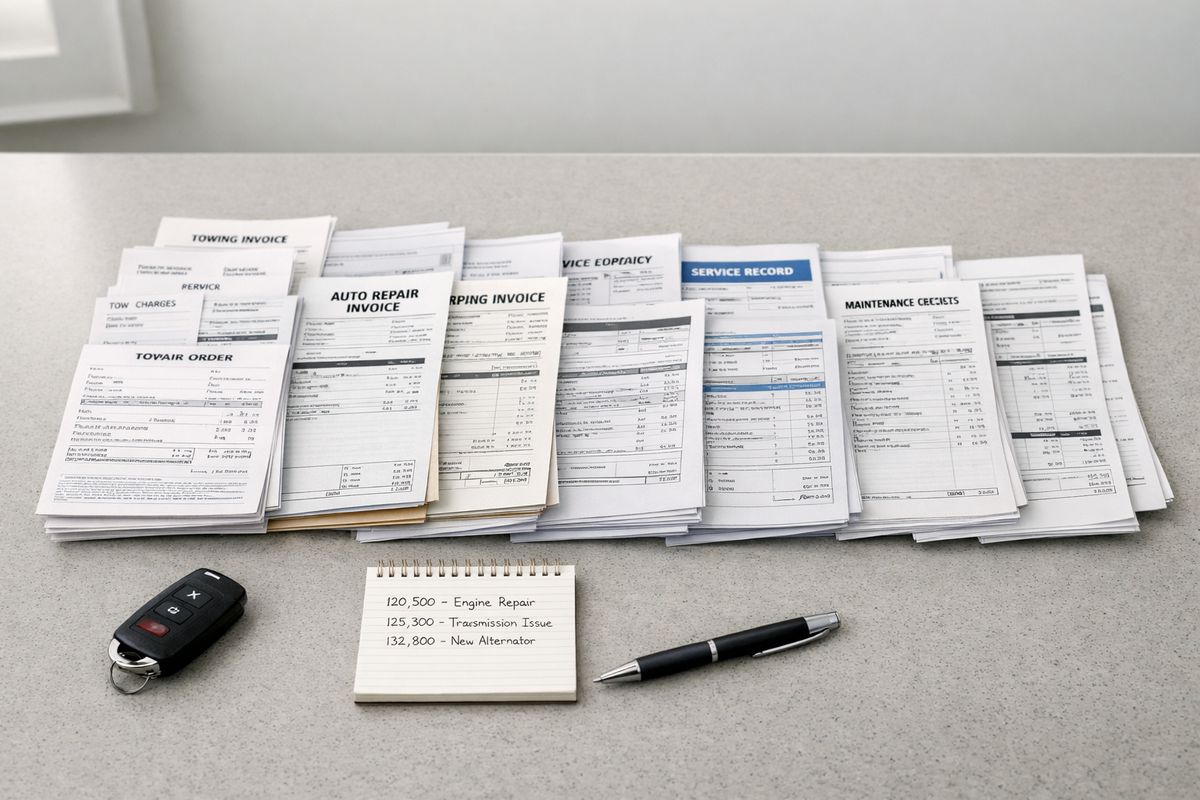
I would keep everything. Intake paperwork, final invoices, tow records, text screenshots confirming drop-off or pickup, and anything showing dates, mileage, symptoms, and time in the shop.
A complete timeline is powerful. It turns a frustrating story into evidence.
Report the same issue clearly each time
I’d describe the symptom, when it happens, and how it affects drivability or safety in the same language every time. Not “car weird again.” More like “hard shift from second to third after 20 minutes of driving” or “engine stalls at red lights with auto stop engaged.”
That kind of repetition may feel tedious, but it helps.
Don’t Assume a verbal promise protects the claim
Service advisors say a lot of things at the counter. Some are helpful. Some are reassuring. None of it matters much if the concern never makes it onto the written repair order.
This is one of the hardest lessons in warranty disputes. If it is not in writing, it becomes much harder to prove later.
Lemon law vs. breach of warranty: which path may apply
Not every bad vehicle case fits neatly into lemon law. Some do. Some fall under broader warranty law instead.
When a case looks like a lemon law claim
The usual pattern is a newer vehicle, a substantial defect covered by warranty, repeated repair attempts for the same issue, or extended time out of service. That combination tends to raise the strongest lemon law questions.
When breach of warranty may still matter
Sometimes the repair history is ugly, but the timeline or technical details do not line up perfectly with lemon law rules. That does not always end the story. Other warranty-based claims may still matter if the manufacturer failed to repair the vehicle after reasonable opportunities.
For anyone sorting through that overlap, this explanation of what happens after repeated failed warranty repairs is often the clearest place to start.
Questions I’d ask before seeking a free case review
These are the questions I would gather answers to before asking for someone to review the file.
What is the vehicle’s year, make, and model?
That helps show warranty status, age, and whether the issue lines up with known manufacturer patterns.
How many times has the vehicle been repaired for the same issue?
This is one of the fastest ways to evaluate whether the repair history may support a claim.
How many total days has the vehicle been out of service?
Even when the number of visits feels borderline, long downtime can be a major fact.
Is the vehicle owned or leased?
Leased vehicles may also qualify. A lease does not automatically take lemon law rights off the table.
Frequently asked questions
Do diagnostics count as lemon law repair attempts?
Often, yes. If the dealer had the vehicle, documented the complaint, and attempted to diagnose or address the defect under warranty, that visit may still matter even without a successful repair.
Does a repair attempt count if the dealer says nothing is wrong?
It can. A “no problem found” or “could not duplicate” visit may still help show a recurring issue if the same complaint was reported consistently.
Does replacing the engine or transmission end a lemon law claim?
Not always. If the vehicle continues to stall, shift badly, hesitate, leak, or trigger warnings after a major component replacement, the claim may still be very much alive.
Can a leased vehicle qualify under lemon law?
Yes, in many situations. Lease status does not automatically block a claim when the vehicle has a substantial warranty-covered defect.
What matters more, repair attempts or days in the shop?
Both can matter. Some cases are driven by repeat failed repairs for the same defect, while others become serious because the vehicle spent an unusually long time out of service.
A small step that can change the whole case
If I could point to one move that actually helped most in these situations, it would be this: gather every repair record before doing anything else. That one step brings the timeline into focus and makes the next decision far less chaotic.
Talk to Jonathan About Your Vehicle
Jonathan D. Schwartz, the attorney behind Bad Vehicle, helps vehicle owners understand their Lemon Law options. He can review repair history, answer questions, and help determine the next steps for a potential claim.
The case review is free, and there are no attorney fees unless there is a win.
Schedule a free consultation with Jonathan: https://badvehicle.com/schedule-your-consultation/
Think your vehicle may qualify?
Have your repair history reviewed and find out what options may be available under Lemon Law or warranty law.