

Yes, you can often file a lemon law claim under warranty, and that is usually where the problem starts. If your 2024, 2025, or 2026 vehicle keeps going back to the dealer for the same serious issue, or sits in the shop for weeks while you scramble for rides, the question is not just whether the repair was covered. The real question is whether your warranty problem has crossed the line into a Florida lemon law claim.
Can you file a lemon law claim under warranty?
Yes, in many cases, a lemon law claim begins with a defect covered by the manufacturer’s warranty. That part surprises a lot of people. A warranty is not separate from the lemon law story, it is usually the opening chapter.
But a warranty alone does not automatically make your vehicle a lemon. Every new vehicle has occasional repair issues. Florida lemon law is meant for something more serious: defects that substantially affect use, value, or safety, and that do not get fixed within a reasonable number of repair attempts or within too much time out of service.
That difference matters. If your SUV needed one covered sensor replacement and then ran normally, that is a routine warranty repair. If your truck keeps stalling at traffic lights, your transmission was replaced, and the problem still comes back every other week, that starts looking very different.
What “under warranty” actually means for a lemon law claim
“Under warranty” usually means the manufacturer promised to repair certain defects for a set time or mileage period. In plain English, if something goes wrong because of a defect in materials or workmanship, the manufacturer is supposed to fix it without charging you for the repair.
For lemon law purposes, what matters most is often when the defect showed up and when you reported it. If the problem arose during the manufacturer’s warranty period and you brought it in for repair, that can matter even if the back-and-forth with the dealer drags on afterward. The calendar does not always tell the full story. Your repair history does.
Factory warranty vs. extended warranty
This is where people get tripped up. A factory warranty is the original manufacturer coverage that comes with the vehicle. An extended warranty is usually a separate service contract you bought later, or that came bundled into the deal.
Florida lemon law cases typically focus on defects covered under the original manufacturer’s warranty, not an aftermarket plan. So if your issue began while the factory coverage was active, that is usually the part that matters most. If you want a deeper explanation of how warranty coverage fits into this area of law, it helps to read more about when a warranty issue may still fall under lemon law protections.
What warranty repairs usually cover
Warranty repairs often include serious mechanical and electrical issues: engine knocking, transmission slipping, repeated check-engine lights, stalling, power loss, brake system defects, steering problems, battery drain, infotainment failures tied to larger electrical problems, and warning lights that keep coming back.
What usually does not fit the lemon law picture? Normal wear items like brake pads and tires, cosmetic annoyances, damage from crashes, neglect, or modifications. A loose trim piece can be irritating, but it usually is not what drives a lemon law claim. A vehicle that jerks violently between gears leaving a parking garage in Tampa, that is a different story.
Warranty repair vs. lemon law violation: Here’s the line
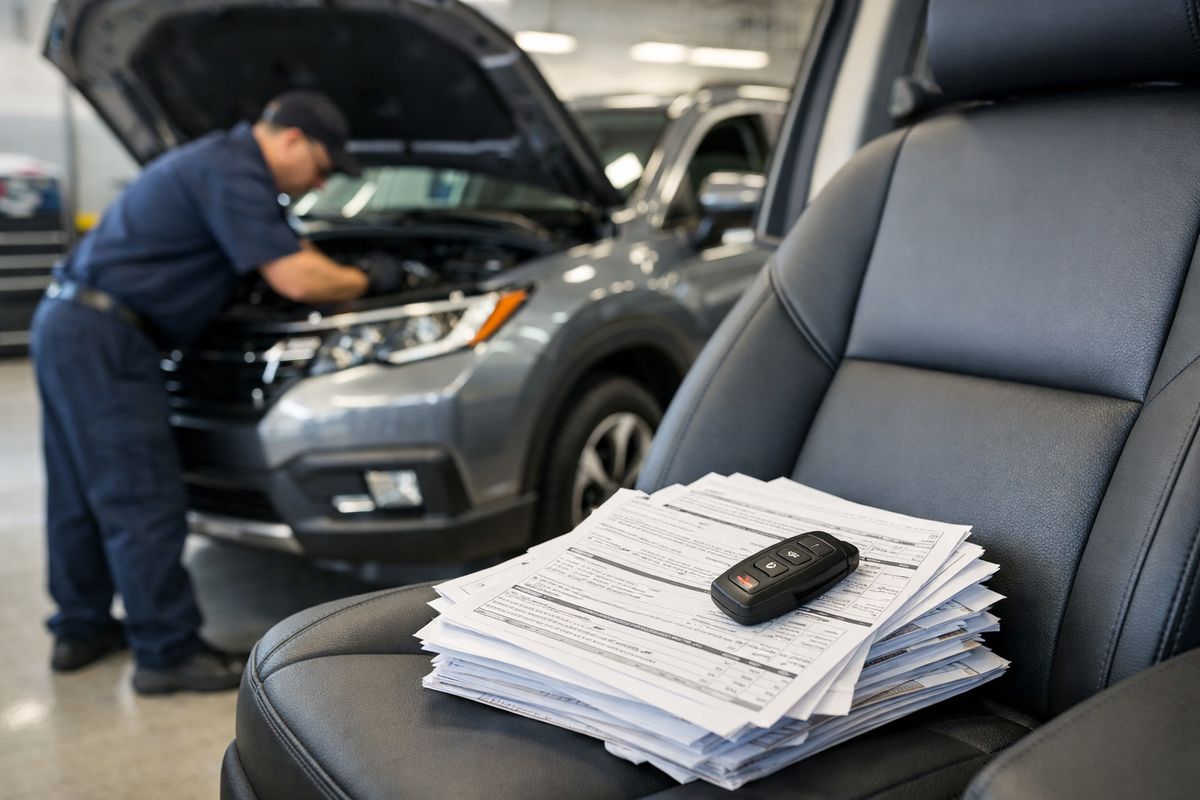
A warranty repair means the manufacturer got a chance to fix the vehicle. A lemon law violation means that chance was not enough, because the defect kept happening or the vehicle was out of service too long.
That line is easier to understand with one simple idea: lemon law is about failed repair efforts, not just broken parts. One bad repair visit is frustrating. Three or four visits for the same dangerous shifting problem, or a month without your vehicle, is something else entirely.
Signs the problem is more than a routine warranty fix
You usually start seeing a pattern before you see a legal claim. The same issue keeps returning. The dealership replaces major parts, updates software, clears codes, or says it cannot duplicate the problem, but the problem keeps interrupting your life.
Maybe your engine was replaced and the vehicle still misfires. Maybe the check-engine light keeps returning after every pickup. Maybe the car lurches, stalls, or loses power, and you keep burning work hours arranging rides across Orlando because the vehicle is back at the dealer again. If that sounds familiar, you may be dealing with more than an ordinary repair. Cases involving an issue that keeps returning after service often follow this exact pattern.
What counts as a “substantial defect”
A substantial defect is a problem that meaningfully affects how your vehicle works, drives, or stays safe. It does not have to make the vehicle completely unusable. It just has to be serious enough that a normal person would care, and care a lot.
Think of it like this: a lemon law defect is not a squeak in the cupholder. It is the kind of problem that changes how confident you feel getting on I-4, taking your kids to school, or pulling into traffic. Transmission hesitation, sudden loss of power, repeated overheating, braking problems, electrical failures, and engine stalling often fall into this category. Minor cosmetic complaints usually do not.
How florida lemon law works for new vehicles and leases
Florida lemon law generally applies to new vehicles, demonstrator vehicles, and leased vehicles, as long as the facts fit the statute and the defect shows up within the right timeframe. Timing matters a lot, which is why repair dates and mileage matter so much.
This area can get technical fast, but the practical version is simple: if your newer vehicle developed a substantial defect during the manufacturer’s warranty period, and authorized repair attempts did not fix it, you may have a claim worth reviewing. For a broader explanation, it helps to look at how Florida’s car lemon law rules apply to qualifying vehicles.
Which vehicles usually qualify in florida
Florida’s lemon law usually covers new vehicles bought or leased in the state, plus certain demonstrator models. If you leased your vehicle, that does not knock you out. A leased car can qualify too, which matters because a lot of 2024 to 2026 vehicles on the road are leased rather than purchased outright.
Eligibility still depends on the details. The vehicle’s age, the warranty timeline, when the defect first appeared, and what kind of defect you are dealing with all matter. That is why two drivers with the same model may end up in very different positions.
Florida’s Repair opportunity rules
The manufacturer and authorized dealer usually get a reasonable number of chances to fix the defect. That does not mean endless chances. It means enough opportunities to address the issue before the law treats the vehicle as a likely lemon.
In practice, people tend to focus on two things: repeat repair attempts for the same problem, and the total number of days the vehicle has been out of service. If your vehicle has bounced in and out of the shop and you are wondering what number starts to matter, understanding how repair attempts are viewed in a lemon law case can help make sense of the pattern.
The notice requirement before a final repair attempt
Florida law includes a formal notice step before the manufacturer gets a final chance to repair in many cases. This is not just paperwork for the sake of paperwork. It can be a make-or-break step.
If that notice is missed, delayed, or sent the wrong way, it can slow down a claim or create avoidable problems. That is one reason so many otherwise strong cases turn into a mess. A good repair history helps, but following the required process matters too.

When your warranty problem starts looking like a lemon
At a certain point, the story starts repeating itself so clearly that the label almost explains itself. Same defect. Same dealer. Same promises. No real fix.
That is usually when frustration stops being the main issue and documentation becomes the real focus.
Same problem, same dealership, no real fix
This is the classic pattern. You bring the vehicle in for shaking, slipping, stalling, overheating, or electrical glitches. You pick it up and the paperwork says something vague like “test drove,” “updated software,” or “could not duplicate concern.” Then the same problem returns a few days later.
That loop matters. If your dealership keeps trying but the defect remains, the repeated visits themselves can become part of the proof. If this has turned into a routine you know too well, what repeated unsuccessful dealer visits can mean for your case is worth understanding.
Engine or transmission replacement Didn’t solve it
A lot of drivers assume a new engine or transmission ends the problem. Sometimes it does. Sometimes it absolutely does not.
If your vehicle needed an engine replacement and still stalls, shakes, throws codes, or loses power, that can strengthen the paper trail rather than erase it. Same idea with a transmission replacement that does not stop harsh shifting, hesitation, or slipping. A major component swap is not a reset button for the vehicle’s history. If that is your situation, ongoing defects after an engine swap can still fit a lemon law claim.
Your vehicle has been in the shop for weeks
Long downtime is a giant red flag. Even if the repair visits involve a few different versions of the same larger issue, weeks in the shop can matter just as much as repeated visits for identical wording on the repair order.
You feel this in real life long before you see it on paper. Missed commutes. Rental hassles. Borrowing a relative’s car. Wondering why a nearly new vehicle has spent more time behind a service bay than in your driveway. If your car has been gone for what feels like forever, how days out of service can affect a lemon law claim becomes a very practical question.
What you need to prove your claim
Frustration is real, but paperwork wins cases. That is the catch.
A strong lemon law claim usually depends less on how angry you are and more on what your records show. Every service visit, every complaint, every invoice, every text message with the advisor can help tell the story in a way memory alone never can.
Repair orders matter more than memory
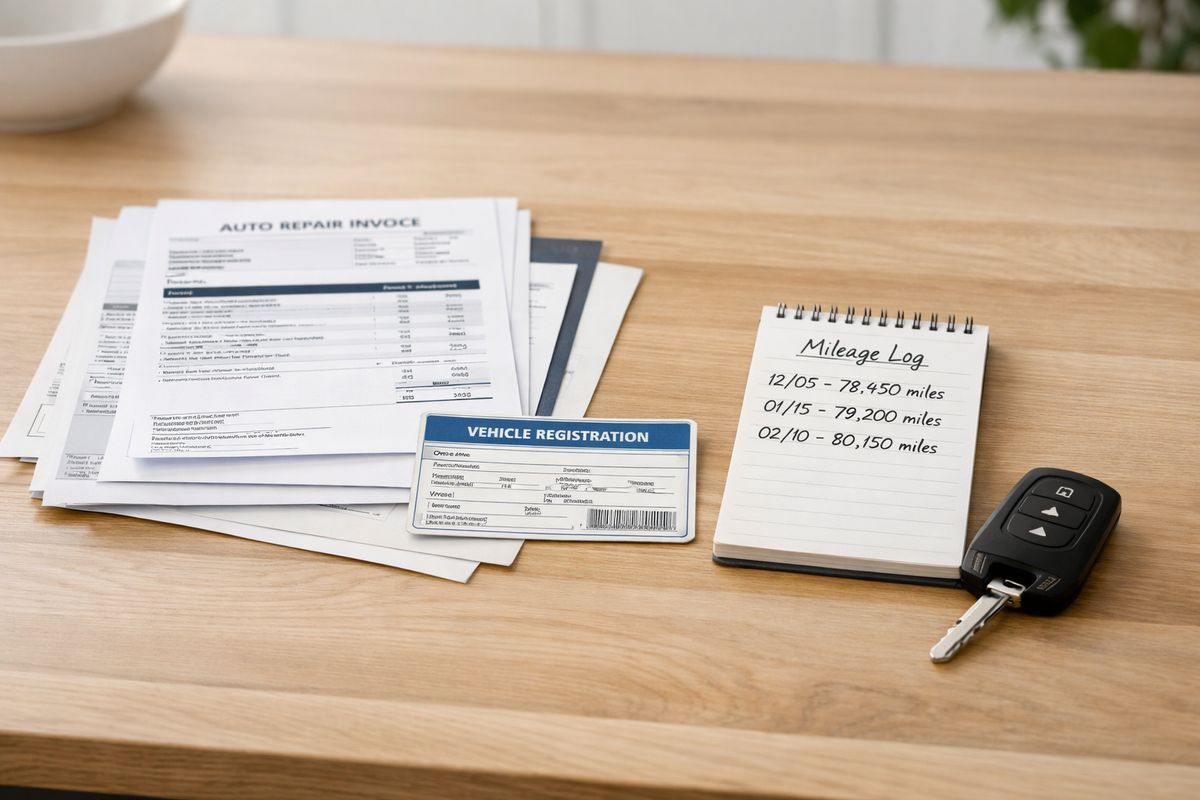
Save everything. Repair orders, final invoices, pickup slips, towing receipts, screenshots of text messages, emails with the dealer, even notes about when the warning lights came on.
Pay close attention to the wording on each repair order. If your vehicle stalls, make sure the complaint says stall or loss of power, not something watered down like “customer states car feels weird.” The cleaner and more specific the language, the easier it is to show a pattern later. For a closer look at the paperwork that can support a claim, review the kinds of records that help show the defect clearly.
What to write down each time you bring the vehicle in
Keep a simple log. Date, mileage, warning lights, noises, what the vehicle did, and what happened afterward. Concrete details matter more than polished writing.
“Transmission slammed into gear leaving a parking lot at 8:10 a.m.” is useful. “Car acting strange again” is not nearly as helpful. Think of it like taking receipts back to a store. The more specific you are, the less room there is for anyone to shrug and say the problem is unclear.
Why “could not duplicate” does not end the case
This phrase drives people crazy, and for good reason. But it does not automatically kill your claim.
Some defects are intermittent. A vehicle may stall once every five days, hesitate only when warm, or trigger warning lights that vanish by the time you arrive. If you consistently report the same issue and the complaint appears across multiple repair visits, the fact that the dealer could not reproduce it every single time does not erase the pattern.
What you can get if the vehicle qualifies
When a vehicle qualifies, the result is not always the same, but the usual remedies are easier to understand than most people expect. In plain terms, the outcome often involves a buyback, a replacement, or some other form of compensation depending on how the claim is resolved.
Buyback
A buyback usually means the manufacturer repurchases the defective vehicle and you return it. In exchange, you receive money back, though the exact amount can vary and may include certain deductions or offsets depending on the facts.
For many drivers, this is the cleanest outcome. You are done with the vehicle and done with the repair cycle. If you want to compare outcomes, it helps to understand how a repurchase stacks up against getting another vehicle instead.
Replacement vehicle
A replacement vehicle may be offered instead of a refund. Some people like that option because they still want a vehicle of similar value without starting over from scratch on the shopping process.
But not everyone wants another version of the same model after months of service visits. That is a personal decision as much as a legal one.
Other compensation that may come up
Not every case ends in a straight buyback or replacement. In some situations, there may be settlement options or reimbursement for certain incidental costs tied to the defect and repair history.
That is especially relevant when the facts support a claim but the practical solution is something short of a full repurchase. Some cases also involve money-based resolutions instead of handing the vehicle back, depending on the path the matter takes.
Common misconceptions about lemon law and warranty claims
A lot of bad assumptions keep people stuck longer than they need to be. Here are the ones that come up again and again.
“My warranty expired, so I have no case”
Not necessarily. If the defect was reported during the applicable warranty period, the claim may still be worth reviewing even if time passed while repairs continued.
That happens all the time. Your first repair visit matters. Your later paperwork matters too. The expiration date is not always the end of the analysis.
“The car still runs, so it Can’t be a lemon”
Wrong. A vehicle does not need to be dead in your driveway to qualify.
If it repeatedly stalls, hesitates, loses power, jerks into gear, overheats, or throws recurring warning lights, that can still point to a substantial defect. A car that “still runs” but cannot be trusted is not the same thing as a car that is fine.
“Only safety problems count”
Safety defects are serious, but they are not the only kind that matter. A problem can still qualify if it substantially impairs your vehicle’s use or value, even if it is not a dramatic brake failure or total steering loss.
Repeated drivability issues count for a reason. Your vehicle is supposed to work reliably, not just avoid catastrophe.
“If the dealer keeps trying, I just have to keep waiting”
No. Repeated failed repair attempts are often the reason a lemon law claim exists in the first place.
At some point, “still working on it” stops sounding patient and starts sounding like a loop. If you are stuck in that loop, the problem may be less about one more repair and more about whether the vehicle qualifies as a lemon.
What to do next if you think your warranty claim has crossed the line
If your vehicle keeps coming back with the same serious issue, or has spent far too long at the dealership, do one thing before making a rushed decision: pause and organize the facts. That single step can save you from trading away leverage you already have.
Gather these details before you ask for a case review
Have the basics ready: year, make, model, purchase or lease date, current mileage, repair dates, number of repair attempts, total days out of service, and whether major components like the engine or transmission were replaced.
That information helps turn a frustrating story into something that can actually be evaluated.
Ask the right question
Start with the question that gets to the point fast: What is your vehicle’s year, make, and model, and how many times has it been repaired?
That is often the fastest way to see whether your situation sounds like an ordinary warranty issue or something more serious. If you are preparing for that conversation, it helps to know what usually happens once you ask for a case review.
Don’t Trade it in before you know your options
Trading in a defective vehicle too early can cost you real money. It can also complicate the claim, especially if the numbers force you to absorb a loss just to get out of the problem.
If you are tempted to cut your losses, stop first and look at the bigger picture. Many drivers end up leaving money on the table by moving too quickly. Before taking that step, read about why unloading a bad vehicle too soon can backfire financially.
Frequently asked questions
Can you file a lemon law claim if the dealer says the problem is fixed?
Yes. If the defect comes back after the repair, the earlier repair visit still matters. What counts is the pattern, not just the dealer’s last statement.
Does a leased vehicle qualify for florida lemon law protection?
Yes, a leased vehicle can qualify in Florida if the defect and repair history fit the law’s requirements. Leasing does not automatically block a claim.
Do you need the same exact problem every time?
Not always in a word-for-word sense, but the records should show a continuing substantial defect or a related pattern. Consistent complaints about the same drivability or safety issue are especially helpful.
What if the check-engine light keeps coming on but the car still drives?
That can still matter. A recurring warning light tied to engine, emissions, transmission, or electrical problems may support a claim, especially if the vehicle has been repaired multiple times.
Can an engine or transmission replacement strengthen a lemon law claim?
It can. A major replacement shows the problem was serious enough to require major work. If the vehicle still has substantial defects afterward, that history may support the claim even more.
How long should you wait before getting your case reviewed?
Not long. Once the same serious issue keeps returning, or your vehicle has spent extended time in the shop, it makes sense to get the repair history reviewed before making another big decision about the vehicle.
Talk to jonathan about your vehicle
Jonathan D. Schwartz, the attorney behind Bad Vehicle, helps vehicle owners understand their Lemon Law options. You can have your repair history reviewed, get answers to your questions, and figure out the next step for your potential claim.
Your case review is free, and you pay no attorney fees unless you win.
Schedule your free consultation with Jonathan: https://badvehicle.com/schedule-your-consultation/
Think your vehicle may qualify?
Have your repair history reviewed and find out what options may be available under Lemon Law or warranty law.