

If you keep taking car to dealer for the same problem, the biggest mistake is treating every visit like a fresh start. It isn’t. Once your 2024, 2025, or 2026 vehicle has been back under those service lane lights again and again, especially after a breakdown on I-95 or a no-start in your driveway, the issue usually is not patience. It is strategy.
If You’re back for the same problem again, blindly keeping the car at the dealer is usually the wrong move
That sounds harsh, but it is true. If your vehicle keeps getting hauled back in for the same unresolved issue, or it has spent weeks in the shop, or the engine or transmission has already been replaced and the car still acts up, continuing the same routine often gets you more delay, more frustration, and not much else.
The familiar script is easy to recognize. You drop off the car, explain the problem again, get told the technician will look at it, and hear some version of “let’s try one more repair.” At first, that sounds reasonable. By the third or fourth round, it starts sounding like resetting the same broken app and hoping this time it magically works.
The problem is not that dealership service departments never fix anything. Of course they do. The problem is that repeated failure to fix the same car changes what your next move should be.
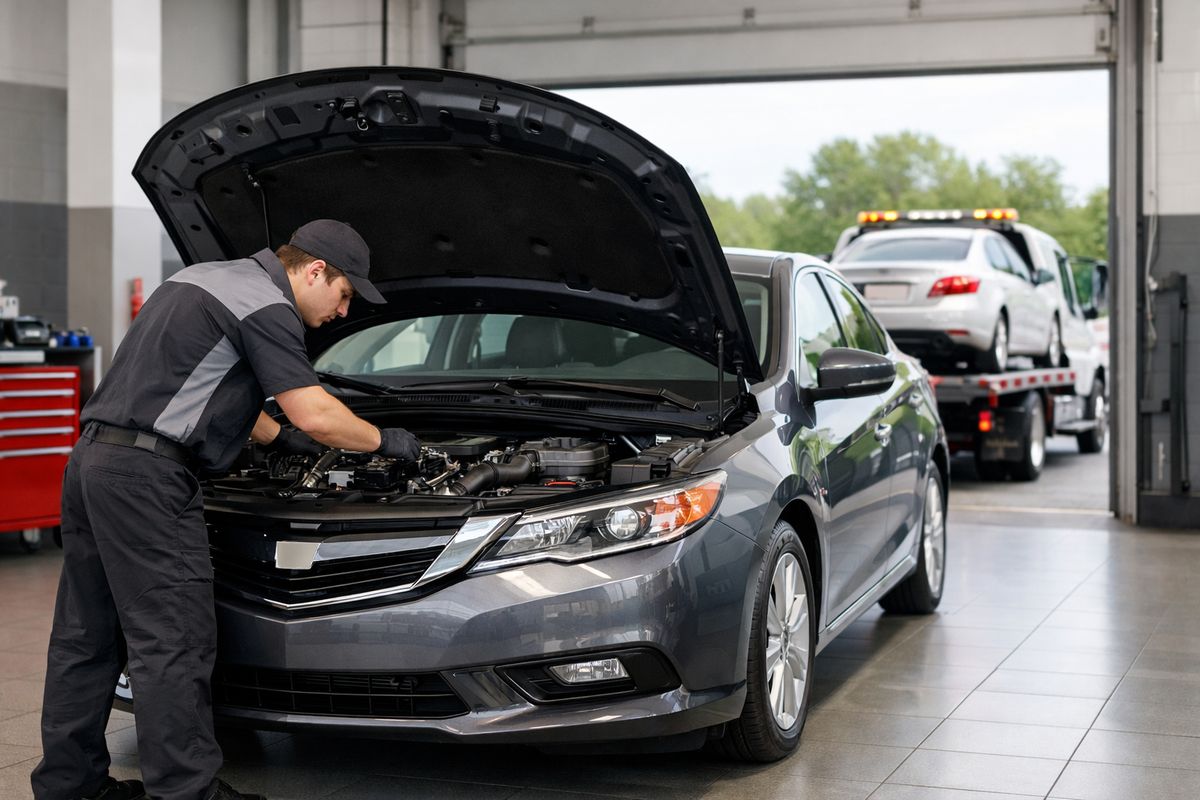
Repeated repair visits are a warning sign, not proof You’re being “patient”
A lot of drivers get stuck in the idea that going back over and over shows they are being cooperative. But repeated repair visits are usually a warning sign that the normal repair process is no longer working.
If your check engine light keeps returning, your vehicle stalls, shifts hard, hesitates, loses power, or refuses to start after prior repairs, that is not proof the issue is small. It often points to a defect that has not actually been fixed.
The same complaint matters more than a new invoice line
One repair order might say “hesitates when accelerating.” Another might say “jerks between gears.” Another might say “customer states engine light came back after repair.” Those phrases are not identical, but the real-life story may be exactly the same.
That matters. A recurring symptom does not stop being recurring just because the wording changes on the paper. If this sounds familiar, it helps to understand why the same issue can keep returning even after service. The dealership may describe each visit a little differently, but your experience behind the wheel is what ties the pattern together.
Big repairs that don’t solve the problem change the stakes
Once major components get replaced, the conversation should change. An engine replacement is not a tune-up. A transmission swap is not a quick adjustment. Repeated module reprogramming is not a minor inconvenience when the vehicle still shudders, stalls, or throws warning lights.
At that point, this is no longer ordinary new-car hassle. If your engine was replaced and the same rough running, stalling, or warning lights came back, that is a serious signal. The same goes for a transmission that was replaced but still fails. Big repairs are supposed to end the problem, not restart the clock.
Your calendar can tell the story even when the repair order doesn’t
Sometimes the paperwork looks scattered, but your calendar tells the truth. You dropped the car off on the 3rd. It sat behind a Florida service department for 23 days waiting on parts or approval. You picked it up on a Friday, then returned it the next Tuesday because the same symptom came back.
That timeline matters. Dates, delays, return visits, and periods when you could not use the vehicle create a pattern that is often more revealing than one service advisor note.
Warranty coverage does not mean you have to accept endless attempts
“It’s under warranty” sounds comforting, and in a narrow sense it is. You are not paying out of pocket for the repair itself. But the catch is that free repairs can still be expensive for you.
Warranty service is not the same thing as a real solution. If the car keeps failing, the warranty has not solved your transportation problem.
Free repair can still be expensive for you
Every repeat repair visit takes something. Time off work. A tow bill before reimbursement. A ride home. Scrambling for school pickup. Another week driving a loaner you never wanted. Another morning spent at the dealership service desk explaining the same issue to a new person.
That is cost, even if the invoice says zero dollars. It is like resetting the same Wi-Fi router every night instead of fixing the line outside. Yes, the reset is free. No, that does not mean the problem is acceptable.
The dealer’s goal is to repair, not decide whether you deserve a buyback
This part trips people up. The service department usually focuses on repairs. Buyback, replacement, or compensation decisions often sit with the manufacturer, not the local dealership.
So even a polite, honest service advisor may not be the person who can solve the bigger issue. If your warranty repair still has not actually fixed the car, staying in repair mode forever can keep you from looking at the remedy that fits better.
Waiting for “one more try” can leave you stuck longer
Another software update. Another road test. Another part on order. Another “come back if it happens again.”
That cycle can eat months. Meanwhile, your vehicle remains unreliable, unavailable, or both. If you are still asking whether this counts, it helps to look at how repair attempts are viewed when problems keep repeating. At some point, “one more try” stops sounding fair and starts sounding like a stall.
In florida, long repair time can matter just as much as repeat repairs
A lot of drivers focus only on the number of repair visits. That is understandable, but it misses half the story. In Florida, long periods out of service can matter just as much.
A vehicle does not need to bounce in and out of the shop ten times to create a serious problem. Sometimes one long stay and one return visit do plenty of damage.
Days out of service add up faster than you think
One 12-day repair stay does not sound catastrophic by itself. Then you add a 9-day return trip, a weekend waiting for pickup, and a few extra days because the part is delayed. Suddenly your new vehicle has been gone for a big chunk of the month.
Track every day the car is unavailable. Not just the days a technician is actively turning a wrench. If you want a clearer sense of how downtime gets evaluated, this breakdown of when a car has been out of service too long is worth reading.
Parts delays and backorders still affect your real-life loss
From your side, “waiting on parts” does not make the problem less serious. Your car is still unavailable. Your payment is still due. Your routine is still a mess.
The reason for the delay may be real, but it does not give you your time back. A backorder is still downtime.
A loaner does not erase the inconvenience
A loaner helps. That much is fair. But it does not transform your own defective vehicle into a dependable one, and it does not protect the value of that vehicle if the history keeps growing.
You bought or leased your car for a reason. Maybe it fits your commute, your family, your cargo, your budget. A random loaner is a bandage, not a cure.
Trading in a defective car before you explore your options can cost you real money
After enough failed repairs, unloading the vehicle can feel like relief. But that relief can be expensive.
Trading too soon is one of the easiest ways to turn a repair problem into a financial loss that follows you for years.
Negative equity gets worse when the car’s history follows it
Repeated repairs, major component replacements, and obvious drivability issues can hurt your trade-in leverage fast. If the car has a bad history and you are upside down on the loan, the offer may come in far lower than you hoped.
That is why it helps to understand how trading a problem vehicle can lock in a loss. Taking a weak offer just to end the headache may solve today’s stress while creating a much bigger money problem tomorrow.
Lessees can get boxed in too
A lease does not make repeated defects harmless. You still have the disruption, the missed use, the trips back to service, and the monthly payment. If the vehicle is unreliable, the fact that you do not plan to keep it forever does not make the current problem disappear.
If this is your situation, it helps to read about how Florida lease drivers can still have options. Lease drivers often wait too long because the car is technically not a purchase, but the inconvenience is just as real.
The emotional urge to be done with it is understandable but expensive
After enough failed fixes, almost any exit starts to look good. That reaction makes sense. But frustration is exactly when expensive decisions happen.
Before trading, selling, or swallowing the loss, pause long enough to look at buyback, replacement, or compensation. Once you unload the car, some leverage can disappear with it.
The smart move is to shift from “another repair visit” to “build your case”
Once the same issue keeps coming back, your goal should change. Stop focusing only on whether the next appointment finally works. Start organizing the facts.
That shift matters because unresolved vehicle problems are easier to evaluate when the story is clear from start to finish.
Start with the repair orders and make sure the complaint is clear
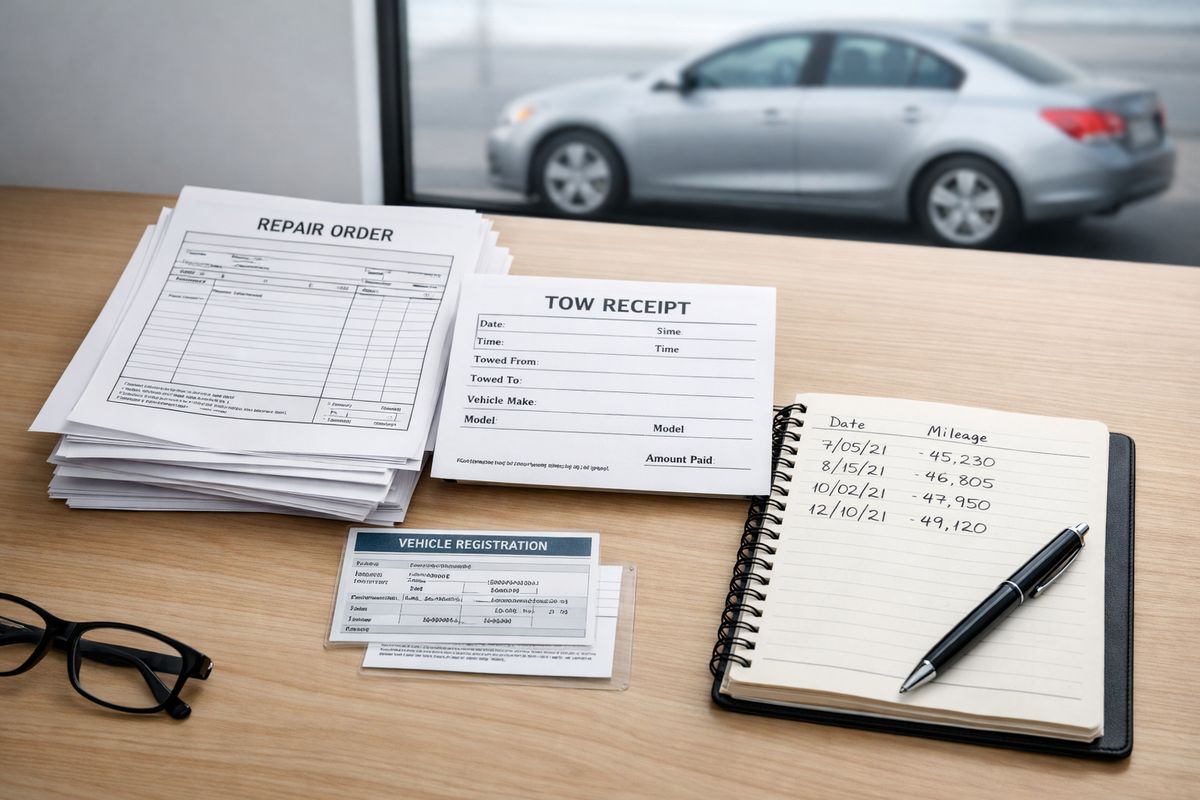
Save every repair order, pickup sheet, tow receipt, and text update. If possible, make sure the complaint section reflects the real symptom. “Vehicle stalls at red lights” is better than “check car.” “Transmission jerks between second and third” is better than “customer states issue.”
Clear wording helps show the pattern. So does keeping records in one place.
Track the basics: year, make, model, mileage, and repair count
Write down your vehicle’s year, make, and model, plus the mileage and how many times it has been repaired for the issue. That simple snapshot can tell a lot very quickly.
It also gives you the core information needed for a free case review. If you are wondering what usually happens once a case review starts, the first step is often just getting those basics straight.
Document how the problem affects daily use
Do not just track repairs. Track impact. If the vehicle stalled in traffic, write it down. If it lost power on the highway, note where and when. If it would not start before work, or if you were without it for weeks, include that too.
Those details show this is more than an annoyance. They show the problem is interfering with normal use in real life.
“But the dealer deserves more chances” is the strongest counter-argument , and it breaks down fast
This is the fairest pushback. Modern vehicles are complicated. Software glitches can be slippery. Intermittent drivability issues can be hard to duplicate. Parts get delayed.
All of that is true. It just is not the whole story.
Yes, some problems are hard to diagnose
Electrical faults can hide. Sensors can fail intermittently. A transmission may jerk only after a long drive in heat and traffic. Some problems really do take time to pin down.
Acknowledging that matters, because not every tough diagnosis means anybody is acting in bad faith.
But complexity is not your burden to carry forever
Here’s the thing: you paid or leased for a working vehicle, not a rolling experiment. Complexity may explain delay for a while, but it does not justify an endless cycle of failed repairs while your life keeps getting interrupted.
Patience sounds noble until it becomes a trap. If the same defect keeps coming back, your obligation is not to keep absorbing the inconvenience forever.
The real question is not whether the dealer is trying
Effort is not the result. A service department can be trying very hard and still not fixing your car.
The question that matters is simpler: is your vehicle actually fixed, dependable, and back in your hands for normal use? If the answer keeps being no, the strategy needs to change.
You should think less about loyalty to the service department and more about your next best option
Loyalty to a friendly advisor is understandable. But loyalty does not make a defective vehicle dependable.
The better question is not “Do you keep going back?” It is “At what point do you escalate, document, and ask whether buyback, replacement, or compensation makes more sense?”
If the issue keeps returning, stop treating each visit like a fresh start
Every return trip is part of one larger story. Do not let each new promise reset your thinking. If the symptom came back, the story continued.
That mindset shift alone can save you months of drift.
If the car has been in the shop for weeks, act sooner
Extended downtime is enough reason to stop waiting passively. Weeks disappear fast when a car is sitting behind the service building, waiting on approval, waiting on parts, or waiting for another test drive.
If your vehicle has been tied up that long, review the timeline now, before more days vanish.
Try one concrete step today
Gather every repair order. Write down your vehicle’s year, make, model, mileage, and number of repair attempts. Then get a free review of the situation and find out whether continuing to keep taking car to dealer still makes sense, or whether a Florida buyback or replacement path may fit better.
Frequently asked questions
How many times should you take your car back to the dealer for the same problem?
There is no magic number that makes endless repeat visits reasonable. If the same issue keeps coming back, especially with safety concerns, major repairs, or long shop time, the smarter move is to start documenting the pattern instead of assuming one more visit will solve everything.
Does it matter if the dealer writes the problem differently each time?
Yes, and not in the way dealerships sometimes imply. The wording can vary while the actual symptom stays the same. Hesitation, jerking, loss of power, or a recurring warning light may still point to one unresolved defect.
If the repair is free under warranty, should you just keep letting the dealer try?
Not automatically. Free warranty work still costs you use of the car, time, stress, transportation trouble, and sometimes lost income. A free repair that does not solve the problem is still a bad outcome.
Can you still have options if your engine or transmission was already replaced?
Yes. A major component replacement does not end the story if the vehicle still has serious problems afterward. In some cases, a big failed repair actually makes the situation more concerning, not less.
Should you trade in the car just to be done with it?
That can be expensive. If the vehicle has repeated repair history or obvious drivability problems, a trade-in offer may reflect that. Exploring buyback, replacement, or compensation first can help you avoid locking in a loss.
Talk to jonathan about your vehicle
Jonathan D. Schwartz, the attorney behind Bad Vehicle, helps vehicle owners understand their Lemon Law options. He can review your repair history, answer your questions, and help you determine the next steps for your potential claim.
Your case review is free, and you pay no attorney fees unless you win.
Schedule your free consultation with Jonathan: https://badvehicle.com/schedule-your-consultation/
Think your vehicle may qualify?
Have your repair history reviewed and find out what options may be available under Lemon Law or warranty law.