
If your car has been back to the dealer so many times that the service advisor knows your coffee order, the question gets very simple: in a lemon law buyback vs replacement, which one actually leaves you better off? For most Florida drivers dealing with serious repeat defects, a buyback usually pays more in real-world terms, but a replacement can still make sense when you want the fastest path back to a working vehicle.
Quick overview: lemon law buyback vs replacement
A buyback means the manufacturer takes the vehicle back and refunds eligible costs. A replacement means the manufacturer gives you a comparable new vehicle instead of refunding your money.
That sounds like a simple swap on paper, but the money feels very different. With a buyback, the value usually shows up as a loan payoff, reimbursement, or money back to you. With a replacement, the value is tied up in another car. So if your main question is which option puts more financial value in your hands, buyback usually wins.
What a lemon law buyback actually means
A lemon law buyback is basically the manufacturer unwinding the deal. The defective vehicle goes back, and eligible amounts tied to the purchase or lease get refunded. In Florida, that can include the vehicle price, sales tax, and certain official fees, though there can also be a deduction for the miles you drove before the defect substantially affected the vehicle.
Here’s the thing: a buyback feels concrete. If you financed the car, part of the refund may go to the lender to pay off the balance, and the rest may come back to you if money is still owed your way. If you leased it, the numbers work differently, but the idea is the same. You are trying to get out of a bad vehicle deal rather than stay attached to it.
If your dealer keeps saying the problem is normal even after repeat visits, it helps to understand what that response often really means. A lot of buyback cases start exactly there.
What a lemon law replacement actually means
A replacement means the manufacturer swaps your vehicle for a comparable new one. Comparable usually means similar model, features, and value, not just any vehicle sitting on a lot. If your defective SUV had a higher trim package, upgraded safety tech, and all-wheel drive, a basic version may not feel like a fair substitute.
A replacement can solve the transportation problem faster, at least in theory. You hand over the bad vehicle and get another one without starting from scratch in the market. But it does not always put more money in your pocket, because you are receiving value in the form of another vehicle, not cash you can redirect elsewhere.
That difference matters more than most people expect.
Which usually pays more up front
Up front, a buyback usually feels better financially. If your loan is paid off and money comes back to you, the result is immediate and flexible. You can buy something else, keep the cash, or avoid rolling into another monthly payment you do not want.
A replacement can look equal on paper because you are getting another vehicle of similar value. But that paper value does not land in your bank account. You still have another car, another registration trail, and sometimes another financing structure to sort through.
If your car has already been through repeated failed repairs, a buyback often feels like a cleaner exit than another round of paperwork tied to the same brand. Cases involving a problem that keeps returning often point in that direction.
How mileage deductions affect the payout
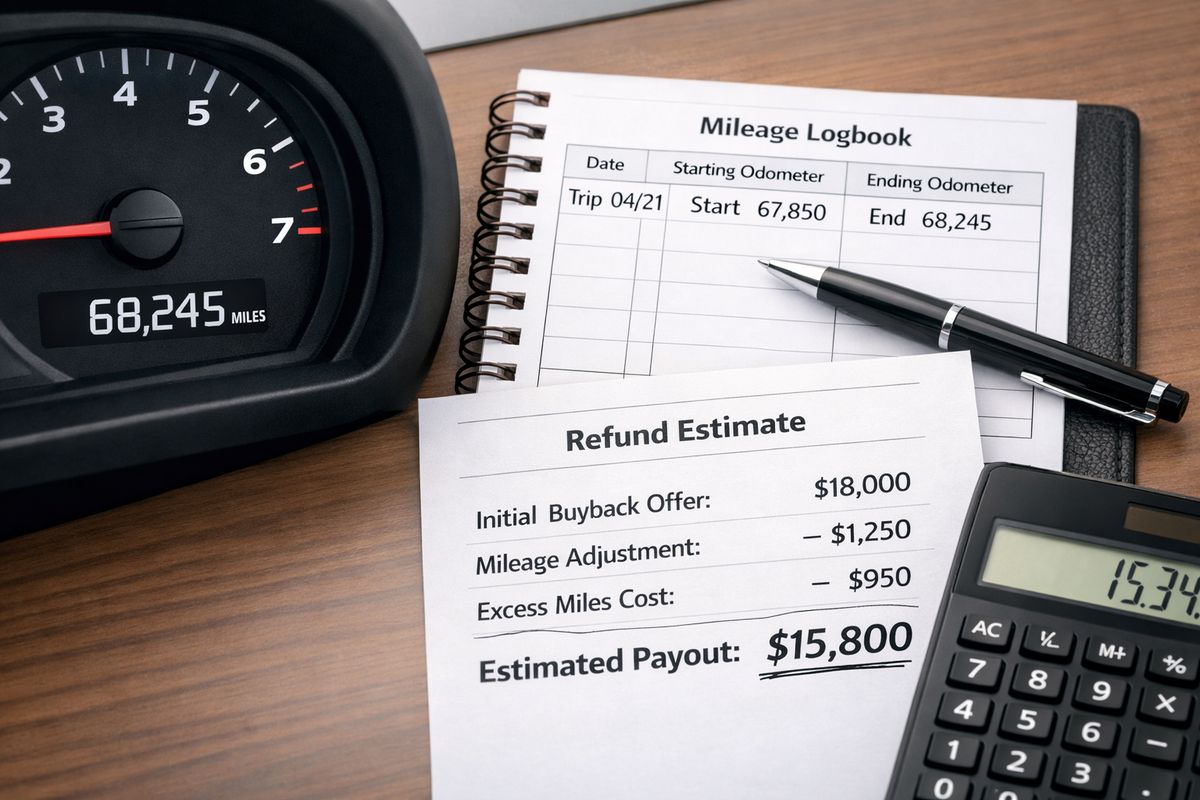
Mileage is one of the biggest swing factors in a buyback. The more you drove the vehicle before the defect triggered lemon law relief, the more likely a use deduction will reduce the refund amount. In plain English, the manufacturer may argue that you got some value from the car before it became a lemon-level problem.
That does not automatically make a replacement better. A replacement may avoid the emotional sting of seeing a deduction reduce your refund, but the fairness question still stays on the table. If your defective vehicle had substantial use, that history can still influence how valuable the replacement outcome feels to you.
This is why early documentation matters. If you are still trying to figure out how many repair attempts usually matter, timing can affect not just eligibility, but also the practical value of the remedy.
Loan, lease, and negative equity comparison
If you financed the vehicle and owe more than it is worth, a buyback is often stronger. Why? Because it can help stop the cycle before you trade in a defective car at a loss and roll that shortfall into the next loan. That is how one bad vehicle turns into two expensive problems.
For leased vehicles, the comparison still matters. A replacement may keep you in a similar payment structure, but a buyback can be more attractive if your goal is to end the relationship with the defective vehicle completely. If your situation involves a lease, understanding how Florida claims work for leased vehicles can clear up a lot of confusion fast.
Negative equity is where buybacks really pull ahead. A replacement gives you another vehicle. A buyback gives you a better chance to reset the financial damage.
Taxes, registration, fees, and incidental costs
This is where people often get surprised. A buyback may include reimbursement for sales tax, title fees, registration, and other qualifying costs connected to the original deal. That can make the refund feel much more complete than just getting the sticker price back minus mileage.
With a replacement, some charges may carry over, be recalculated, or create fresh out-of-pocket costs depending on the exact structure of the swap. Even if the replacement is fair overall, it may not feel as clean financially if you still end up paying for new tags, insurance adjustments, or mismatched fees.
After weeks in the shop, most people ask a simple question: what money actually comes back? Usually, the buyback gives the clearer answer.
Speed and hassle: which option is easier to live with
A buyback can involve plenty of paperwork, but the end point is straightforward. The manufacturer takes the vehicle back, pays what is owed, and the transaction ends. It is a lot like getting a refund for a broken appliance instead of waiting for the store to order a substitute model that may or may not match what you bought.
A replacement can sound easier because you keep driving a similar vehicle. The catch is inventory, approvals, trim matching, and delivery timing. A “simple swap” can turn into weeks of waiting while everyone figures out what counts as comparable.
If your vehicle has already spent too long off the road, tracking excessive days in the shop becomes a practical part of the case, not just a legal detail.
Vehicle availability and replacement risks
A buyback is definite. Money can be calculated. A loan can be paid off. The vehicle goes back.
A replacement has more moving parts. The same model may be unavailable. The trim may be discontinued. A feature package you paid for may not exist in the same form anymore. For 2024 to 2026 vehicles, that problem is real because model-year changes can happen fast, even within what seems like the same vehicle.
And if the replacement is not truly comparable, the deal starts to feel like compromise instead of relief.
Emotional and practical tradeoffs
After enough breakdowns, most people stop caring about theory. You want your mornings back. You want to stop wondering if the check engine light will come on halfway across an intersection in Orlando or while merging onto I-95.
A buyback gives a clean break. That matters when trust in the vehicle is gone. Even if the numbers are close, being done with the defective car can feel like the bigger win.
A replacement fits a different mindset. If you still like the model, still want the same kind of vehicle, and mostly believe you got one bad unit, getting a properly working version may feel like the right fix.
Florida lemon law rules that can change the outcome
Florida rules can affect whether a buyback or replacement is available at all. Repair history matters. Out-of-service time matters. Warranty coverage matters. Notice requirements matter too, especially if your case is at the point where the manufacturer must get one final chance to fix the issue.
For 2024 to 2026 vehicles, the warranty timeline is a big deal because lemon law protection is tied closely to warranty-covered defects and qualifying repair attempts. If you are unsure about the basics, getting clear on what counts as a qualifying Florida lemon helps you judge the strength of either remedy.
Pricing and financial outcome comparison
Here is the clearest version: a buyback usually offers stronger total refund potential, while a replacement offers stronger continuity of transportation. Buybacks can include repayment of major deal-related costs, though mileage deductions may reduce the total. Replacements can preserve vehicle value on paper, but hidden costs and mismatched inventory can chip away at that advantage.
| Factor | Buyback | Replacement |
|---|---|---|
| Immediate cash value | Usually higher | Usually lower |
| Loan payoff benefit | Strong | Limited |
| Flexibility after resolution | High | Low |
| Mileage deduction impact | Direct | Indirect |
| Inventory risk | None | High |
| Emotional clean break | Strong | Moderate |
| Fast return to driving | Sometimes slower | Sometimes faster |
When a buyback usually pays more
A buyback usually pays more when your frustration is high and your financial risk is growing. That includes repeated engine or transmission failures, long repair delays, concern about loan payoff, or fear of taking a loss by trying to dump a defective car in a trade.
It also tends to win when you want flexibility. Cash back or a loan payoff lets you choose a different brand, a cheaper vehicle, or no replacement at all for the moment. That freedom has value, and it is hard to match with a manufacturer-chosen swap.
If your engine was replaced and the problems still did not stop, that is another strong sign. Situations involving ongoing trouble even after major engine work often point toward wanting out, not trying again.
When a replacement can be the better value
A replacement can be the better value when mileage deductions are low, a truly comparable vehicle is available quickly, and you still want basically the same car. If your main goal is to get back on the road without shopping from scratch, the replacement route can feel smoother.
It also makes more sense when your defective vehicle was otherwise a good fit for your life. Maybe the cargo space worked, the trim was right, and the payment already fit your budget. In that narrow lane, a replacement can deliver solid value even if it does not hand you the most money.
When to choose a buyback
Choose a buyback when your vehicle has become a financial trap, not just a repair problem. Repeated engine or transmission failures, multiple unsuccessful dealer visits, and weeks out of service all point that way.
It is also the better fit when you want to avoid throwing good money after bad. If you are thinking about another repair attempt because you feel stuck, reading about what it means when the warranty repair still did not solve it can help you see the pattern more clearly.
When to choose a replacement
Choose a replacement when you still want the same kind of vehicle and your biggest problem is this particular unit. If a comparable model is available and your use deduction would heavily cut into a buyback refund, a replacement can make practical sense.
It is also appealing when transportation is the main issue. If getting another similar vehicle quickly matters more than maximizing dollars, replacement has a real advantage.
The verdict: which pays more for most florida drivers
For most Florida drivers dealing with recurring defects, a lemon law buyback usually pays more in practical financial terms. You are more likely to get a cleaner financial reset, avoid trade-in loss, reduce loan trouble, and walk away with flexibility. A replacement makes sense in narrower situations, mainly when a close match is available fast and convenience matters more than getting the strongest money outcome.
Frequently asked questions
Does a lemon law buyback mean you get all your money back?
Not always every dollar, but often much of the deal-related cost can be recovered. A use or mileage deduction may reduce the refund, and the exact numbers depend on the purchase, lease, and repair history.
Is a replacement vehicle always brand new?
Usually the replacement is a new comparable vehicle, but “comparable” is the key word. The match should be close in model, value, and features, not just any available car.
Which is better if you still owe money on your loan?
A buyback is often better if you still owe money, especially if the vehicle has dropped in value. It gives you a better shot at resolving the bad deal without carrying the problem into another loan.
Can a leased vehicle qualify for a buyback or replacement?
Yes, leased vehicles can qualify under the right circumstances. The financial structure is different from a financed purchase, but lemon law relief can still apply.
Does an engine or transmission replacement end your lemon law case?
Not necessarily. If the same serious problem keeps coming back, or new related issues continue after major repairs, your claim may still be very much alive.
Talk to jonathan about your vehicle
Jonathan D. Schwartz, the attorney behind Bad Vehicle, helps vehicle owners understand Lemon Law options. He can review your repair history, answer your questions, and help determine the next steps for a potential claim.
Your case review is free, and you pay no attorney fees unless you win.
Schedule your free consultation with Jonathan
Think your vehicle may qualify?
Have your repair history reviewed and find out what options may be available under Lemon Law or warranty law.