
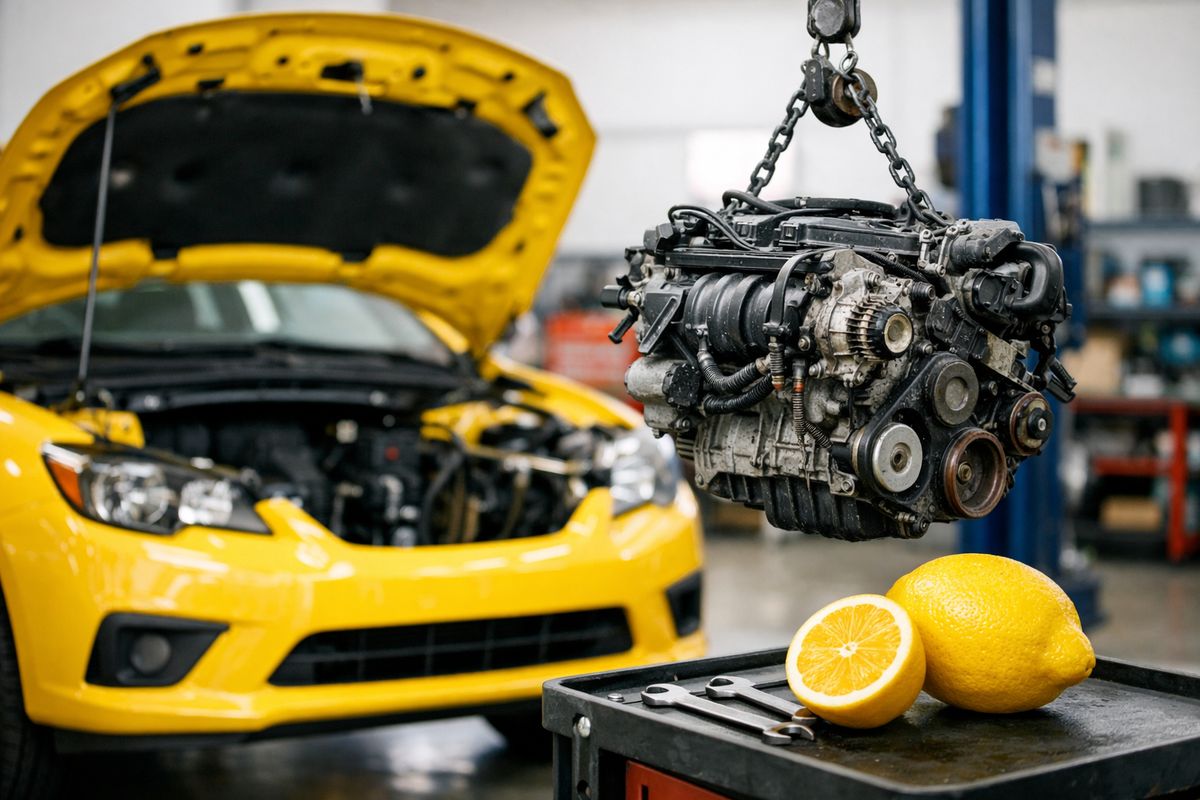
An engine replacement can help a lemon law engine replacement claim, sometimes a lot, but it does not automatically win the case by itself. Here’s the thing: if your 2024, 2025, or 2026 vehicle needed a whole new engine and still gives you trouble, or sat at the dealership for weeks, that is a serious sign the problem may be bigger than a normal warranty repair.
Does an engine replacement automatically help a lemon law claim?
No. An engine replacement can strongly support your claim, but it does not guarantee one.
That answer surprises a lot of people. You hear “new engine” and assume the manufacturer basically admitted the vehicle was a lemon. Not quite. But swapping an engine is not like replacing a battery or a sensor. It usually shows the original problem was major enough to affect how your vehicle runs, how safe it feels, or what it is worth.
Why a replacement matters
An engine is the heart of the vehicle. If a manufacturer approves replacing it under warranty, that usually means the defect was serious, expensive, and not something the dealership could solve with a quick afternoon fix.
That matters under lemon law because serious repairs help show substantial impairment. In plain English, that means the problem made your vehicle harder to use, less safe, or worth less than it should be. If your car stalled at a traffic light, lost power on I-4, knocked loudly at startup, or burned oil between services, that is not a minor inconvenience.
The catch: replacement does not erase the history
A new engine does not wipe the slate clean.
If your vehicle had repeated repair visits before the replacement, that history still matters. If it kept stalling, flashing warning lights, refusing to start, or spending long stretches at the dealership after the replacement, that matters too. Think of it like a bad home appliance that needed its main control board replaced three times. The fact that one huge repair happened does not erase everything that came before it.
How florida lemon law looks at serious engine problems
Florida lemon law focuses on new vehicles with defects the manufacturer cannot fix within a reasonable opportunity. For 2024 to 2026 owners and lessees, the key idea is usually whether the defect is a “nonconformity,” which is just a legal way of saying a problem covered by warranty that substantially impairs the vehicle’s use, value, or safety.
If you want a fuller overview, it helps to read more about which Florida vehicles can qualify.
What counts as a qualifying defect
Serious engine issues often qualify when they materially affect how your vehicle drives. That can include engine failure, knocking, stalling, overheating, excessive oil consumption, check-engine warnings, no-start problems, or a sudden loss of power.
The test is practical, not academic. If your vehicle feels unreliable, unsafe, or worth less because of the engine problem, that is the kind of issue lemon law is built to address.
Repair attempts and days out of service
Two facts usually matter most: how many times the dealership tried to fix the issue, and how long your vehicle was out of service.
A repair count matters because repeat visits suggest the problem was not actually solved. Time out of service matters because being without your vehicle is part of the harm. If your SUV sat behind the service bays in Orlando for 28 days waiting on an engine and related parts, that is not a footnote. That is a big part of the story. If you need more context, look at how repeat repair visits are evaluated.
Why 2024-2026 owners and lessees should pay attention to warranty timing
Timing matters more than most people realize. Lemon law rights are often tied to the warranty period and the early part of ownership.
So if your engine problem started early but you kept hoping the next visit would finally fix it, delay can make a strong claim harder to prove. The defect does not become less real with time, but paperwork gets messier, memories fade, and deadlines get closer. The same timing issue can matter if you are still wondering whether warranty coverage and lemon law can overlap.

When an engine replacement strengthens your claim
An engine replacement helps most when it is part of a larger pattern: repeat breakdowns, recurring symptoms, long delays, or new problems after a major repair.
If the same problem comes back after the new engine
This is one of the strongest fact patterns.
If your vehicle still stalls, misfires, leaks oil, loses power, or throws warning lights after the engine swap, that suggests the root problem was not truly fixed. Maybe the replacement engine was defective too. Maybe the real issue was wiring, fuel delivery, software, or something the dealership missed from the start. Either way, if the trouble returned, your history matters. That is exactly why it helps to understand why the same defect keeps returning.
If your vehicle spent weeks at the dealership
Sometimes the biggest issue is not just the repair itself, but the amount of time your vehicle disappeared into the service department.
Maybe you dropped it off for a knocking noise and got it back a month later. Maybe parts were backordered. Maybe the dealer kept saying “a few more days.” Even if the engine was eventually replaced, those lost weeks can support your claim because lemon law is not only about what broke, but also about how long you were deprived of a working vehicle.
If the replacement created new problems
A replacement engine can solve one issue and create three more. It happens.
After a swap, some vehicles come back with wiring faults, coolant leaks, drivability problems, software errors, rough idling, or repeated check-engine lights. That does not mean your case got weaker. If your vehicle remains unreliable after a major warranty repair, the overall defect history may still support relief.
If your transmission or other systems were also repaired
Engine problems do not always travel alone. If your transmission was also repaired, or your vehicle had electrical, cooling, or fuel system issues during the same ownership period, that can show a broader pattern.
Dealerships often separate each visit into neat little boxes. Real life is messier. If your vehicle has had multiple major warranty repairs, that larger history may matter more than any single invoice. The same is true for drivers dealing with a bad transmission after major repair work.
When an engine replacement may not be enough on its own
There are limits. A single engine replacement followed by a complete and lasting fix may not always support a successful lemon law claim.
One major repair with no repeat issues
If the engine was replaced once and your vehicle has run normally ever since, the manufacturer will usually argue the issue was repaired within a reasonable number of attempts.
That argument can be effective. Lemon law is meant for unresolved warranty defects, not every serious repair. A big repair is still alarming, of course, but if the vehicle is truly fixed and stays fixed, your claim may be weaker.
Problems caused by abuse, modifications, or poor maintenance disputes
Manufacturers often push back by blaming the owner. Missed oil changes, aftermarket tuning, neglected maintenance, or unrelated damage are common defenses.
That is why service records matter. Repair orders, invoices, and maintenance receipts can help show you did your part. If blame starts shifting onto you, paperwork becomes your best friend.
“That’s Normal” or “no problem found” responses
This one drives people crazy, and for good reason.
A dealer write-up saying “could not duplicate” does not magically make rough running, burning smells, hesitation, or random stalling normal. If the symptoms were real, keep documenting them. Save the repair orders. Take notes on when it happened and what the vehicle did. Dealers sometimes minimize issues that later turn into much stronger claims. You can see how that comes up when the dealership brushes off a real problem as normal.
What to gather before you ask about a lemon law claim
You do not need a perfect legal file cabinet. But you do need the basic paper trail.
Repair orders, invoices, and dates
Keep every repair order, not just the one for the engine replacement.
The useful details are usually the small ones: mileage in, mileage out, dates, complaint descriptions, technician notes, parts delays, and whether the vehicle was kept overnight or longer. If you are missing records, ask the dealership for them. This is the kind of paper trail that can support showing what really happened during your repairs.
Your timeline of symptoms
Write out your timeline while it is still fresh.
Note when the problem started, how often it happened, whether the vehicle stalled in traffic, lost power on the highway, overheated in the driveway, or refused to start before work. Think of it like keeping receipts after a bad return process at a store. The more specific you are, the harder it is for anyone to wave the problem away.
Warranty, lease, or purchase documents
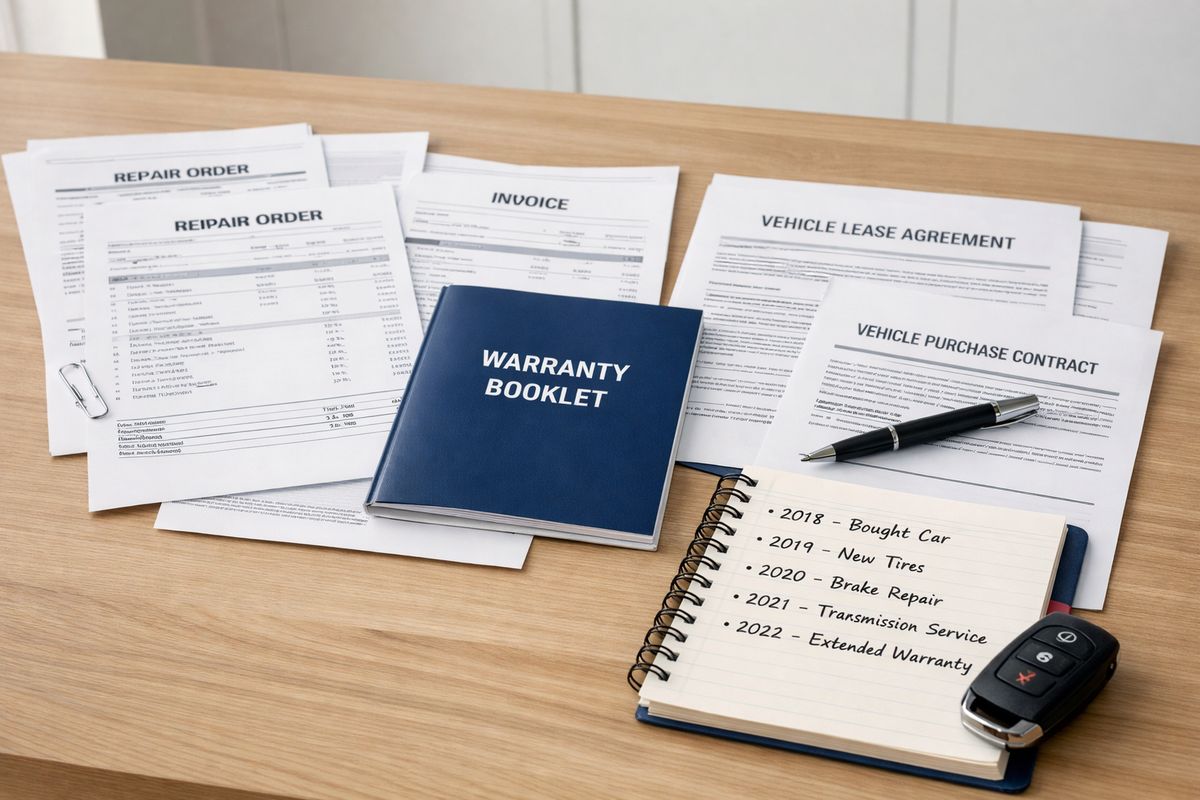
Gather your warranty booklet, purchase contract or lease agreement, and any manufacturer emails or letters.
If you leased the vehicle, do not assume lemon law only helps buyers. Lessees can have rights too, and the same repair history still matters.
Common questions about lemon law and engine replacement
If your engine was replaced, is your vehicle automatically a lemon?
No. But it is a serious sign worth reviewing closely. An engine replacement often shows the defect was substantial, especially if the same symptoms came back or your vehicle spent a long time in the shop.
Can you still qualify if the dealership says the vehicle is fixed now?
Yes, possibly. A manufacturer may still face a claim if the history shows repeat repairs, major downtime, or symptoms that returned after the “final” fix.
Does a buyback make more sense than trading it in?
Often, yes. Trading in a defective vehicle can leave you absorbing the loss through lower value, negative equity, or both. A lemon law claim is aimed at putting responsibility back on the manufacturer instead. It helps to compare that with what can happen when you trade in a defective vehicle too soon.
What if you leased the vehicle instead of buying it?
A lease does not automatically take lemon law off the table. If your leased vehicle has a qualifying warranty defect and a strong repair history, your claim may still be valid.
What to do next if your engine was replaced
If your engine was replaced and you are still guessing whether it matters, stop guessing. The most useful first move is simple: gather your year, make, and model, count the repair visits, and total up the days your vehicle spent in the shop.
Start with one simple step
Those few details are often enough to tell whether your case deserves a closer look. If your vehicle has been back repeatedly, stayed out of service for long stretches, or still is not right after a major repair, get the repair history reviewed while the dates and paperwork are still easy to track. You can also read more about what happens during a claim review if you want a clearer picture before moving forward.
Frequently asked questions
Does an engine replacement usually mean the defect was serious?
Yes. Replacing an engine is usually strong evidence that the underlying issue was major, not minor. It does not automatically prove a lemon law claim, but it often supports one.
Can you qualify if the replacement engine fixed the original problem but new issues started?
Yes, possibly. If your vehicle remained unreliable after the engine swap because of leaks, warning lights, wiring problems, or drivability issues, that ongoing repair history can still matter.
Does time waiting for parts count against your case?
No. If your vehicle sat at the dealership waiting on parts for a warranty repair, that downtime may still support your claim because you were without use of the vehicle.
What if the service advisor keeps saying to bring it back again?
That repeated return pattern can help show the defect was not actually fixed. Keep every repair order and make sure each visit clearly describes the same symptoms when they continue.
Can a buyback or cash recovery still be possible after an engine replacement?
Yes, depending on the facts. Some cases point toward repurchase or replacement, while others may fit a cash recovery option instead.
Talk to jonathan about your vehicle
Jonathan D. Schwartz, the attorney behind Bad Vehicle, helps vehicle owners understand their Lemon Law options. He can review your repair history, answer your questions, and help you determine the next steps for your potential claim.
Your case review is free, and you pay no attorney fees unless you win.
Schedule your free consultation with Jonathan
Think your vehicle may qualify?
Have your repair history reviewed and find out what options may be available under Lemon Law or warranty law.