

If your car is still under warranty, lemon law with warranty issues can absolutely overlap. In fact, that is often exactly how a lemon case starts: you keep giving the dealer chances to fix a covered problem, and the problem keeps coming back anyway.
Does lemon law still apply if your car has a warranty?
Yes. A warranty and lemon law usually work together, not against each other.
A vehicle warranty is the manufacturer’s promise to repair certain defects within a set time or mileage period. Lemon law is what can step in when that repair process fails. So if your engine, transmission, electrical system, or another covered part keeps acting up after repeated dealer visits, the fact that your car is under warranty does not block a claim. It may actually support one.
Here’s the simple version: the warranty is the promise to fix the problem. Lemon law is the backup plan when the fix never really sticks.
How a warranty and lemon law work together
A lot of drivers assume that if the dealership is still “working on it,” that means lemon law is off the table. That is not how it works. The whole point of many lemon law claims is that the manufacturer had a fair shot to repair the vehicle and did not succeed.
A warranty says the maker will try to fix the car
A warranty is basically a repair contract. If a covered part fails during the warranty period, the manufacturer is supposed to repair it, replace it, or otherwise correct the issue.
Different warranties can matter depending on what is going wrong. A bumper-to-bumper warranty often covers a broad range of defects for a limited time. A powertrain warranty usually focuses on major components like the engine and transmission. Emissions warranties can matter for certain warning lights, sensors, or related failures. If your problem falls under one of those promises, the dealer usually becomes the first stop.
That paper trail matters. Every service visit shows that the manufacturer knew about the problem and had a chance to fix it.
Lemon law steps in when the fix cycle keeps failing
Lemon law is not about one annoying repair. It is about a pattern.
Think about calling a plumber three times for the same leak under the kitchen sink. Each visit ends with “all set,” but two days later the cabinet is wet again. At some point, the issue stops being a normal repair and starts looking like a failed fix cycle. Cars work the same way.
If the defect is serious, keeps returning, or leaves your vehicle out of service for too long, lemon law may provide a remedy beyond more repair attempts. If you want a deeper look at how this overlap works, this guide on when a warranty problem may also support a claim breaks that down in more detail.

What counts as a “lemon” in florida
In Florida, not every vehicle problem makes a car a lemon. The defect usually needs to be substantial, not just irritating.
The basic question is whether the problem significantly affects your vehicle’s use, value, or safety. That is the heart of it. If your car has a defect that makes it unreliable, unsafe, or worth less because nobody can actually fix it, that is where lemon law conversations get real.
The problem has to be more than a minor inconvenience
A small cosmetic issue, a trim rattle, or a loose interior panel is frustrating, but that usually is not what drives a strong lemon law case.
Stronger examples are the ones that disrupt driving or create safety concerns: engine failure, transmission slipping, hard shifting, stalling, loss of power, brake problems, steering issues, or electrical failures that affect core vehicle functions. If your SUV dies at a stoplight on Federal Highway or your transmission jerks every time you accelerate onto I-95, that is not a minor inconvenience.
Repair history matters more than one bad day
One breakdown alone usually is not enough. What matters more is the pattern that follows.
If you keep going back for the same complaint, or for symptoms tied to the same root problem, that history starts to tell the real story. Maybe the warning light returns a week later. Maybe the dealer writes “could not duplicate” even though the same shudder shows up every morning on your commute. Maybe your car sits for days waiting on parts, comes home, and then goes right back.
That is why records matter more than memory.
New cars, demonstrators, and leased vehicles
Florida lemon law protections often apply to new vehicles, demonstrator vehicles, and leased consumer vehicles, assuming other requirements are met. Yes, a leased vehicle can still qualify. A lease does not cancel your rights just because you do not hold traditional ownership in the same way.
If your vehicle is leased and the defect keeps coming back, it is worth learning how Florida handles recurring problems in leased cars.

Does lemon law apply if the car is still under warranty?
Yes, and this is the point many drivers miss. Being under warranty does not cancel lemon law rights. In a lot of cases, it is exactly why the claim exists in the first place.
If the manufacturer is still obligated to repair the vehicle, and those repair attempts keep failing, that failed warranty process can become the basis for a lemon law claim.
Yes, and the warranty claim trail can help your case
Every repair order helps build the timeline. Service invoices, dealer notes, parts replacement records, repair dates, mileage, and repeat complaints all show the same thing: you reported the problem, the dealer had the car, and the issue was not truly resolved.
That history can be especially telling when major parts have already been replaced. If your engine was swapped and the knocking, stalling, or hesitation continued, that is not a small detail. It is a sign the problem may be deeper than a routine fix. If your paperwork shows repeated visits for one unresolved issue, it helps to understand how multiple repair attempts are usually evaluated.
The catch: not every warranty repair turns into a lemon law claim
Not all warranty work leads to a lemon claim, and that is where some confusion starts.
Routine maintenance is not lemon law territory. Oil changes, tire wear, brake pads worn through normal use, alignment issues caused by potholes, accident damage, aftermarket modifications, or one-off unrelated issues usually do not qualify. The same goes for problems caused by misuse or neglect.
The issue generally needs to be a covered defect and part of a meaningful pattern. A single repair for an isolated problem is different from a car that keeps coming back with the same failure.
Signs your warranty problem may also be a lemon law case
Most people do not wake up one day and say, “This is now a lemon law claim.” It usually starts with frustration, another service appointment, and that sinking feeling when the problem returns.
You have gone back for the same problem more than once
This is one of the biggest red flags.
If you reported the same symptom multiple times, especially using similar language each visit, that matters. It also matters when the dealer says “no problem found” or “operating as designed,” but the warning light comes back on by the next commute. A recurring issue is still recurring even if the dealership cannot pin it down on demand.
If that cycle sounds familiar, it helps to read about what it means when the same issue keeps sending you back.
Your engine or transmission has been replaced and the car still is not right
An engine or transmission replacement is not a minor event. If a major component was replaced under warranty and your vehicle still hesitates, slips, stalls, bucks, knocks, or feels wrong, that deserves a closer look.
A car should not feel permanently “off” after a major repair. Maybe it lurches between gears at 35 mph after warming up. Maybe it loses power merging into traffic. Maybe the transmission was replaced, but the shudder is still there. Those are the kinds of details that make people stop trusting the vehicle, and for good reason.
Your vehicle has spent weeks in the shop
A car can become a serious burden even if the dealer insists progress is being made.
If your vehicle has spent long stretches at the dealership, or keeps going back and sitting while parts are on backorder, that downtime matters. Missing work after another drop-off at a Fort Lauderdale dealership is not just annoying, it is lost use of the vehicle you paid for. If that sounds familiar, you may want to compare your situation to how extended time in the shop can affect a claim.
You are thinking about trading it in just to be done with it
That urge is understandable. A lot of drivers reach the point where they just want out.
But trading in too early can lock in a financial loss, especially if the vehicle’s history or condition lowers its value. Before taking the hit, it is smart to understand why unloading a defective vehicle can cost more than expected. Once you sign away the problem, you may also give up leverage you still had.
How many repair attempts are usually enough?
There is no magic number that fits every situation in every state, but the idea is straightforward: the manufacturer gets a reasonable number of chances to fix the defect. Not unlimited chances. Reasonable ones.
Florida rules and timing matter, so the details can get technical fast. Still, the common sense version is useful.
Repeat repairs for the same defect
Multiple repair attempts for one unresolved issue usually carry the most weight. If your complaint is written differently every visit, the record can look scattered even when the underlying problem is the same.
That is why consistency matters. If the transmission jerks after warming up, keep describing that same symptom. If the engine stalls after idling, say that every time. Paperwork should tell one clear story.
Serious safety issues may need fewer chances
A defect tied to safety is in a different category than an inconvenience.
Problems involving braking, steering, stalling in traffic, sudden loss of power, or fire risk are often treated with more urgency. You should not have to keep rolling the dice with a car that may leave you stranded in an intersection or unable to stop normally.
Days out of service can matter too
Repair count is only one piece of the picture. Time out of service can matter just as much.
Some vehicles do not rack up many completed repair attempts because they sit at the dealership waiting for parts, a field engineer, or another teardown. But a car that spends weeks unavailable is still failing you. If you want a more focused explanation, this article on how too many shop days can strengthen a case is worth a read.
What to do every time the dealer tries a warranty repair
This is where good cases often get stronger or weaker. The facts matter, but so does the paper trail.
Save every repair order and invoice
Keep every document, even if the visit feels minor.
Look for the date, mileage, your complaint description, what the technician found, what parts were replaced, and whether the dealer wrote phrases like “no problem found” or “could not duplicate.” Those details can become the backbone of your claim later. A folder full of organized records says more than a frustrated memory ever could.
Describe the problem the same way each time
Consistency helps. If the transmission jerks at 35 mph after the car warms up, say exactly that each time. If the engine stalls after ten minutes of driving, keep that description steady.
Think of it like labeling moving boxes. If every box says something different, nobody knows where anything goes. If every box says “kitchen,” the pattern is obvious.
Track how long the vehicle is unavailable
Write down drop-off dates, pick-up dates, rental gaps, tow events, and days when the vehicle simply was not usable.
Do not assume the dealer’s records will capture every detail the way you would want. A simple note on your phone or a basic spreadsheet is enough. The trick is keeping it current, not perfect.
Do not rely on verbal promises
Service-lane conversations are easy to forget and easy to deny later.
If someone tells you the manufacturer approved a part, admitted a known issue, or promised another repair step, try to get that in writing. If that does not happen, note the date, time, name, and what was said right away. If you are gathering records, this page on documents that can back up your repair history can help you spot what to keep.
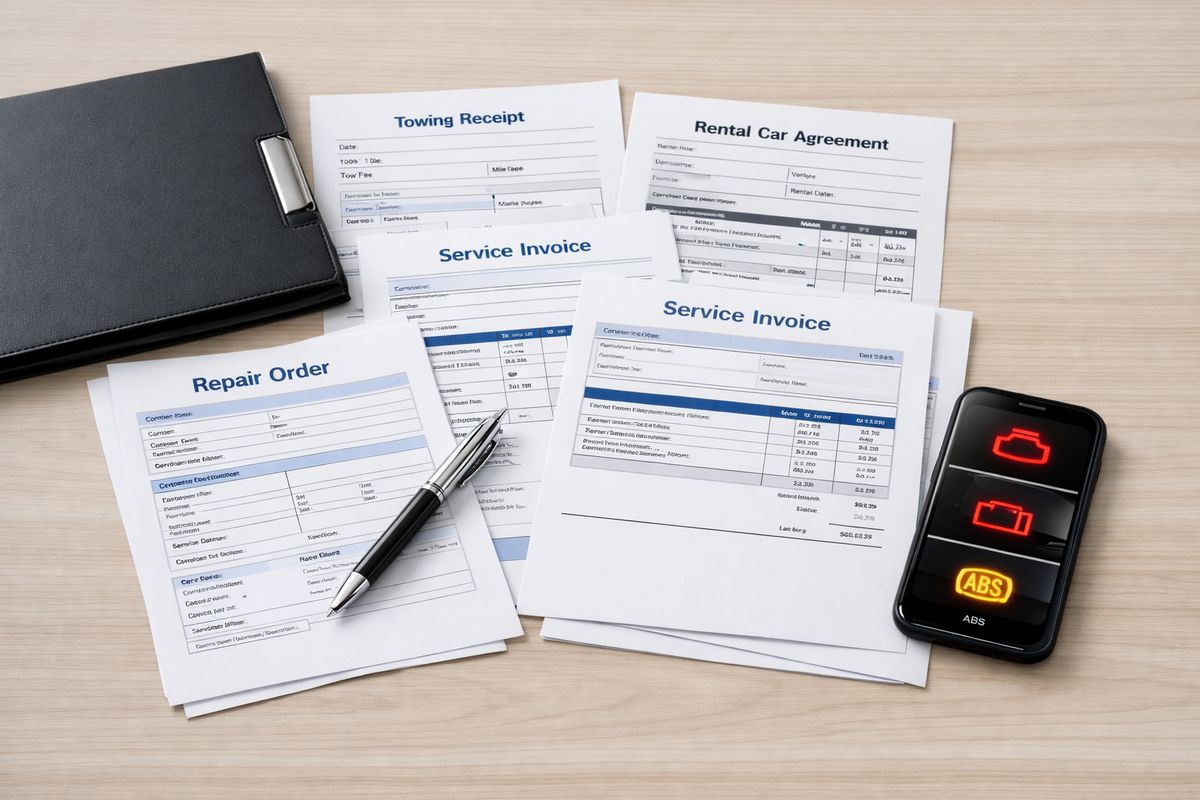
What if the dealer says “no problem found?”
This is one of the most maddening phrases in the entire process. It also does not automatically kill your claim.
A dealer’s inability to duplicate the problem on one visit does not mean the problem is imaginary. Modern vehicle defects are often intermittent, software-related, heat-related, or triggered only under certain driving conditions.
Intermittent defects are common with modern vehicles
Check-engine lights can clear. Electronics can fail only sometimes. Transmission issues may show up only after a long drive or once the vehicle reaches operating temperature.
That makes diagnosis harder, but not meaningless. If your dashboard lights up once every few days, your backup camera fails randomly, or your SUV stalls only after stop-and-go traffic, you are not stuck just because the dealership could not reproduce it in a ten-minute test drive.
Your notes, videos, and repeat visits still matter
Photos of warning lights, videos of rough shifting, screen recordings of error messages, towing receipts, and a timeline of symptoms can all help show the defect is real.
That is especially true when the issue appears, disappears, and then returns again. Repetition tells the story. So do your own notes. Date them, keep them short, and match them to each service visit.
Possible outcomes if your car qualifies
A successful claim does not always end the same way. The right outcome depends on the facts, the defect, and what resolution actually makes sense for you.
Buyback
A buyback usually means the manufacturer takes the vehicle back and refunds eligible amounts, subject to any lawful usage deduction.
For many drivers, this is the cleanest outcome. You are done with the bad vehicle instead of wondering whether the next repair will finally work. If you want to compare possible paths, this guide to Florida buyback and replacement choices explains what people often look at.
Replacement vehicle
Sometimes a comparable replacement vehicle is offered instead of a refund.
That can appeal to you if you still want the same type of vehicle and your main goal is getting one that actually works. The catch is that not everyone wants another version of the same model after a long repair saga.
Cash compensation or settlement
Some cases end with compensation instead of a full repurchase.
That can make sense in certain situations, but you should understand the tradeoff before signing anything. A cash deal may leave you with the vehicle, which means the defect, resale risk, or future repair burden may still be yours.
Florida-specific issues to keep in mind
Florida lemon law rules are state-specific, and timing matters a lot more than many drivers realize.
Deadlines can make or break a claim
Waiting too long can create real problems even when the defect is obvious.
A lot of people keep hoping that one more repair will finally fix everything. Sometimes that hope costs time you cannot get back. Once the pattern becomes clear, it is smart to act before deadlines or notice requirements become an issue. If you want a broader Florida overview, this explanation of which vehicle problems tend to qualify in this state lays out the basics clearly.
Manufacturer procedures and notice requirements
Florida claims may involve specific notice steps or dispute procedures before a final remedy becomes available.
That does not mean the process is impossible. It means missing a required step can slow things down. If your repair history is stacking up, structure matters almost as much as the defect itself.
Common questions about lemon law with a warranty
If the warranty is still active, should you keep letting the dealer try?
Usually, you need to give reasonable repair opportunities. But reasonable does not mean endless. If you are on repeat visit number four, five, or six for the same problem, the issue may be bigger than a normal warranty repair.
Does lemon law cover leased vehicles?
Yes, leased consumer vehicles can qualify in many situations, including in Florida, if other requirements are met. A lease does not strip away lemon law protections just because the financing structure is different.
What if the defect started after a major repair like an engine swap?
Document it right away. A new or continuing defect tied to warranty work still matters, especially if the vehicle never drives correctly after the repair. Post-repair problems can become part of the same overall case or raise new warranty concerns.
Does a used car qualify if some warranty coverage remains?
Sometimes, but the answer depends on the type of warranty, the vehicle, and which law applies. Factory warranty carryover, certified coverage, and federal warranty rights can all matter. Used-car situations are often more fact-specific than new-car claims.
When it makes sense to get a case review
If your car keeps going back for the same issue, has spent too long in the shop, or still is not right after major warranty repairs, it makes sense to get someone to look at the history before you make a costly move.
Have your year, make, model, and repair count ready
The fastest way to size up a potential case is simple: know your vehicle’s year, make, and model, and how many times it has been repaired for the problem. Add the rough dates, current mileage, and whether the engine or transmission was replaced, and the picture gets much clearer.
Try one simple step today
Put every repair order, invoice, tow bill, and rental receipt in one folder, then write down each shop visit in order.
That one step can change everything. It turns a messy, frustrating story into a timeline somebody can actually evaluate.
Frequently asked questions
Can a car be a lemon if the dealer keeps repairing it for free under warranty?
Yes. Free warranty repairs do not cancel lemon law rights. If the covered defect keeps returning or your vehicle spends too much time out of service, the failed repair pattern can still support a claim.
Does “no problem found” on the invoice ruin a lemon law case?
No. It can be frustrating, but it does not end the issue. If the symptom keeps returning, especially with notes, videos, warning messages, and repeat visits, the overall history can still matter a lot.
Is an engine replacement a sign your car may qualify?
It can be. A major component replacement is a serious event, and if the vehicle still stalls, knocks, hesitates, or drives poorly afterward, that is a strong reason to review the repair history closely.
Can your car qualify based on time in the shop, even without many repair attempts?
Yes. Long periods out of service can matter, especially when the vehicle sits waiting for parts or repeated diagnosis. Repair count is not the only thing that matters.
Should you trade in a defective car before checking your options?
Usually not. Trading it in too soon can lock in a financial loss and may complicate your ability to pursue other remedies. It is smarter to review the repair history first.
Talk to jonathan about your vehicle
Jonathan D. Schwartz, the attorney behind Bad Vehicle, helps vehicle owners understand their Lemon Law options. You can have your repair history reviewed, get answers to your questions, and figure out the next step for a potential claim.
Your case review is free, and you pay no attorney fees unless you win.
Schedule your free consultation with Jonathan: https://badvehicle.com/schedule-your-consultation/
Think your vehicle may qualify?
Have your repair history reviewed and find out what options may be available under Lemon Law or warranty law.