

A recurring vehicle defect means the same underlying problem keeps returning after repair, and for Florida owners and lessees of 2024 to 2026 vehicles, that pattern often signals more than routine service. When the same defect keeps happening, repeated repair attempts, long shop stays, and major component replacements can point to a deeper warranty failure.
What it means when the same car defect keeps coming back
When a dealership writes up the same complaint again and again, the issue is no longer just inconvenience. It becomes a documented pattern. For many Florida drivers, that pattern shows up as repeated visits for stalling, harsh shifting, warning lights, battery drain, or a vehicle that spends weeks at the dealer without a lasting fix.
Under Florida consumer protection rules, recurring defects matter because the law looks at patterns, not isolated frustration. The Florida Attorney General’s Lemon Law guide states that a vehicle may qualify when the manufacturer or its authorized service agent fails to conform the vehicle to warranty after a reasonable number of attempts or after extended time out of service. The state’s arbitration program defines the process for eligible claims involving new or demonstrator vehicles sold or leased in Florida, according to the Florida New Motor Vehicle Arbitration Board.
Why repeated repairs happen
The same problem usually returns for one of several familiar reasons. In repair histories, the most common include misdiagnosis, temporary fixes, software updates that do not resolve the actual failure, intermittent symptoms that refuse to appear on command, parts delays, and poor communication between service visits.
Manufacturers and dealers often describe these events as ordinary troubleshooting. That is true up to a point. Modern vehicles combine engine, transmission, electrical, and software systems so tightly that one fault can trigger several symptoms. But when the complaint keeps returning after service, the paperwork starts telling a different story.
Misdiagnosis and symptom-based repairs
Dealers often repair the symptom they can see that day, not the root cause. A warning light may lead to a sensor replacement. A hesitation complaint may lead to a software reflash. A vibration may lead to a mount or tire-related repair. Yet the real source can sit elsewhere in the fuel system, valve train, transmission control logic, wiring, or power management system.
That is why the same owner returns with the same complaint, even though the invoice lists a different repair each time. Engine hesitation, random stalling, hard shifts, loss of power, and check-engine lights are broad symptoms. They can come from several systems at once.
Parts replacement that does not fix the root cause
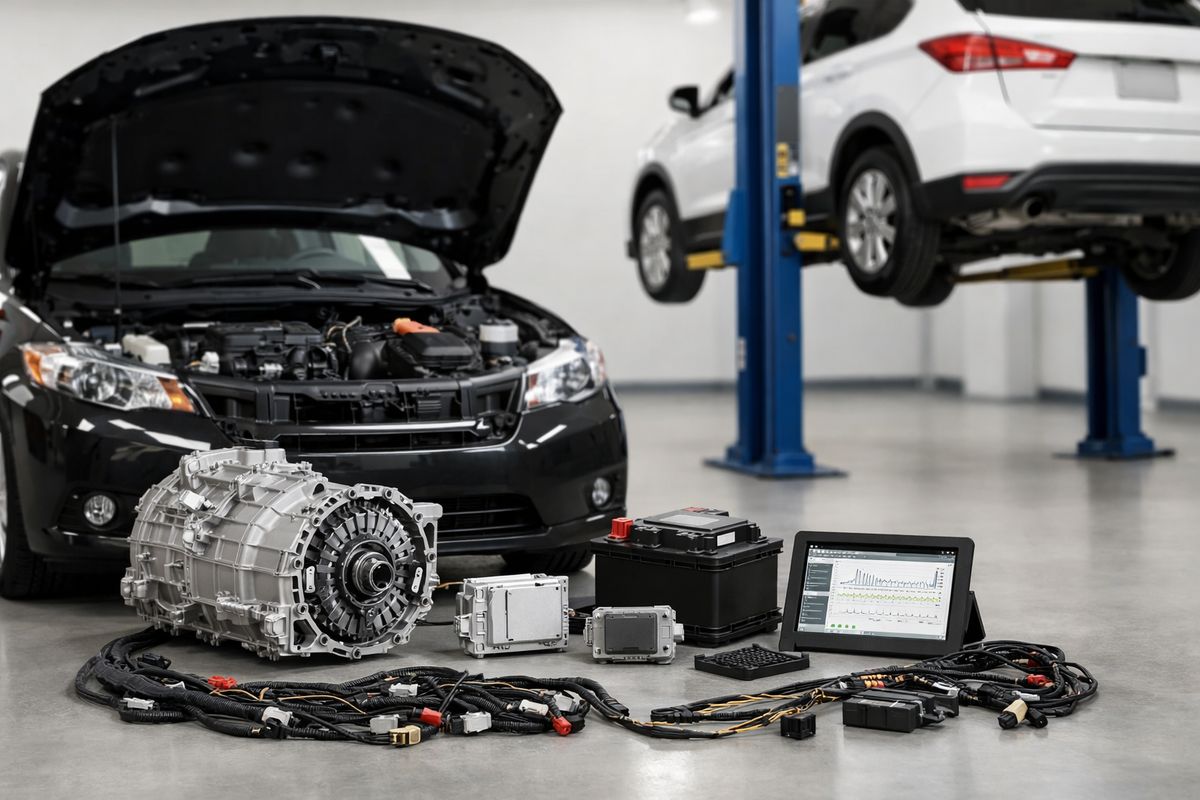
A replaced transmission does not automatically solve a transmission case. The same is true for an engine component, battery pack, control module, or sensor network. If the underlying defect remains, the problem returns under a new label.
This shows up often in service records. A dealer replaces a valve body, then updates software, then replaces the full transmission. Or an engine gets major internal work, but the same misfire, overheating, or shutdown complaint comes back. In those situations, repeated component swaps can serve as evidence that the defect was never actually corrected. Cases involving major repairs that did not end the trouble often become stronger because the record shows escalating efforts without a fix.
Intermittent problems and “no trouble found” visits
Some defects only appear under certain conditions, during high heat, after cold starts, at highway speed, in stop-and-go traffic, or after extended driving. These are the cases that frustrate both consumers and service departments.
A technician may road-test the vehicle for 12 miles and find nothing. The invoice then says “could not duplicate” or “no fault found.” But the owner returns days later with the same shutdown, shudder, camera failure, or battery drain issue. Repeated “no trouble found” visits do not erase the complaint. They often show that the defect is real but inconsistent, which is common in modern software-driven vehicles.

The difference between a one-time repair and a recurring defect
A one-time repair is a normal warranty event. A recurring defect is a repeated failure of the same underlying condition despite repair attempts. The difference matters because warranty systems expect occasional repairs, but lemon law and related warranty claims focus on unresolved defects.
One invoice rarely proves much. Three or four service visits for the same drivability problem, or a long out-of-service stretch tied to a continuing failure, tells a different story. Florida consumers trying to understand that threshold often review how repeat attempts are evaluated when deciding whether the issue has moved beyond ordinary service.
Signs the defect is truly recurring
The practical signs are usually plain. The same warning light returns after reset. The same shifting issue reappears after a reflash or adjustment. The same leak, noise, stall, or loss of power comes back after parts replacement. The vehicle returns to the dealership for the same complaint, even if the paperwork uses different language.
Another strong sign is related system failure after a prior repair. A vehicle may first enter for hesitation, then for stalling, then for reduced power mode. On paper those can look separate. In reality, they often trace back to one unresolved engine management issue.
Related repairs can still point to the same underlying problem
Dealers and manufacturers do not always describe repeat problems the same way. One visit says “hard shift.” Another says “hesitation on acceleration.” A third says “delayed engagement.” Those descriptions can all reflect the same transmission defect.
The same pattern appears in electrical cases. One invoice lists backup camera failure. Another lists communication loss with a control module. Another lists driver-assistance system warnings. Different codes, same defect chain. That is why service history review matters more than a single phrase on a single invoice.
Which vehicle problems most often keep coming back
Certain categories of vehicle defects recur more often because they involve complex systems, inconsistent symptoms, or backordered parts. For 2024 to 2026 vehicles, powertrain and software-related issues dominate many repeat-repair histories.
Engine failures, stalling, and loss of power
Recurring engine defects often involve rough idle, oil consumption, overheating, hard starting, misfires, repeated check-engine warnings, and sudden shutdowns. These problems affect reliability first, then safety. A vehicle that loses power in traffic or stalls at intersections has moved beyond nuisance.
Manufacturers often begin with updates, ignition components, sensors, or fuel system work. If the defect keeps happening, the service file can grow quickly. In Florida disputes, an unresolved warranty repair pattern often matters more than whether the dealership insists it repaired the vehicle correctly the last time.
Transmission problems that return after repair
Transmission cases are classic examples of recurring defects. Common complaints include slipping, harsh shifting, delayed engagement, shuddering, surging, and refusal to accelerate normally. Service records often show software reflashes, clutch adaptations, valve body work, fluid service, and full replacement transmissions.
When those measures fail, the pattern becomes hard to ignore. A replaced transmission that still shudders or hesitates is not a fresh start. It is evidence that the original problem was never fully resolved, or that the replacement introduced the same failure again.
Electrical, computer, and sensor defects
Modern vehicles run on modules, networks, cameras, sensors, and software. That increases convenience but also creates failure chains that are hard to isolate. Infotainment blackouts, repeated warning messages, battery drain, backup camera failure, adaptive driving-assistance faults, and random resets often cycle through several repair attempts before anyone identifies the true source.
Manufacturers often answer with module programming, resets, or component replacement. Sometimes that works. Often it does not, especially when the root issue lies in communication faults, unstable voltage, or corrupted software logic that affects more than one system.
Long out-of-service problems
Sometimes the strongest sign of a defect is not the exact label but the amount of time the vehicle disappears into the service lane. Weeks in the shop for related unresolved issues point to a breakdown in the warranty repair process itself.
Parts shortages make this worse. A dealer may confirm the failure but leave the vehicle waiting for a backordered engine part, transmission assembly, or control module. For many consumers, extended downtime under warranty becomes just as significant as the number of visits because the loss of vehicle use is real, measurable, and documented.
What repair records usually reveal
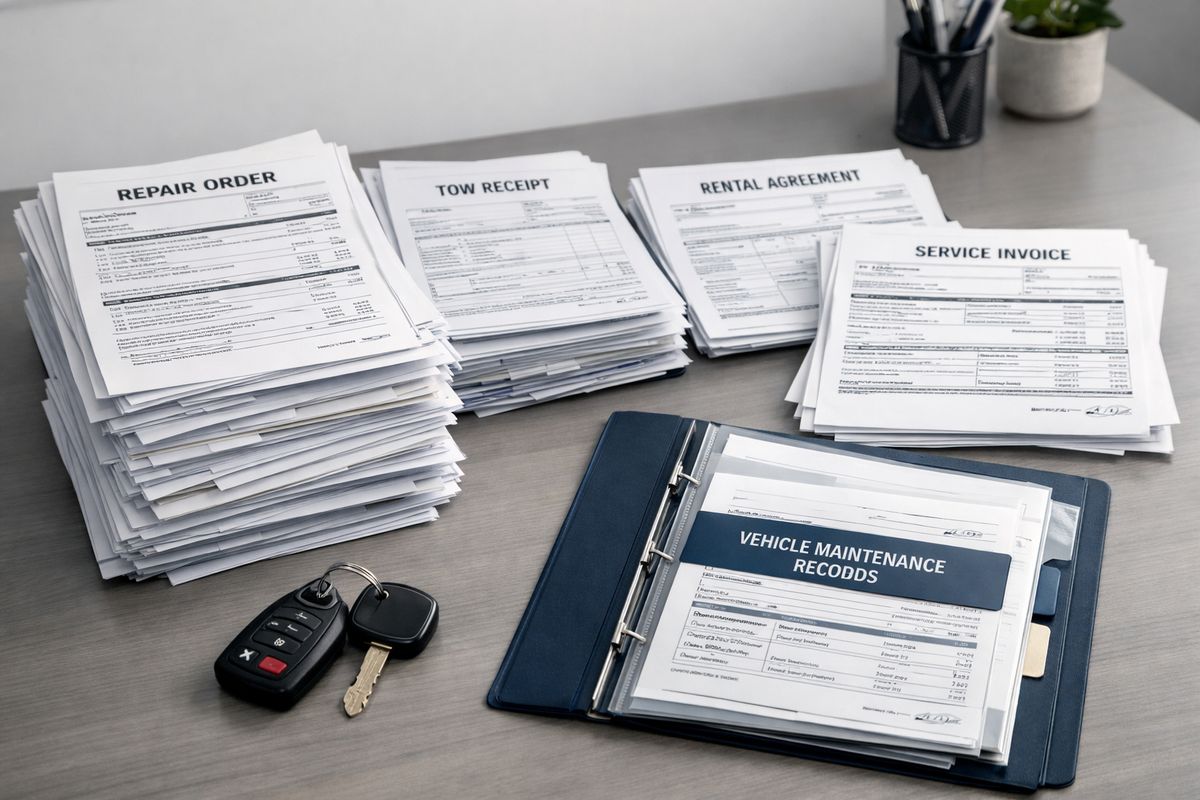
Paperwork drives recurring-defect cases. Repair orders, final invoices, towing records, and text messages often reveal more than memory ever can. They show dates, mileage, complaint language, work performed, and whether the condition returned.
A clear service history also cuts through a common manufacturer defense, that the vehicle had many unrelated repairs rather than one continuing issue. Records often show otherwise.
Language to look for in service invoices
Certain phrases matter because they show what was reported and what the dealer did with that report. Common examples include “customer states,” “verified concern,” “could not duplicate,” “performed update,” “replaced component,” “test drove,” and “condition returned.”
Those entries help establish the timeline. “Customer states vehicle stalls at stoplights” is stronger than a vague note such as “check engine.” “Condition returned” is especially useful because it links one visit to the next. Consumers gathering the paperwork that supports a claim usually find that the wording across invoices tells the story better than any single repair outcome.
How manufacturers and dealers document repeat complaints
Dealers document repairs for several audiences at once: the customer, the technician, the manufacturer warranty system, and internal service management. That means the same problem may appear under different descriptions depending on who entered the note.
Technician comments, warranty claim coding, and internal repair narratives often reveal consistency that the customer-facing invoice hides. A complaint listed publicly as “hesitation” may carry a manufacturer code tied to transmission slip or throttle failure. That inconsistency is common, not unusual. It does not break the pattern. It often confirms it.
When a repeating defect becomes a legal issue in florida
A recurring defect becomes a legal issue when ordinary warranty repair no longer solves the problem within a reasonable time or number of attempts. At that point, the issue shifts from service management to consumer rights.
Florida has a specific lemon law structure for qualifying newer vehicles, but warranty disputes do not end there. Some consumers pursue relief inside the state lemon law framework. Others rely on broader warranty rights, depending on timing, vehicle status, and repair history.
Florida lemon law basics for newer vehicles
Florida’s lemon law generally applies to new or demonstrator vehicles sold or leased in the state for personal, family, or household use, according to the Florida Attorney General’s office. The core ideas are repeated repair attempts for a nonconformity and extended days out of service for repair of one or more nonconformities.
Eligibility turns on facts, dates, mileage, warranty status, and notice requirements. For that reason, many owners start with the state framework for qualifying Florida vehicles before a formal review of the repair history.
Warranty claims outside traditional lemon law timelines
Not every valid case fits neatly inside the strictest lemon law timelines. Some vehicles remain under manufacturer warranty but fall outside one procedural window or another. Others involve recurring defects that continue after major repairs or after lengthy shop time.
In those situations, consumers still examine buyback, replacement, or compensation paths based on warranty law, the repair record, and diminished value concerns. A vehicle that has been repeatedly repaired but never truly fixed remains a legal and financial problem, even if the dealership treats each visit as a separate event.
Leased vehicles, replaced engines, and replaced transmissions
Lease status does not erase recurring-defect rights. In Florida, leased vehicle cases often follow the same practical pattern as purchase cases: repeated complaints, repeated repairs, and a vehicle that still fails to conform to warranty. Consumers comparing options for leased vehicles with continuing defects often find that the paper trail matters more than whether the contract is a lease or finance agreement.
The same is true when an engine or transmission has already been replaced. Major component replacement does not close the file if the same underlying problem remains. In many disputes, it strengthens the record because it proves the defect was serious enough to justify major warranty work.
What owners and lessees should do after the defect returns
After the defect returns, documentation becomes the center of the case. Consistency matters. So does timing. Gaps in the record tend to help the manufacturer more than the consumer.
Report the same complaint the same way each time
When the same issue comes back, the complaint should be described consistently on each repair visit. If the vehicle stalls, the write-up should say stall or shutdown each time. If it shudders during acceleration, that wording should appear again.
Consistent descriptions help establish recurrence. Inconsistent language gives the dealer room to treat each visit as unrelated. This point matters especially in intermittent cases, where the vehicle may behave differently on the day of inspection.
Keep every repair order, invoice, and towing record
The strongest files usually include the initial write-up, final repair invoice, manufacturer or dealer texts, rental bills, tow receipts, and notes of days out of service. Even a short stay counts. So does a return visit that ends with no repair.
These records become especially valuable when a consumer later evaluates what happens after multiple failed fixes. The dates, mileage, and wording often determine how the case is viewed.
Avoid trading in the vehicle before reviewing options
Trading in a defective vehicle is a common reaction to frustration. It is also one of the fastest ways to lock in financial loss. A low trade value, negative equity, and a documented defect history can leave the consumer paying for a problem that was never solved.
That is why many people pause before disposing of the vehicle and review the financial risk of trading a bad one before making the loss permanent.
Common misconceptions about recurring car defects
Several misunderstandings keep consumers from documenting a valid defect pattern or from recognizing when a routine repair has become something larger.
“A new engine or transmission solves the case”
A major replacement does not erase the earlier repair history. It also does not guarantee success. If the same problem continues after an engine or transmission replacement, the unresolved nature of the defect often becomes clearer, not weaker.
“The dealer said no code means no problem”
No stored code does not mean no defect. Many intermittent failures leave incomplete data, especially when they involve heat-related faults, communication interruptions, sensor dropouts, or conditions that vanish by the time the vehicle reaches the dealership.
Repeated documented complaints still matter. So do towing events, warning messages, and repeat visits that end with no fix.
“Different symptoms mean different problems”
They do not. Stalling, shifting, warning lights, battery drain, and software malfunctions can all come from one unresolved system failure. Different symptom labels often describe one defect moving through a complex vehicle.
Questions that help determine whether the defect keeps happening
Case reviewers usually start with a few basic facts because those facts reveal whether the repair history shows a recurring pattern or a one-time event.
What is the Vehicle’s year, make, and model?
The year, make, and model help identify warranty status, known defect patterns, drivetrain design, and software architecture. That matters even more for 2024 to 2026 vehicles, which often rely on newer electronic control systems and updated powertrain designs.
How many times has it been repaired?
Repair-attempt count remains a central fact because it shows whether the manufacturer had repeated chances to fix the problem. The total is not the only factor, but it is one of the clearest. Consumers often compare their facts against guides explaining how repeat visits are counted.
How long has the vehicle been in the shop?
Cumulative downtime can be as important as the number of visits. A vehicle with two very long repair stays may present a stronger record than a vehicle with several short appointments, especially when parts are unavailable or the dealer cannot complete the work.
Was the engine or transmission replaced?
Engine or transmission replacement often signals that the issue was serious from the start. If the same drivability, power loss, or shifting issue remains after that repair, the case record usually reflects an unresolved defect rather than routine maintenance.
What a free case review typically looks at
A free case review usually focuses on documents, dates, and repair patterns. The reviewer examines whether the vehicle remained under warranty, how the defect was described, how many times the dealer attempted repair, how long the vehicle stayed out of service, and whether major components were replaced.
The process is practical. It is less about labels and more about evidence.
Documents and facts commonly reviewed
Commonly reviewed items include purchase or lease paperwork, warranty information, repair orders, final invoices, tow bills, rental receipts, mileage records, and notes showing when the vehicle was unavailable for use. Current condition also matters because it shows whether the defect remains active or recently returned.
Possible outcomes: buyback, replacement, or compensation
The usual outcomes are buyback, replacement, or cash compensation. A buyback generally means the manufacturer repurchases the vehicle under applicable rules. A replacement means another comparable vehicle is provided. Compensation often addresses diminished value, repair history, or other losses tied to the unresolved warranty defect. Consumers comparing those remedies often review how repurchase and replacement differ in practice.
Frequently asked questions
How many repairs show that the same defect keeps happening?
There is no single magic number in every case. Reviewers look at the total repair history, the seriousness of the defect, whether the same complaint kept returning, and how long the vehicle stayed out of service.
Does a replaced transmission end a recurring-defect claim?
No. If the same shifting, slipping, shuddering, or hesitation problem returns after the replacement, the record still reflects an unresolved defect.
What if the dealer keeps saying it cannot duplicate the problem?
Repeated “could not duplicate” visits still matter when the complaint is consistently reported and documented. Intermittent defects commonly produce that language on invoices.
Do leased vehicles count in recurring-defect cases?
Yes. A leased vehicle can still have the same unresolved defect pattern as a purchased vehicle, and the repair history remains the main evidence.
Does time in the shop matter as much as repair count?
Yes. Long periods out of service often carry major weight, especially when the vehicle sits waiting for parts or repeated diagnosis.
Talk to jonathan about your vehicle
Jonathan D. Schwartz, the attorney behind Bad Vehicle, helps vehicle owners understand their Lemon Law options. He can review repair history, answer questions, and help determine the next steps for a potential claim.
The case review is free, and there are no attorney fees unless the case is won.
Schedule a free consultation with Jonathan: https://badvehicle.com/schedule-your-consultation/
Think your vehicle may qualify?
Have your repair history reviewed and find out what options may be available under Lemon Law or warranty law.